Making Maharashtra Free Of Naxalism
The Maharashtra government’s declaration that the state is free from armed Maoism or Naxalism, based on its assertion this week that not a single active armed Maoist remains on its records, should be welcomed with relief and caution. It has taken decades of sound strategy and foresight, bravery, and courage by the security forces on the ground and targeted development programmes and welfare…
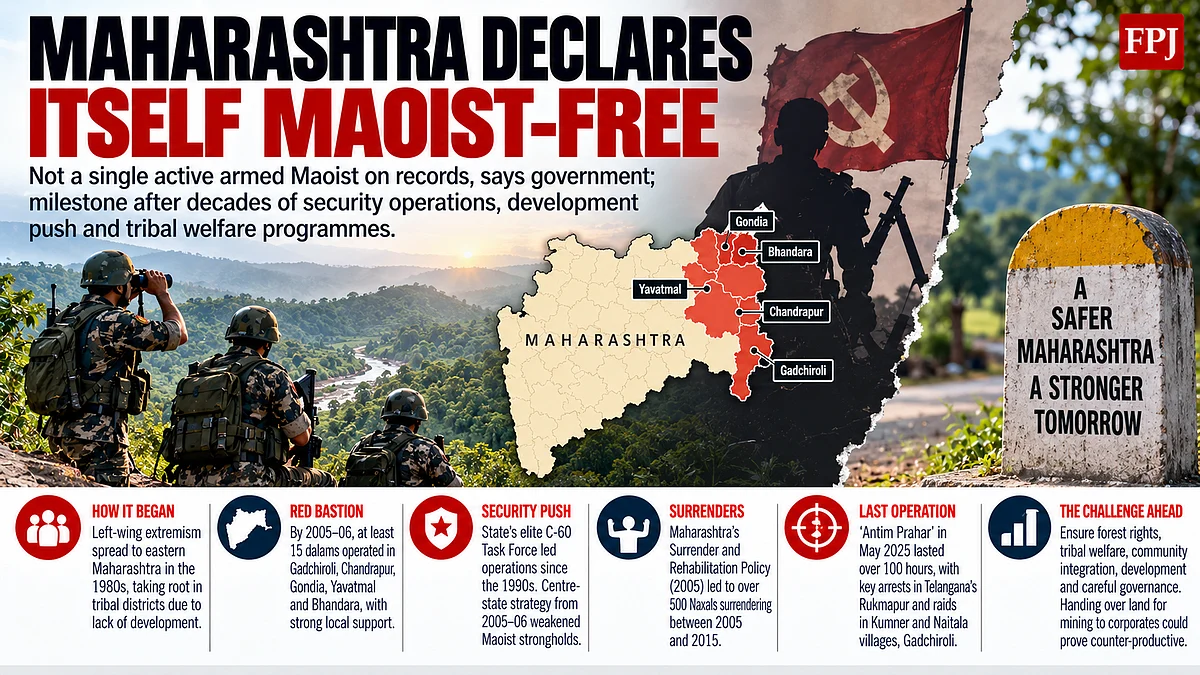
The Maharashtra government recently declared its state free from armed Maoism or Naxalism, a claim met with both relief and skepticism. The achievement is the result of years of strategic planning, the bravery of security forces, and welfare programs targeted at tribal communities in affected districts. The critical operation, known as Antim Prahar, took place in May of this year, resulting in the arrest of four key figures and raids in Gadchiroli's Kumner and Naitala villages.
Gadchiroli district, carved out of Chandrapur in 1982, historically served as a stronghold for the Maoist movement that spread from Madhya Pradesh, Chhattisgarh, and Andhra Pradesh (now Telangana) in the 1980s. By 2005-06, the districts had at least 15 active armed Maoist units with local support.
Inadequate development in these districts, characterized by the lack of industries and essential services such as health outposts and schools, provided an ideal environment for the rebellion to flourish. In response, Maharashtra's elite Crack-60 (C-60) Task Force of commandos had been fighting the Maoist cause since the 1990s, and strategic actions between 2005-06 began to weaken the movement's foundations.
Maharashtra's Surrender and Rehabilitation Policy (2005) led to 500 Naxals surrendering between 2005 and 2015. The past decade saw a final surge against Maoists, including controversial targeting of their urban support bases through the Maharashtra Special Public Security Act, 2025, which led to high-profile arrests, the collapse of leadership, and mass surrenders.
Chief Minister Devendra Fadnavis deserves credit for leading Maharashtra to this milestone, although he built upon the strategies his predecessors had laid. As the state celebrates this milestone, it is crucial to also remember the sacrifices of the security personnel who laid down their lives, often facing landmines, IEDs, and hostile locals.
The current challenge lies in ensuring the forest rights of tribals, integrating them into society, and fostering their welfare, as well as promoting socio-economic development and governance that addresses their basic needs. The question now arises: merely declaring these districts Maoist-free and allowing corporations to mine might prove counterproductive.
Written by urgent.news from Free Press Journal's reporting — not their text. Machine-written — may contain errors; check the original before relying on it.