Mahama urges African governments to treat healthcare as an investment, not budget cost
President John Mahama has called for a major rethink of healthcare financing in Africa, urging governments and investors to treat the sector as an economic investment rather than merely a cost to national budgets. According to President Mahama, increased investment in healthcare can drive economic growth, create jobs, strengthen human capital and support macroeconomic stability […]
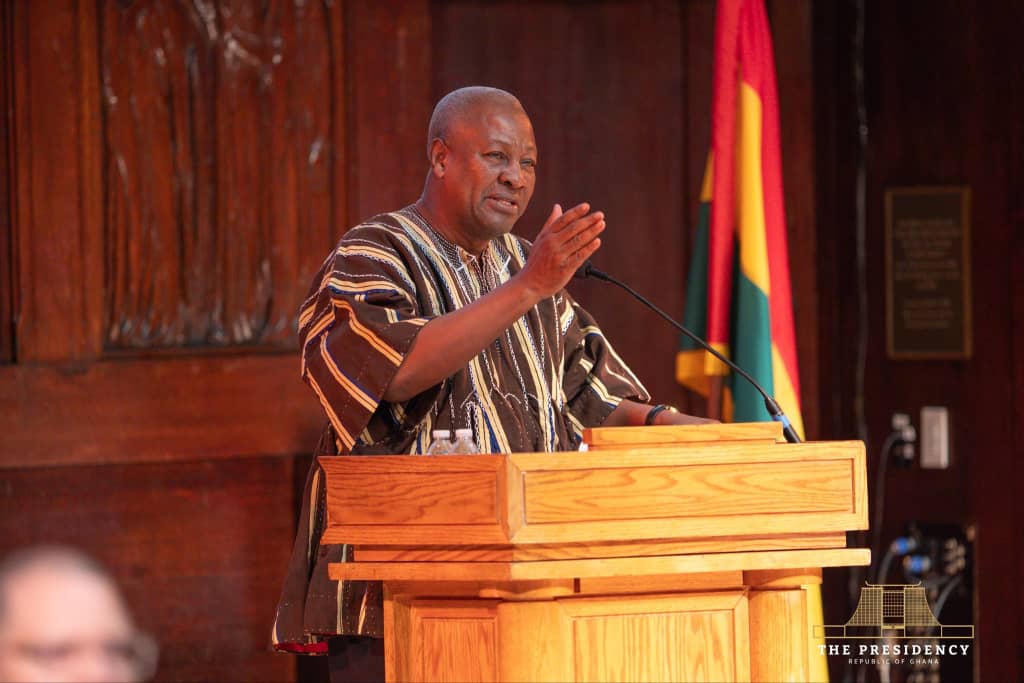
President John Mahama urged African governments and investors to reevaluate healthcare financing, viewing the sector as an economic investment rather than a mere budget cost. He emphasized that increased investment in healthcare can stimulate economic growth, generate jobs, and bolster human capital across the continent. At the Health Plenary of the Alamein Africa Forum in Egypt, Mahama criticized the long-standing practice of treating healthcare purely as a social expenditure that receives funding only when resources are available.
He argued that this approach is a "fundamental error," as it fails to recognize the significant economic potential of healthcare.
Mahama called for stakeholders to shift their mindset, recognizing healthcare as an "investable high-growth economic sector" that can drive manufacturing, create jobs, and ensure macroeconomic stability. He cited research from the Copenhagen Consensus, which found that a targeted package of basic emergency, maternal, and newborn care could yield $87 in economic and social returns for every dollar invested.
Additionally, Mahama mentioned the Lancet Commission, which noted that declining mortality rates contributed to nearly a quarter of total income growth in developing economies during the early 2000s.
The president highlighted Africa's heavy reliance on imported medicines and vaccines, accounting for over 70% of pharmaceuticals and nearly 99% of vaccines. This dependence results in billions of dollars leaving African economies annually to purchase healthcare products abroad. The situation is exacerbated by a decline in traditional donor assistance, with OECD projections estimating a potential 29-46% decrease in health aid compared to 2024 levels.
Mahama argued that this crisis presents a significant market opportunity for domestic private capital, particularly through the expansion of local pharmaceutical production.
He pointed to Africa's growing population, which is projected to reach 2.5 billion by 2050, as a key factor supporting the business case for local pharmaceutical manufacturing. With increasing demand for essential medicines, chronic disease management, and biologics, Mahama argued that African countries should position healthcare and pharmaceutical manufacturing as strategic sectors. By doing so, they can retain more economic value within the continent, create jobs, and enhance health security.
Written by urgent.news from Adom Online's reporting — not their text. Machine-written — may contain errors; check the original before relying on it.
This story
This is one outlet's version. Read the fullest account.