Kelemahan parti disebalik ketidakpastian pakatan di Melaka, kata penganalisis
Tawfik Yaakub kata sokongan yang berpecah menyebabkan parti politik perlukan rakan kerjasama tetapi ia mungkin buat pengundi keliru.
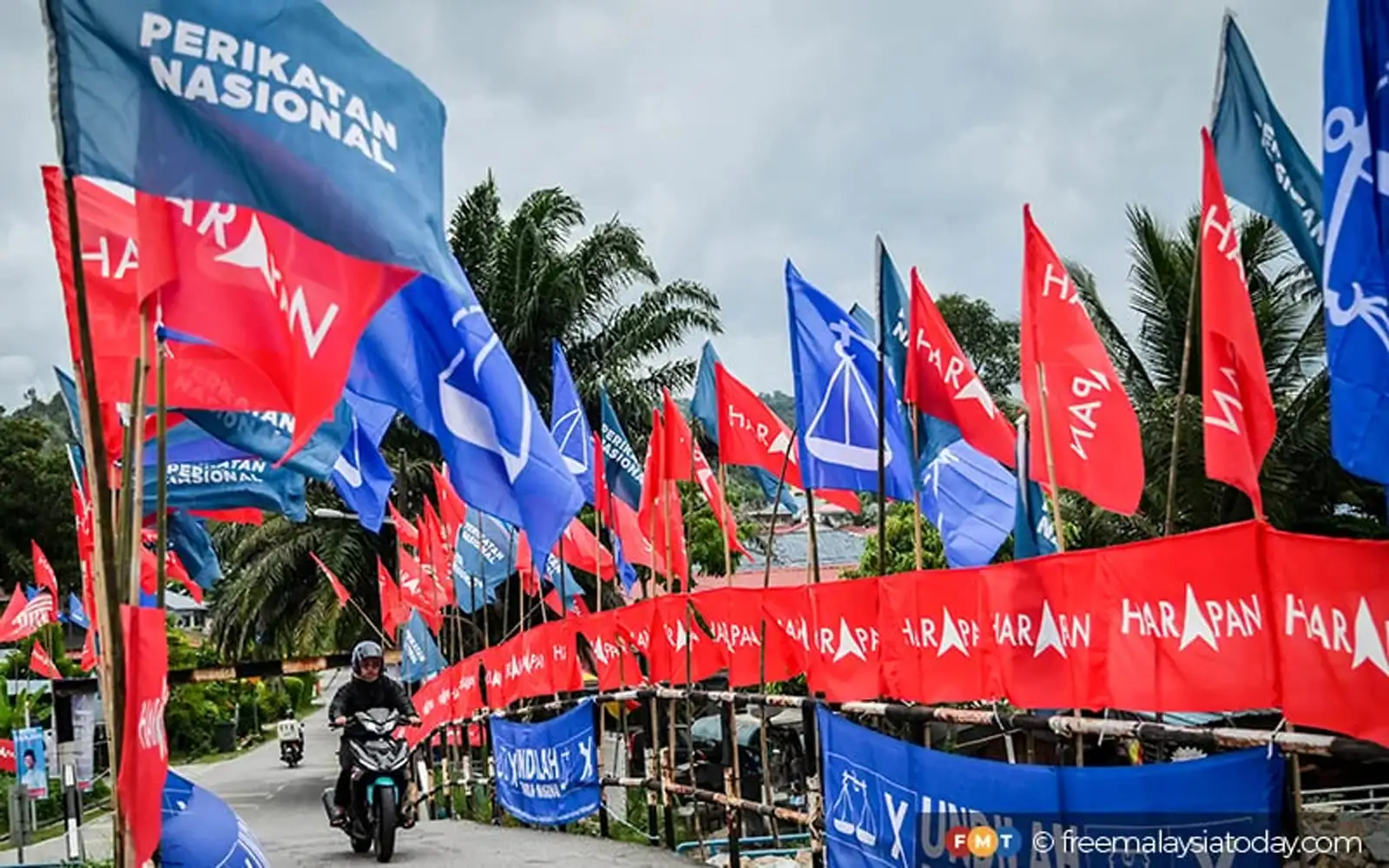
Analysts say political parties are increasingly leaning towards cooperation in elections due to lack of confidence in individual strength. In an era where no party is expected to hold a majority, forming a coalition becomes necessary before parties solidify their plans for governance together. Tawfik Yaakub from Universiti Malaya explained that political cooperation today is not just about ideological alignment, but also about strategizing to avoid fragmentation between parties and voter dispersion.
This is why various forms of cooperation are being explored by parties, despite concerns about the benefits of a coalition versus the risk of losing each party's identity and traditional support base. The dilemma is evident in Melaka, where Pakatan Harapan (PH) initially ruled out cooperation with Barisan Nasional (BN) or Perikatan Nasional (PN), but later clarified that such a coalition does not preclude either BN or Bersatu.
BN remains open to forming a coalition with PN, while Umno's Secretary-General, Asyraf Wajdi Dusuki, added that BN remains open to all parties, including PH. Meanwhile, Bersatu has stated it will not join any coalition for the Melaka PRN, including PH. Tawfik warned that conflicting statements from political leaders risk creating three different perceptions among voters: a party without a clear goal, decisions driven primarily by an elite discussion, and today's decisions potentially changing tomorrow.
Ahmad Zaharuddin Sani Ahmad Sabri from Global Asia Consulting pointed out that cooperation should not be viewed as a mere seat issue, as each party brings its history, governance record, leadership performance record, controversies, and voter perceptions. He noted that choosing a coalition involves weighing the party's historical achievements and potential drawbacks, such as integrity concerns and perceptions of governance management.
Zaharuddin emphasized that while vote counting may determine which party has enough support to form a government, the way the government is run is not guaranteed by the counting process. Both analysts agreed that the challenge after PRU16 will be whether parties can move towards coalition-building based on vote percentages to form a government, and whether they can explain why they are joining, with whom they are cooperating, and the type of government that will emerge from that cooperation.
For voters, the issue is not just about who wins in Melaka, but whether a party can explain why they are joining, with whom they are cooperating, and the kind of government that will be formed from that cooperation.
Written by urgent.news from Free Malaysia Today's reporting — not their text. Machine-written — may contain errors; check the original before relying on it.
This story
This is one outlet's version. Read the fullest account.
- Kelemahan parti disebalik ketidakpastian pakatan di Melaka, kata penganalisis freemalaysiatoday.com