How Egypt is using technology to protect its ancient trees
Egypt is documenting and protecting thousands of rare and long-lived trees, some more than 200 years old, while accelerating a nationwide campaign to expand green spaces and plant millions of new trees.
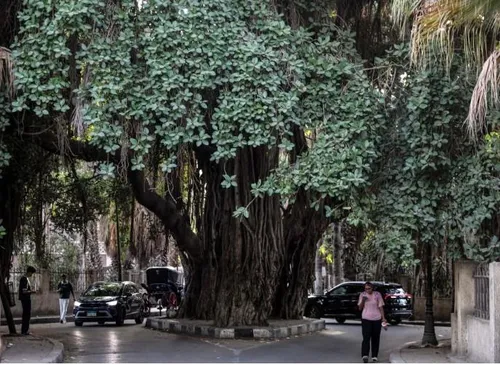
In the capital city of Cairo, Egypt, a massive ancient tree stands in the middle of a busy street, attracting attention from passersby. Hazem Ismail, a high school student, took a selfie with the tree, drawn to its aged branches. This scenario reflects a growing public and official focus on tree preservation and planting across Egypt.
President Abdel Fattah El-Sisi recently directed authorities to expand green spaces nationwide, while Prime Minister Mostafa Madbouly ordered governorates to accelerate tree planting along major roads. The Ministry of Local Development and Environment tightened regulations on cutting or uprooting trees and initiated a presidential plan to plant 100 million trees.
The National Organization for Urban Harmony is compiling a national archive of rare and long-lived trees, with over 2,000 recorded in Cairo, Giza, and Aswan, and work ongoing in El Qanater El Khayreya. Geographic information system technology is employed to track tree locations and conditions, feeding data into the Memory of the City mobile app for public exploration.
Meanwhile, Shagrha, an environmental initiative, has planted more than 750,000 trees across 22 of Egypt's 27 governorates since its launch in 2016, with over 250,000 volunteers involved. Founder and CEO Omar El-Deeb emphasizes sustainability, working with local institutions to ensure long-term care for the planted trees. Despite efforts to protect mature trees, environmental expert Mona Kamal stresses that successful tree-planting initiatives should focus on long-term environmental sustainability, not merely the number of trees planted.
Written by urgent.news from IOL's reporting — not their text. Machine-written — may contain errors; check the original before relying on it.