Gulf-Africa economic corridor taking shape as investment opportunities expand
<p>Doha, Qatar: Maser Group Chairman and MDR Investments CEO Prateek Suri says deeper cooperation between African economies and the Gulf could define one of the most important economic relationships of the coming decades.</p> <p>The growing economic links between Africa and the Gulf are creating the foundations of a new economic corridor, according to Prateek Suri, Chairman of Maser Group and CEO…
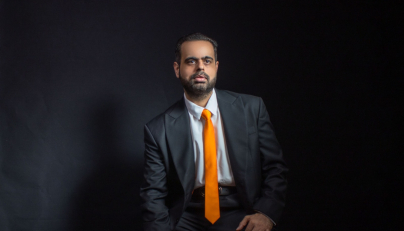
Doha, Qatar: Prateek Suri, Chairman of Maser Group and CEO of MDR Investments, asserts that increased cooperation between African economies and the Gulf could define one of the most significant economic relationships of the coming decades. According to Suri, the growing economic ties between Africa and the Gulf are laying the groundwork for a new economic corridor.
Suri, who has established businesses across Africa and the Gulf Cooperation Council (GCC), notes that both regions possess complementary strengths. Africa offers resources, land, a large, young population and substantial infrastructure needs, while the Gulf contributes capital, logistics expertise, and global connectivity.
Successful leadership in these regions demands adaptability to various cultures and business environments while preserving consistent values. Suri emphasizes that leadership is not a one-size-fits-all approach; every country possesses its unique culture, decision-making pace, and trust-building methods. He advises listening before leading in African markets, where relationships and long-term commitment hold immense importance.
In contrast, the Gulf showcases a remarkable blend of relationship-driven business and rapid execution.
Suri maintains that credibility is essential; people need to trust that leaders will follow through on their commitments. Successful global leaders adapt their style without altering their values. Suri is confident that the expanding links between the two regions could evolve into a major economic partnership in the decades ahead.
African economies boast resources, land, a youthful population, and substantial infrastructure requirements, while the Gulf possesses capital, logistics expertise, global connectivity, and a burgeoning investment ecosystem. Their mutual complementarity is striking. The UAE and Qatar, in particular, have transformed into globally connected economies through long-term vision, infrastructure investment, and strategic capital deployment. Their experiences offer valuable lessons for many emerging economies.
For Suri and his companies, the goal is to act as a bridge between these ecosystems. Maser Group and MDR Investments aim to connect capital with real opportunities on the ground and develop businesses and assets with enduring economic significance. Suri views artificial intelligence (AI) as a major investment opportunity, but cautions that discussions around AI often overlook the crucial physical infrastructure required to support it.
He argues that the AI economy necessitates substantial physical infrastructure, such as data centers, electricity, land, connectivity, cooling systems, and renewable energy sources. This insight presents an intriguing opportunity for emerging economies like Africa. Instead of merely being consumers of AI developed elsewhere, Africa should actively participate in the infrastructure and economic value chain behind AI.
Simultaneously, the Gulf, including Qatar, has the capital, infrastructure, and ambition to become a significant player in the next generation of the global digital economy.
Ultimately, Suri believes that the effectiveness of AI investment depends on whether it enhances productive capacity and opportunity. If investments in AI also bolster power infrastructure, connectivity, skills, and employment, technology and development should reinforce each other rather than compete.
Infrastructure demands a multidisciplinary approach, according to Suri. As interest in infrastructure, energy, mining, and AI grows, future development will necessitate leaders who can operate across industries rather than within single sectors. A mine requires energy and logistics, a data center demands power, connectivity, and land, and a new industrial zone necessitates roads, housing, and supply chains.
These areas are increasingly interconnected, requiring leaders to possess a broad range of knowledge, including capital, government priorities, technology, local communities, and execution.
Patience will become a vital leadership trait. Infrastructure development differs significantly from building a digital business; these are long-duration investments. Investors must not solely focus on short-term gains but rather consider what they can build over ten or twenty years.
Looking ahead to the next decade, Suri sees potential across various sectors linking the Gulf and Africa. These opportunities include energy, minerals, logistics, food security, data, and more.
Written by urgent.news from The Peninsula Qatar Business's reporting — not their text. Machine-written — may contain errors; check the original before relying on it.