Fuel Price Crisis | Here’s how much more each kilometre will cost versus early 2026
Fuel prices are soaring, with October’s hikes set to push driving costs sharply higher. Here’s how much more each kilometre could cost motorists compared with early 2026.
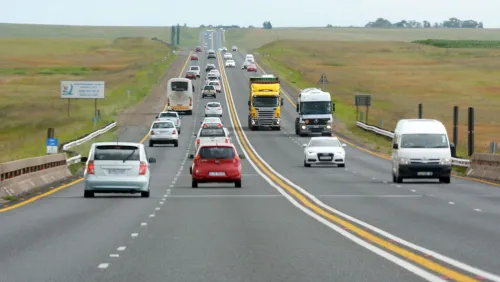
The fuel price crisis in South Africa is set to intensify in October, with motorists facing even higher costs per kilometer compared to early 2026. According to Central Energy Fund projections, petrol prices will rise by around R3.08 for 93 Unleaded and R3.29 for 95 Unleaded. Diesel prices are expected to increase by between R2.80 for 500ppm and R3.15 for 50ppm.
Government intervention in the form of tax relief is unlikely, as it did in April when tax was cut by R3.00 per litre for two months. The Minister of Mineral and Petroleum Resources, Gwede Mantashe, has stated there are no immediate plans to alleviate the financial burden on households and businesses.
Motorists can expect to pay around R29.23 for a litre of 95 Unleaded petrol at the coast and R30.10 in Gauteng, where 93 Unleaded is projected to retail at R29.94. Retail margins could push prices of 50ppm diesel above R34 at the coast and R35 inland, once factoring in profit margins.
The impact on average budgets is severe. An entry-level car that cost R1,000 more to fuel in September compared to March will now cost over R1,000 more, if driving 2,000km per month. Small cars with an average consumption of 5.5 litres per 100km will see their fuel costs increase from R1.11 per kilometre in March to R1.65 in October. Compact SUVs with an 8.0 l/100km consumption rate will face a rise from R1.61 to R2.40 per kilometre.
Diesel-powered vehicles are also feeling the pinch, with projected fuel costs rising from R1.89 per kilometre in March to R3.16 per kilometre by October. The average South African motorist drives approximately 1,500km to 1,800km per month. A small car like a Suzuki Swift, driven 1,500km, would have cost R1,666 in fuel bills in March, but could reach R2,470 in October. SUVs like the Chery Tiggo, with an 8.0 l/100km consumption rate, will see fuel costs rise from R2,423 in March to R3,593 in October.
The future of these soaring fuel costs remains uncertain, largely dependent on the peace situation in the Middle East. Elevated oil prices are primarily due to geopolitical tensions and disruptions in global crude supply and shipping, particularly through the strategically vital Strait of Hormuz.
Written by urgent.news from IOL's reporting — not their text. Machine-written — may contain errors; check the original before relying on it.