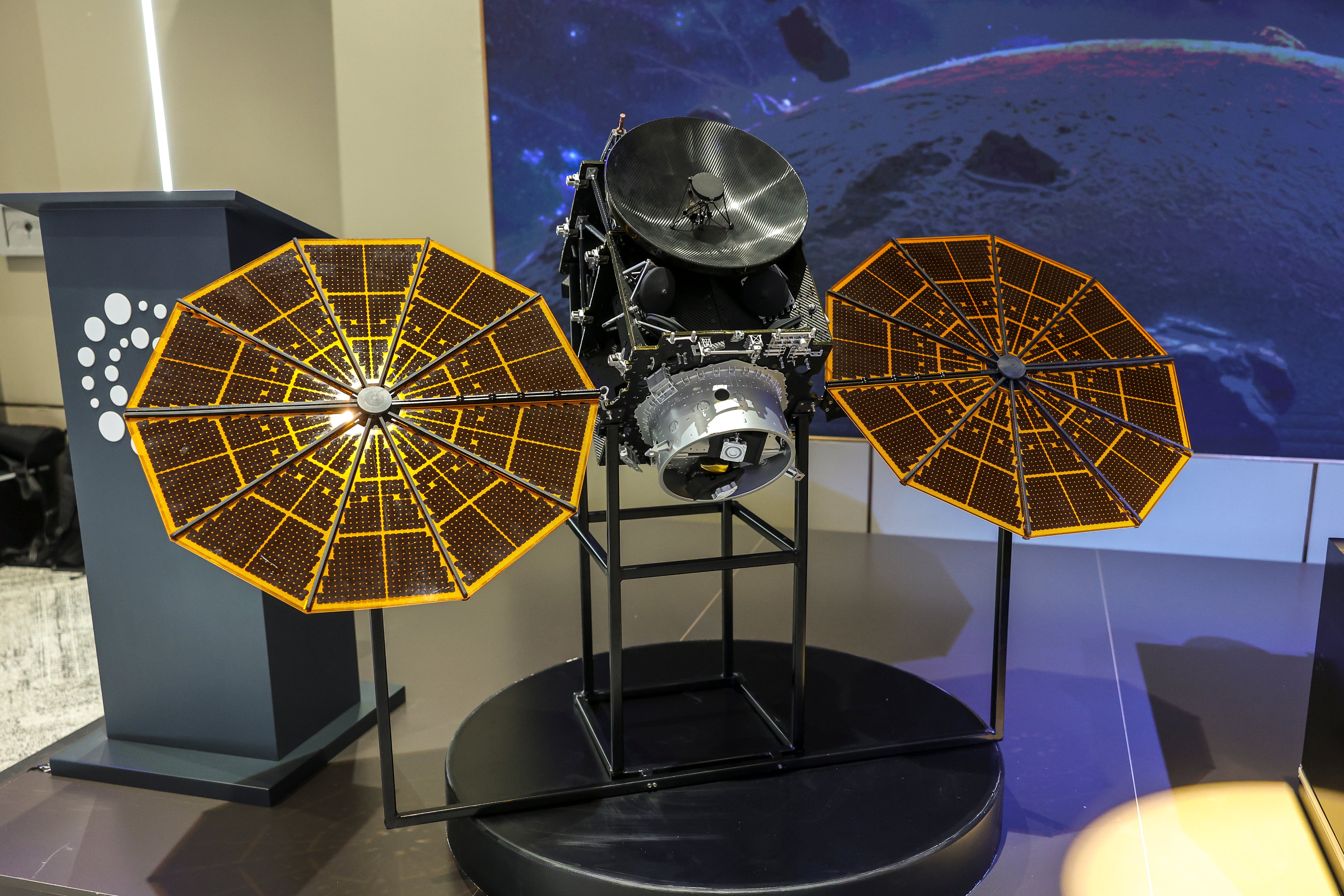
First photos from Smile spacecraft show Earth like you've never seen it before
The joint European-Chinese Smile satellite officially began its science operations this week, sharing a ghostly image of Earth's sunlit North Pole ringed by giant auroras.
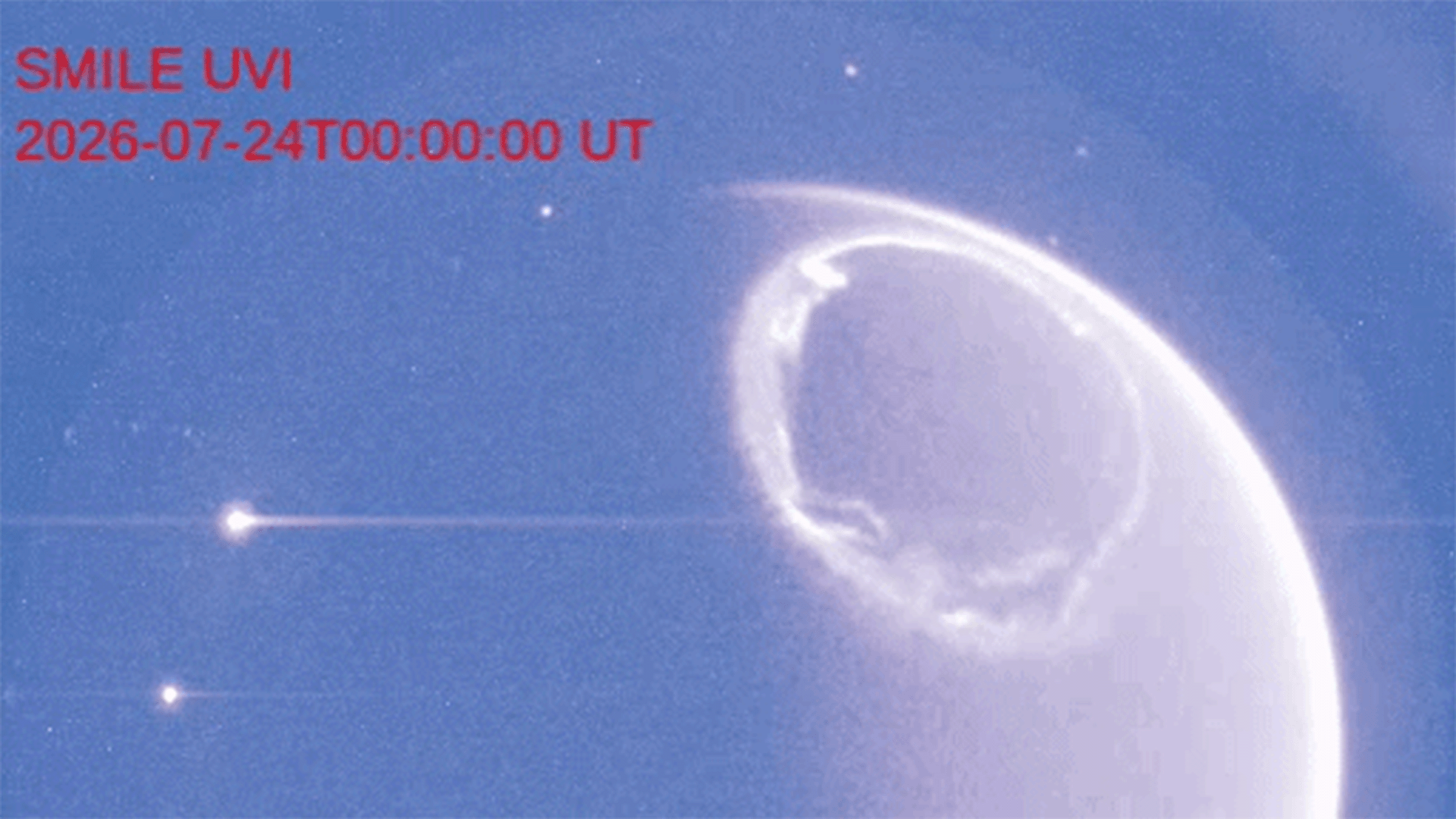
A new Earth-observing satellite, Smile, has captured its first photos, revealing an aurora that appears to glow like a half moon while twisting over the North Pole during daylight hours. The ultraviolet images, shared on September 30, showcase a giant aurora that is typically only visible at night and near the poles. In the images, Earth glows like a half moon, with the aurora covering about a third of the sunlit side of our planet.
Far behind, stars fall like raindrops as Smile maneuvers in its orbit. The mission, a collaboration between the European Space Agency (ESA) and China's Academy of Sciences, officially began science operations this week. Smile's highly elliptical orbit allows for a record-breaking 45-hour observation window over the North Pole. The satellite carries four science instruments to detect X-rays, magnetic fields, and light ions, with the Ultraviolet Aurora Imager being the main focus for observing auroras.
Scientists tested the spacecraft's soft X-ray imager by pointing it at the distant supernova remnant Cassiopeia A, confirming that the instrument is functioning well.
Written by urgent.news from Live Science's reporting — not their text. Machine-written — may contain errors; check the original before relying on it.