Asian Games close after fortnight of turmoil and teenage triumph
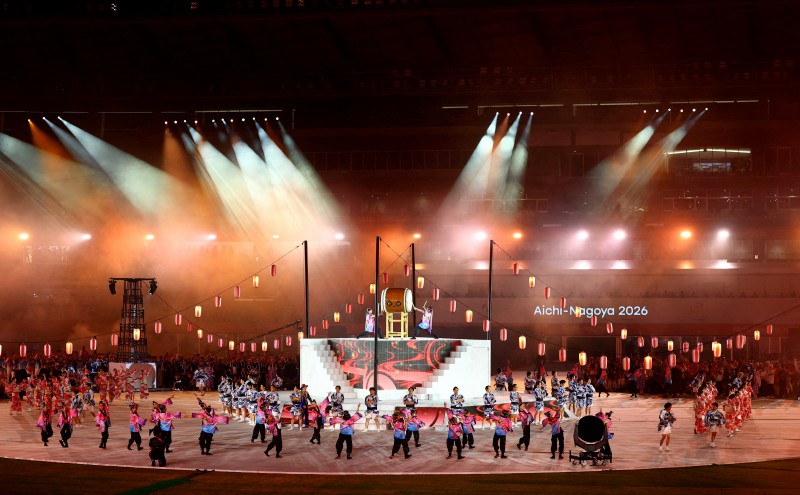
OCA President Sheikh Al Thani declared the Games closed at Mizuho Park Athletic Stadium

The 20th Asian Games concluded on Sunday after a turbulent two weeks, marked by youthful talent in the arenas but hampered by logistical issues and low public interest. Olympic Council of Asia President Sheikh Joaan bin Hamad Al Thani declared the Games over at Mizuho Park Athletic Stadium, with the torch passed to organizers of the upcoming 2030 event in Doha.
A total of 17,000 athletes and officials converged on Aichi-Nagoya, surpassing the number of participants at the 2022 Paris Olympics, competing in 469 gold-medal events spread across Tokyo and Osaka. Despite the massive scale, the Games were plagued by planning flaws, leading to chaotic accommodations and transport mishaps. Athletes and teams grappled with poor accommodations and transport problems, prompting repeated apologies from the disheartened organizing committee.
Nonetheless, the Games were elevated by the performances of teenage prodigies, led by China's 13-year-old swimmer Yu Zidi. Yu earned the title of Female Most Valuable Player, poised for a stellar Los Angeles Olympics after securing three gold medals in Tokyo. Her teammate, Zhang Zhanshuo, became the first swimmer to claim seven golds at the Games, while Japan's 17-year-old wunderkind Shin Ohashi shattered the 200m breaststroke world record.
In athletics, China's 18-year-old Yan Ziyi won the women's javelin gold with a world-class throw, while Thailand's 20-year-old sprinter Puripol Boonson excelled in both the 100 and 200m, earning the Men's MVP award. The athletes persevered despite regular logistical failures and occasional diplomatic errors. Accommodation, transport, and other issues reportedly affected many teams, according to Hong Kong team chef de mission Wong Po-kee.
Organizers opted to house athletes and officials in a mix of hotels, wooden container units, and a cruise ship to save costs, rather than building a dedicated athletes' village. They had budgeted for 15,000 athletes and officials, approximately 2,000 fewer than those who registered, and struggled to manage them effectively. Athletes faced up to 12-hour waits for registration upon arrival, with some discovering double-booked rooms or sharing rooms with incorrect teammates.
Transport problems plagued the Games, with athletes' shuttle buses failing to arrive or taking participants to the wrong venues, causing delays in several competitions. South Korea's delegation was particularly dissatisfied, with their chef de mission branding the Games' organization an "F." Their men's soccer team was upset when the South Korean flag could not be hoisted for the national anthem at the victory ceremony after they defeated Japan for the gold medal.
North Korea's national anthem was played for South Korea's men's hockey team earlier in the Games, another awkward mix-up. Even though the 2020 Tokyo Olympics were held without spectators due to COVID-19 restrictions, Japan's first major multi-sport event was marred by sparse crowds. Fewer than 1,000 spectators attended the host nation's women's soccer semi-final at a 50,000-capacity stadium, and many smaller venues were often near-empty, although many were located in remote areas, making access difficult.
Nagoya resident Naoko Toda, who watched several competitions before the closing ceremony, said, "If I had to say, well, I don't think it was a success." Despite the challenges, the Games' governing body, the OCA, declared Aichi-Nagoya a success and commended organizers for their cost-effective arrangements. China topped the medal table with 169 golds among 341 medals, their best haul at an overseas Asian Games.
However, Japan also delivered for its fans, with 83 golds in a total of 269 medals, surpassing their previous record set in Hiroshima 1994. Padel, mixed martial arts, teqball, and surfing made their Games debuts in a record 43-sport program that surpassed the Paris Olympics in size. Qatar is scheduled to host the next Asiad in 2030, though the OCA may consider delaying it by a year to serve as continental qualifiers for the 2032 Brisbane Olympics.
Written by urgent.news from SABC News's reporting — not their text. Machine-written — may contain errors; check the original before relying on it.
Also reported by 7 other outlets
- Asian Games close in Japan after records, rancour, rain freemalaysiatoday.com
- Asian Games end after turmoil, triumph economictimes.indiatimes.com
- Asian Games close in Japan after record-breaking feats and young stars shine nst.com.my
- UAE sign off Asian Games campaign with second equestrian medal thenationalnews.com
- [Asian Games] 20th Asian Games draw to conclusion with celebration of athletic feats koreatimes.co.kr
- Asian Games close in Japan after records, rancour and rain al-monitor.com
- (Asiad) 20th Asian Games draw to conclusion with celebration of athletic feats en.yna.co.kr