Amazon drivers are getting AI glasses — but what I found behind the scenes seems far worse
Amazon’s AI glasses may look futuristic, but they’re only one piece of a system already reshaping how warehouse workers and delivery drivers operate.
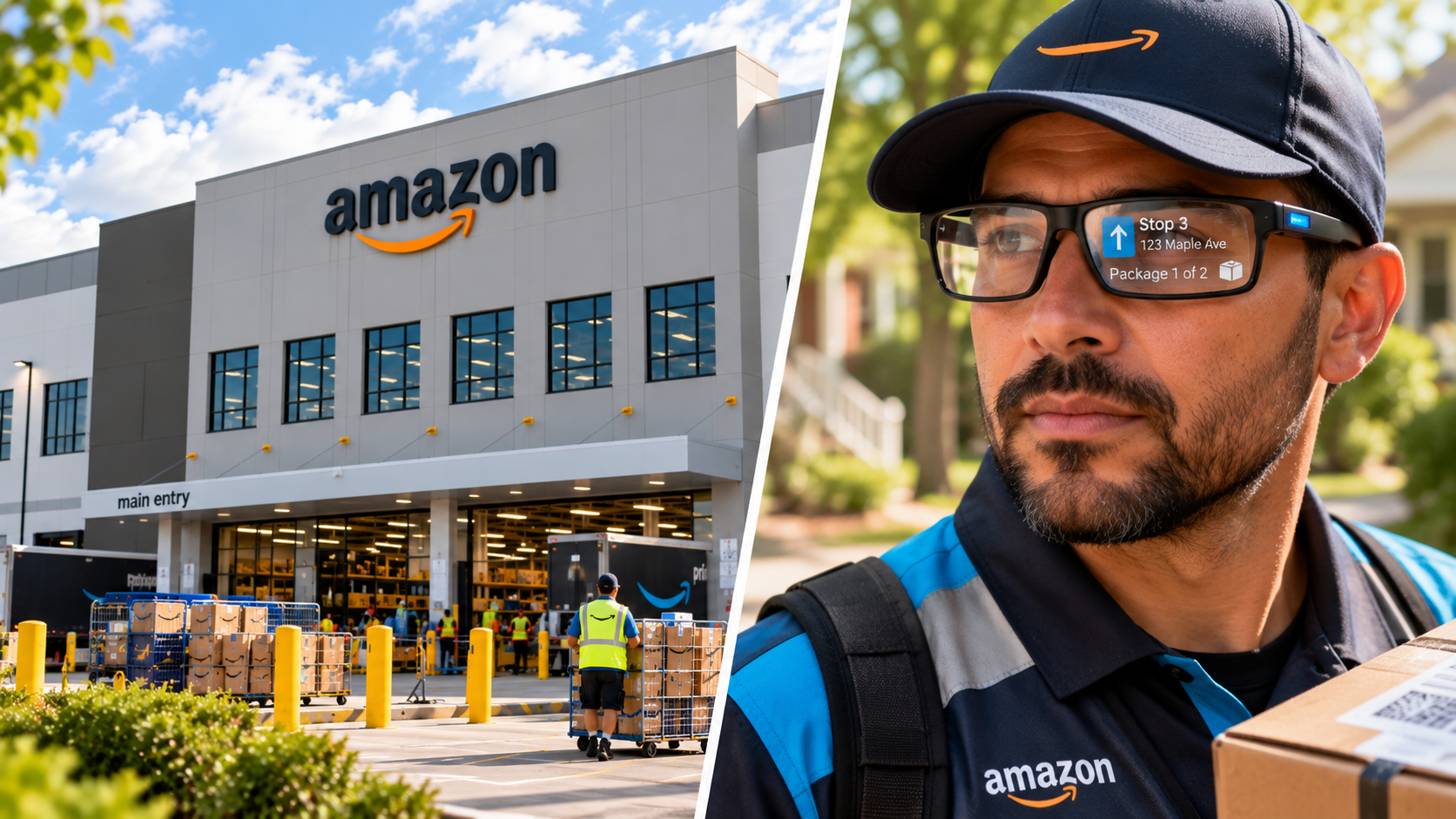
Amazon intends to provide more than 20,000 pairs of smart glasses to its delivery drivers by the end of 2027, following an 18-month pilot where over 500 drivers wore them and made more than 275,000 deliveries. The glasses, which drivers can opt to wear, project navigation, package information, and hazard alerts directly into the driver's field of vision.
Amazon describes the glasses as a voluntary addition to the driver's toolkit, shaped by feedback from the drivers who tested them. However, concerns have been raised about the privacy implications of the glasses, which capture still images at regular intervals while the drivers are on foot. The company has not considered providing an opt-out for the homes captured in these images.
Nonetheless, the focus of the story appears to be less on the glasses and more on the underlying AI systems that operate before a driver even pulls the package from the warehouse shelf. As early as the demand forecasting stage, AI is influencing where products are stored and how they move through the fulfillment center, robots and computer vision systems are coordinating inventory movement, and AI-powered mapping and routing are determining the most efficient delivery routes.
Amazon's AI systems begin working long before a box is moved from the warehouse, with the foundation model used for demand forecasting improving regional forecasts for millions of popular items by 20%. Once an item reaches a fulfillment center, it enters a network of people, robots, computer vision, and machine-learning systems that operate collectively.
Amazon's millionth robot was deployed in 2025, and the company utilizes various robots, each with specific capabilities, to move entire shelves, pick individual items, and even organize inventory autonomously. The robots are also coordinated by an AI traffic controller that creates more efficient paths and reduces congestion, with the company projecting a 10% reduction in travel time for the fleet.
Furthermore, Amazon is implementing agentic AI to manage fulfillment centers, with Project Eluna analyzing operational data to identify bottlenecks and recommend actions to managers. Additionally, a new version of the Proteus robot accepts plain-language instructions from employees, allowing workers to simply tell the robot what needs to be moved, and the robot will determine the best route, timing, and priority.
As Amazon continues to automate human work, the progression is clear from the use of Vulcan, the first robot with a sense of touch, which can pick and stow items in tightly packed compartments, to the AI systems that coordinate robots and analyze the buildings where they operate.
Written by urgent.news from Tom's Guide's reporting — not their text. Machine-written — may contain errors; check the original before relying on it.