A policeman directs traffic from a metal bin, Harrow boys queue for sweets in straw boaters, and men on stilts tend the Kent hops: new photo book opens a fascinating window on 1930s Britain
This 616-page hardback gathers together hundreds of archive photographs, many never seen before, of a nation caught between tradition and modernity.
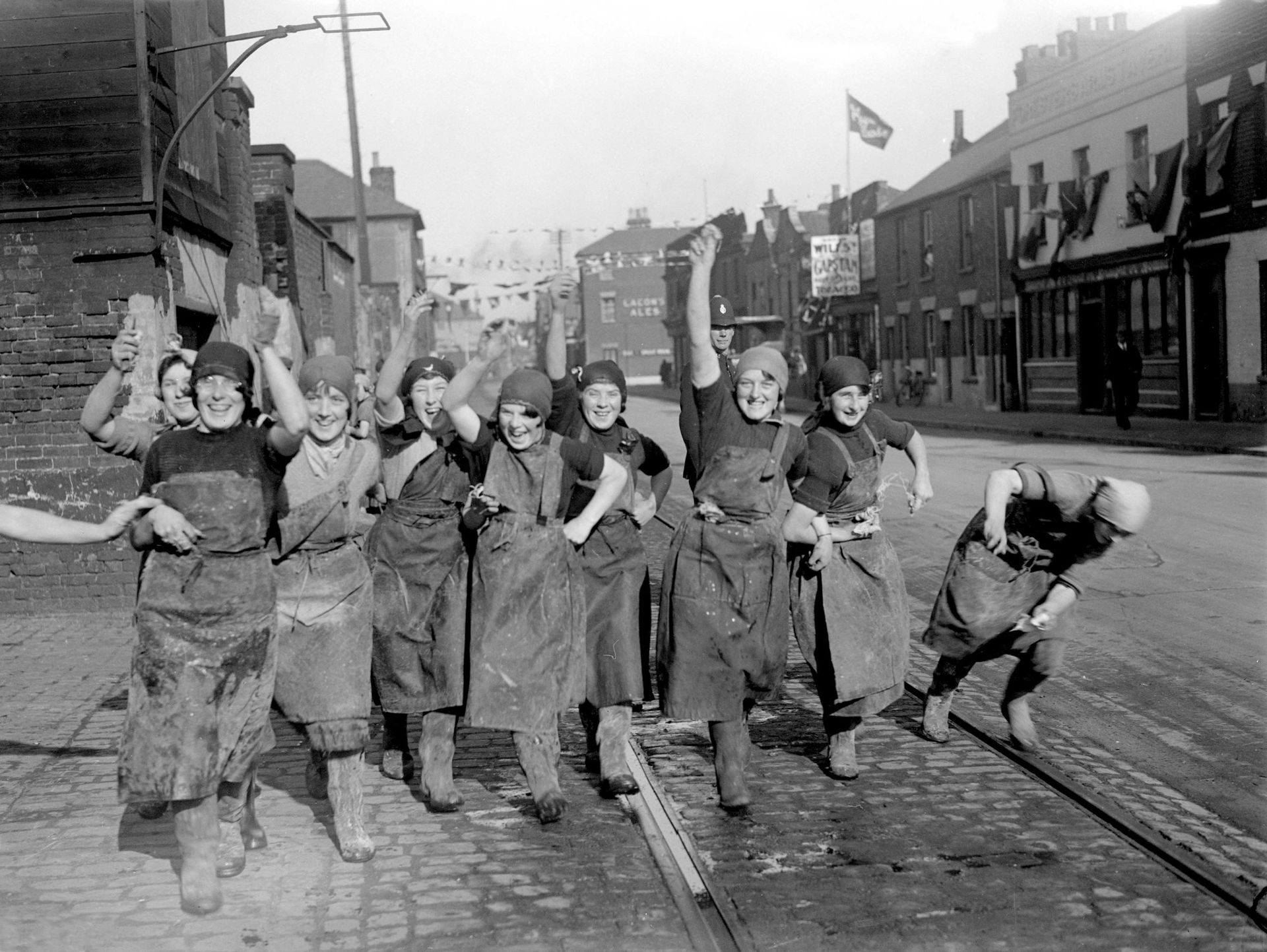
Britain in the 1930s was a time of both profound change and surprising continuity. Amidst the looming threat of war and the harsh realities of the era, the decade also offered moments of quiet, everyday life that have been captured in a new photo book.
Author Steven Brindle and writer Maureen Hill have compiled an extensive collection of photographs, many previously unpublished, in a hardback titled Britain in the 1930s. The images have been sourced from the archives of Associated Newspapers, publisher of the Daily Mail, as well as Getty Images' Hulton and Keystone collections. The book is arranged by county, ranging from Cornwall to Orkney, and spans 616 pages.
The book is framed by JB Priestley's 1934 English Journey, which identified three Englands: the old country with its cathedrals and villages, the Victorian-built industrial England, and a new England influenced by America, characterized by arterial roads, cinemas, and dance halls.
Remarkably, the countryside during this time seemed largely untouched by the modern world. There were few buildings post-1900, and many structures dating back before 1800 remained unaltered. Historian Brindle notes this in the book's introduction, highlighting the remarkable preservation of the pre-20th century landscape.
Photographically, the book is a treasure trove of images taken by newspaper photographers, whose names have been lost to history, but whose work is characterized by superb composition. One such photograph shows Liverpool's dustbins, protective boxes equipped for police officers to shield them from wind and mud. Another captures Boxing Day at the Ritz Dancing Hall in Manchester, where a cashier smiles behind the pay desk, with dance hall signs advertising special offers for children and refreshment vouchers.
The book also showcases a crossing for schoolchildren in Oxford, escorted by a man holding a Safety-First sign - an early version of the modern lollipop man. The image is a testament to the innovative measures taken to ensure children's safety during that time.
A Bournville chocolate factory in Warwickshire is depicted in another photograph, where two women carry towers of finished boxes. By the 1930s, Bournville was the largest cocoa processor in the British Empire, employing around 10,000 people. The image also features a sheep shearing event in Winsford, Somerset, where Exmoor sheep arrive for the Exmoor Horn Sheep Breeders Society Show and Sale.
Finally, the book includes images of the Queen Mary liner at Clydebank, where it was built, and a scene in Yorkshire where geese are driven down the street by a man with a stick and a boy in wellies. These images encapsulate the essence of the 1930s Britain, a blend of old traditions and nascent modernity.
Written by urgent.news from Digital Camera World's reporting — not their text. Machine-written — may contain errors; check the original before relying on it.