66% of Hong Kong’s 8-year-olds could be short-sighted by 2028, experts warn
More than 60 per cent of Hong Kong’s eight-year-olds could be short-sighted by 2028, optometrists have predicted, citing a shrinking “hyperopic reserve” that normally helps delay nearsightedness. The Hong Kong Association of Private Practice Optometrists released the findings on Sunday from a study of more than 3,500 pupils at eight primary schools conducted between November and May, urging…
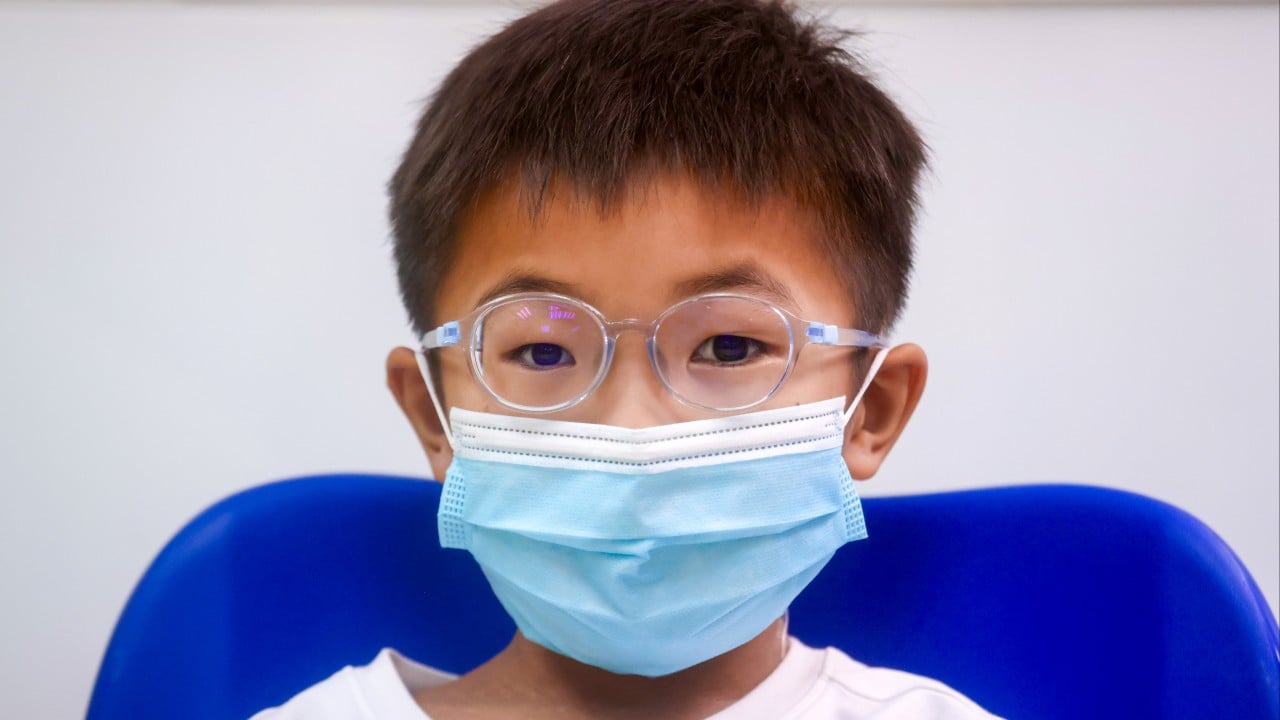
Hong Kong's leading optometrists predict that by 2028, a staggering 66% of the city's eight-year-olds may suffer from short-sightedness. This dire forecast stems from a study of over 3,500 students across eight primary schools conducted between November and May. The Hong Kong Association of Private Practice Optometrists released these findings, warning parents to initiate comprehensive eye examinations for their children as early as three years old.
The association reported that 67% of six-year-olds had less than the recommended hyperopic reserve of 0.75 dioptres, while 24% were already short-sighted.
Hyperopic reserve, which refers to the natural long-sightedness of children at birth, gradually diminishes as their eyes grow. As this reserve depletes prematurely, children face a higher risk of developing myopia. Citing a mainland Chinese study, the association projected that 66% of the surveyed children could become myopic by 2028, noting that children with insufficient hyperopic reserve are likely to develop short-sightedness within two years.
Queenie Yip Siu-lai, the association's president and task force chairman, emphasized that a lack of intervention could result in over 60% of eight-year-olds being short-sighted within two years, potentially leading to high myopia and severe eye diseases. She stressed that this represents a crucial opportunity to safeguard the vision of Hong Kong's children.
The association attributes the high prevalence of short-sightedness in Hong Kong to various factors, including smaller family homes and reduced time spent outdoors. Benny Tam Bing-tin, the vice-chairman of the task force, explained that a child's hyperopic reserve can be influenced by elements such as home size and outdoor exposure.
Once acquired, hyperopic reserve cannot be restored, just as myopia cannot be reversed. Early identification of children with insufficient reserve and timely intervention are key to mitigating the problem.
The optometrists urged parents to initiate regular comprehensive eye checks from the age of three. They also recommended increasing time spent outdoors, limiting screen time, maintaining proper reading distance and posture, and ensuring adequate rest. Furthermore, the association called for the government to establish policies to manage children's myopia and enhance public education.
A separate survey conducted by the association in September, involving 67 members, revealed that nearly 80% of parents did not take their children for eye checks until vision problems arose or screenings failed, indicating a lack of awareness regarding the issue. The case of seven-year-old Owen illustrates the potential severity of the situation.
After failing an eye screening two years ago, Owen's condition worsened over the summer holidays, with his short-sightedness reaching 125 degrees in his left eye and 1,050 degrees in his right eye. Once fitted with glasses, his grandmother limited his screen time and enrolled him in activities such as running, swimming, and badminton, which helped stabilize his short-sightedness.
Written by urgent.news from South China Morning Post's reporting — not their text. Machine-written — may contain errors; check the original before relying on it.
This story
This is one outlet's version. Read the fullest account.