Were peasants ever the problem? Rethinking 300 years of economic development
Development experts often see agriculture, particularly peasant farming, as a sector that yields insufficient output and income given the large workforce it employs. The Economics Nobel laureate William Arthur Lewis once stated that labor productivity in agriculture is "negligible, zero, or even negative." According to this viewpoint, development involves transitioning the "displaced" surplus labor from farms to manufacturing and other modern, capitalist sectors, where labor productivity and wages are higher.
This shift would be advantageous for agriculture, as it would enable economies of scale through the consolidation of existing holdings, facilitating the use of farm machinery, equipment, and capital-intensive inputs.
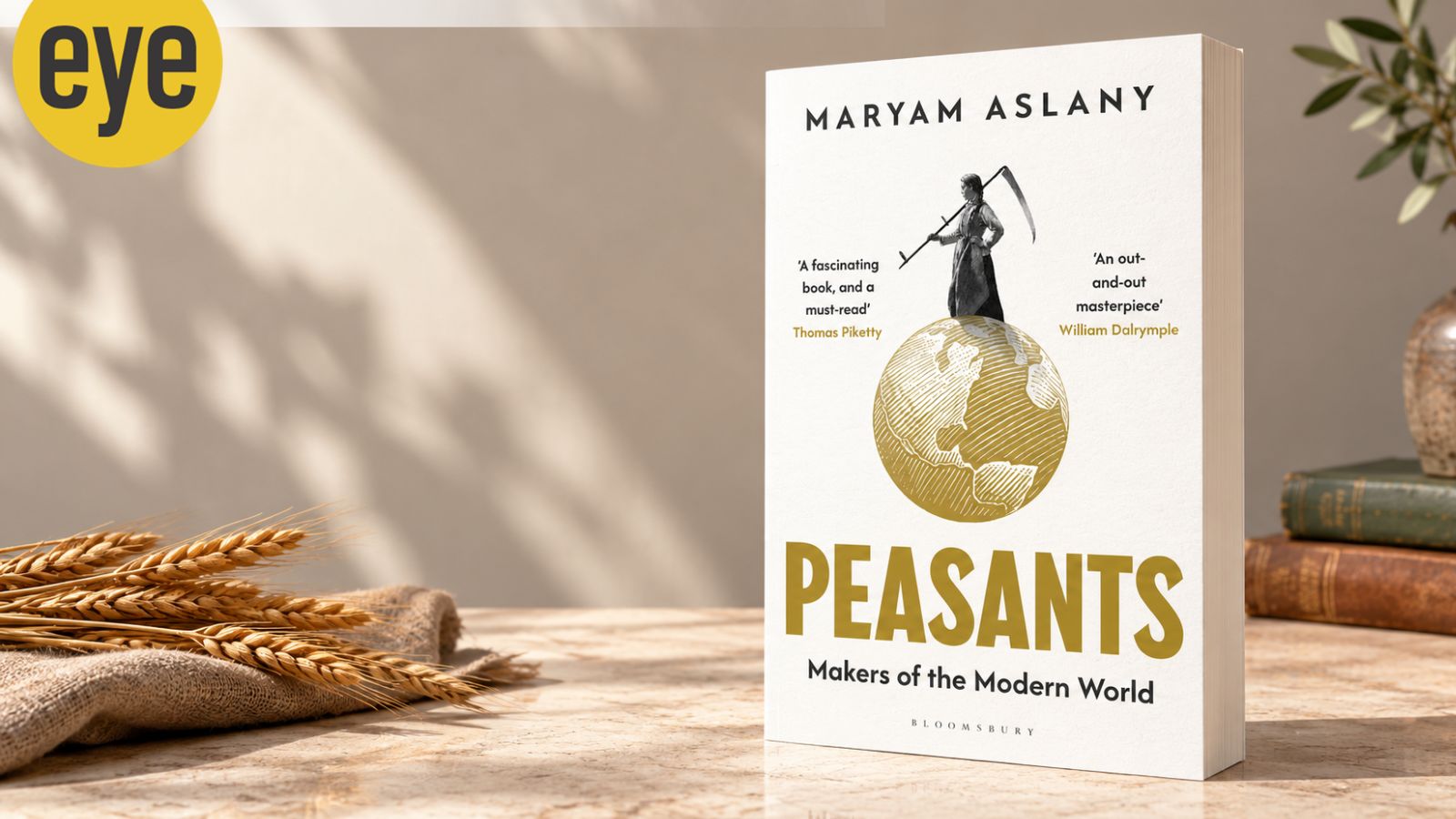
Maryam Aslany, an economic sociologist, argues that the notion of peasants and smallholder farmers as a hindrance to progress and incompatible with modern economies has been embraced by both free-market capitalists and Marxists. For Karl Marx, peasants were akin to individual "potatoes in a sack," lacking the collective class consciousness of the industrial proletariat.
The Bolsheviks even embraced a vision of large-scale farming. Under Joseph Stalin, peasants were deprived of their landholdings and forced to work on kolkhoz collectives or state-owned sovkhoz industrial farms equipped with armies of tractors and combine harvesters.
Today, the United States has only 1.9 million farms that directly employ 1.2% of its workforce. The average farm size in 2024 is 466 acres, with 50.2% of the total production value coming from farms with $1 million or more in annual gross cash income. The European Union has a larger number of farmers (8.8 million), but agriculture's share in employment is only 3.9%. However, this is not the case in Asia, Africa, and Latin America, where an estimated two billion people live in peasant households.
Aslany's book makes two main arguments. First, peasants were crucial to what she calls the "biological order," when human activity relied heavily on plants and animals and the people possessed knowledge of collaborative relationships with their natural cycles. Without peasants, there would be no states or empires, as they supplied food and generated agricultural surpluses that enabled cities to exist and kings to maintain standing armies and build architectural marvels.
Second, the transition to an "industrial order" is not seamless. While China has reduced its workforce's share in agriculture from 59.6% to 21.7% between 1991 and 2025, Aslany notes that this transformation is exceptional and cannot be replicated universally.
Peasant agriculture is not just a historical relic but a vital part of the present as well. Aslany brings back the most enduring class of humanity into the global conversation through engaging stories of growers of sugarcane, rice, coca, and cocoa in Maharashtra, Cambodia, Peru, and Ghana. Despite the challenges of retaining the best lands and human resources, peasants are shown as innovative, hardy, and adaptable.
However, the book falls short in offering a blueprint for the future of peasant agriculture, as even countries where it is still prevalent struggle with the retention of the best lands and human resources.
Written by urgent.news from The Indian Express's reporting — not their text. Machine-written — may contain errors; check the original before relying on it.