Spaniards protest housing crisis as Sánchez weighs snap vote
With a potential early election looming, the demonstrations highlight growing frustration with the country's political establishment.
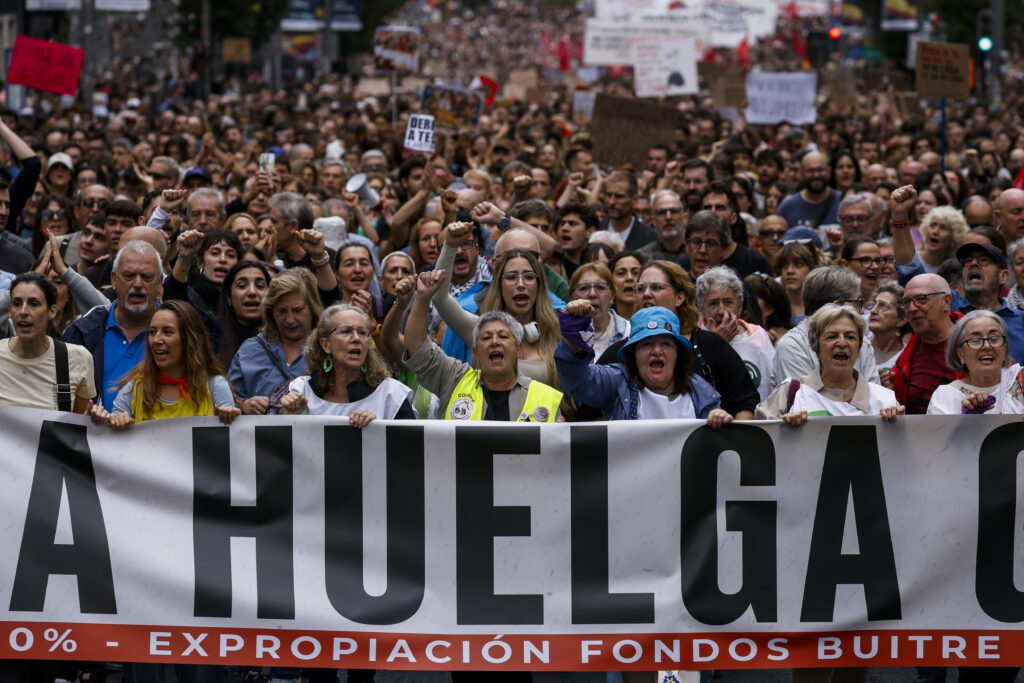
Housing protests erupted across numerous Spanish cities on Saturday as Prime Minister Pedro Sánchez considered dissolving parliament for an early election. The Madrid demonstration, organized by the Spanish Tenants Union, saw an estimated 500,000 participants march through the city's primary avenues, converging on the iconic Cibeles Square.
The union reported the towering crowd as a testament to widespread frustration with leadership's failure to address the escalating housing crisis. Over the past ten years, average rents have surged nearly 90%, according to Valeria Racu, spokesperson for the Spanish Tenants Union. Racu emphasized that the protests signaled the people's enduring power and their refusal to accept political inaction.
The unrest was prompted by the eviction of 87-year-old Maricarmen Abascal from her family home since 1956, an act orchestrated by an investment firm. The Sánchez administration attempted to mitigate public discontent on Tuesday by introducing two long-overdue bills aimed at curbing speculative practices, extending eviction protections for vulnerable tenants, and automatically renewing existing contracts.
However, conservative members of parliament rejected both bills on Friday, prompting speculation that Sánchez, already under scrutiny over the migrant crisis in Ceuta and corruption allegations involving family and political associates, might opt for a snap election to capitalize on housing-related anger.
Despite the perceived success of the demonstrations, protesters also criticized Sánchez for his perceived lack of action on the housing crisis since his inauguration in 2018. Racu argued that eight days of mobilization had outpaced eight years of progressive government, and called for a general strike to compel the adoption of urgent housing measures. Such measures, she claimed, would transition the prevailing feelings of disaffection, desperation, disillusionment, and sadness into a newfound vigor on the streets.
As the protests unfolded, the ailing Prime Minister remained out of sight, weighing his election call options. Socialist leaders from Castilla-La Mancha, Extremadura, the Basque Country, and Castilla y León urged Sánchez to expedite early elections, asserting that the electorate needed to be heard. Meanwhile, the prospect of an imminent vote is prompting Spain's fragmented left to scramble for regrouping.
Deputy Prime Minister Yolanda Díaz has declined to run for re-election, while Health Minister Mónica García and Culture Minister Ernest Urtasun are considered frontrunners to succeed her as leader of the Sumar party. Podemos leader Irene Montero and former Barcelona Mayor Ada Colau, both seasoned housing activists, are also vying to lead a broader left-wing alliance.
The center-right People's Party holds a significant 34% support in electoral polls, and has shown openness to forming a government with the far-right Vox party, which polls at 18%. Sánchez's Socialists, backed by 26% of voters, would require the fragmented left to unite behind a viable electoral alliance capable of securing sufficient seats in parliament to form a new coalition.
Written by urgent.news from Politico EU's reporting — not their text. Machine-written — may contain errors; check the original before relying on it.