Por qué buscamos los empleos del futuro en el sitio equivocado
¿Quiere saber cuáles serán los empleos del futuro? Siempre esperamos nombres de ciencia ficción para esos puestos que vienen, como ingeniero cuántico o diseñador de agentes de IA. Sin embargo, la realidad es diferente: los nuevos trabajos ya están aquí, ocultos bajo oficios tradicionales como electricista o mecánico. Las tareas cambian mucho antes de que nazca una nueva profesión. Leer
Throughout history, the human race has often wondered about the new professions that will emerge and which existing jobs will disappear with each technological revolution. Fearing and apprehensive, we usually wait for an answer in the form of job titles: prompt engineer, quantitative specialist, artificial intelligence agent designer, robotics technician.
It seems as if the new economies immediately produce recognizable occupations. However, it is clear that we do not know how to look... Rachel Lipson, a researcher at Harvard Kennedy School, has found an interesting anomaly while studying what is called the frontier economy: semiconductors, biomanufacturing, quantum computing, advanced nuclear energy, batteries, data centers, and other industries growing around critical technologies.
The problem is not just that official statistics do not yet know where to place them. It is that the transformation of work seems to begin much earlier than a new profession appears. First, tasks change; then skills; later, professional combinations that were once unusual appear... Much later, if ever, comes the name. This possibility suggests that some future jobs are already among us, hidden under perfectly ordinary titles.
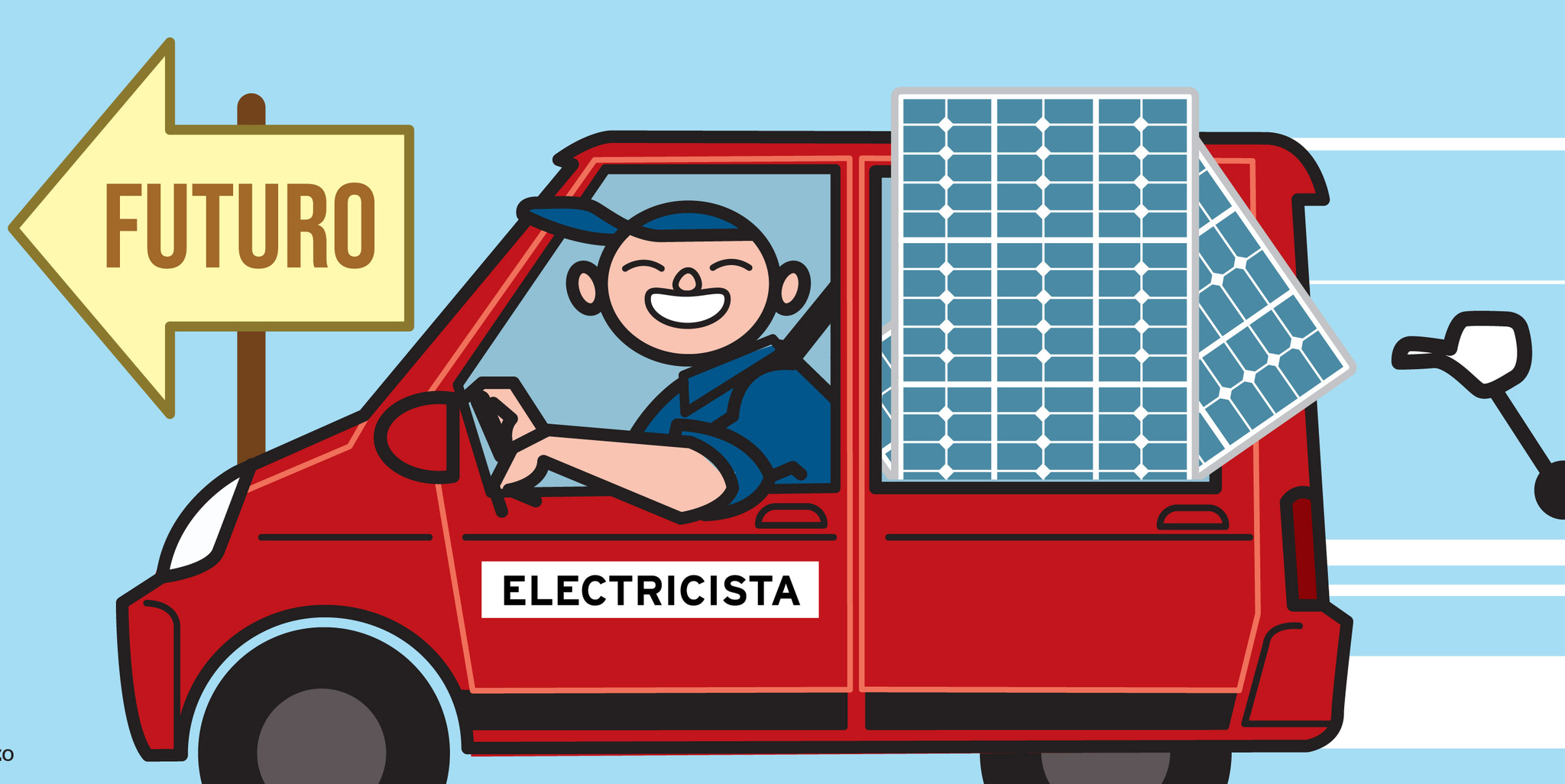
First clue: a profession may keep its name but become something else. An electrician is still an electrician even though he can now install batteries, inverters, fast chargers, photovoltaic systems, and bidirectional network equipment that barely existed in his trade a decade ago. Tesla currently offers electrician apprenticeships in its Nevada Energy division to work simultaneously with electrical distribution, transformers, solar installations, energy storage, inverters, batteries, and systems up to 1,000 volts direct current.
In labor statistics, this is likely to continue appearing as an electrician. Practically, it starts to resemble a different profession. In the International Energy Agency's World Energy Employment 2025 report, technical occupations - electricians, pipefitters, operators, power plant workers, or technicians - have added about 2.5 million jobs since 2019.
Electrification is making existing professionals learn new technologies: HVAC technicians switching to installing heat pumps, automotive workers transitioning to electric vehicles, or electricians specializing in new energy infrastructure. This could be a first clue for detecting an invisible profession: look for occupations where job titles remain stable while technological content changes very rapidly. This is not new.
Written by urgent.news from Expansion ES's reporting — not their text. Machine-written — may contain errors; check the original before relying on it.