Monkey vs langur: How to spot the difference
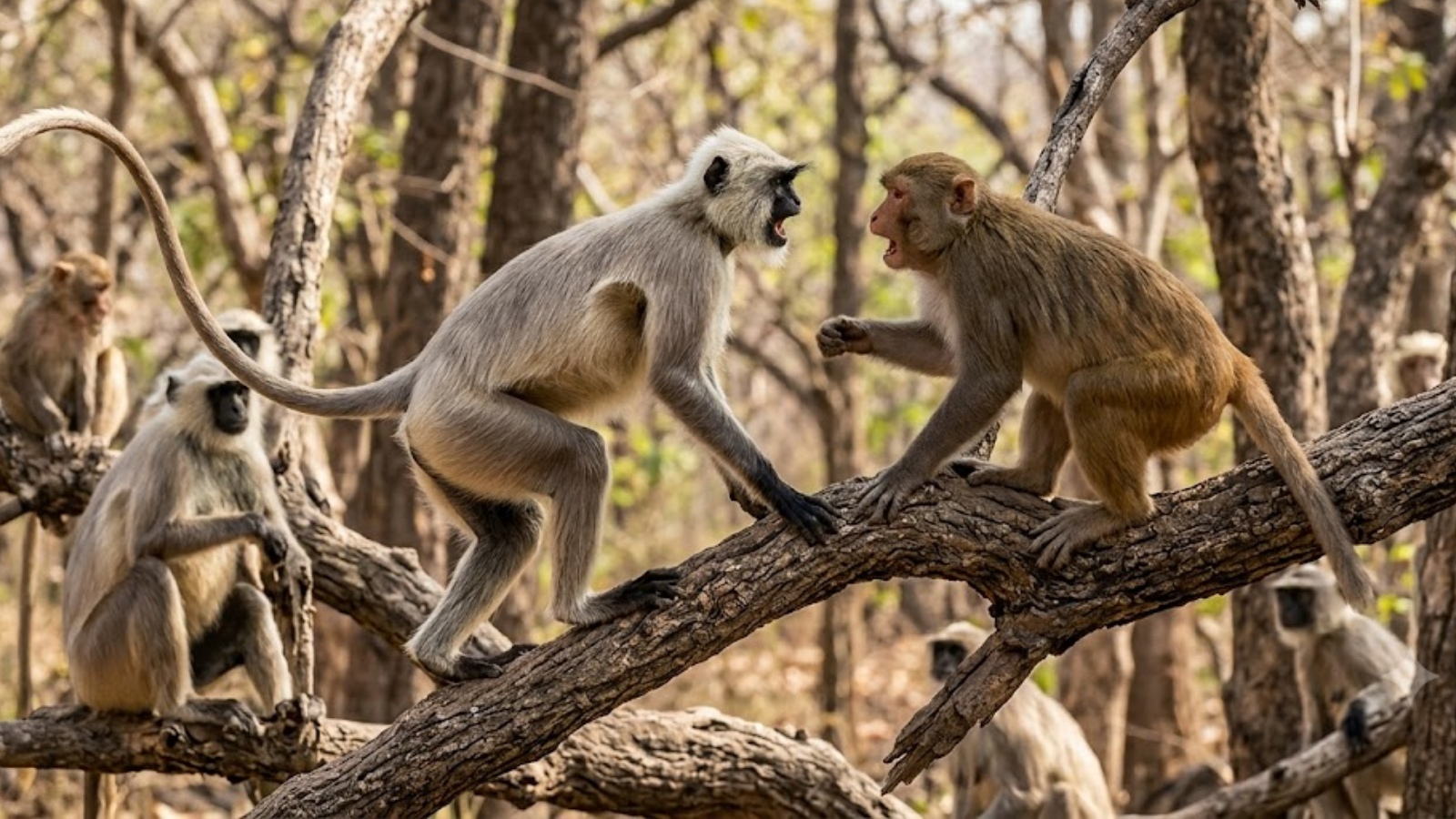
While many people tend to think of all primate creatures as “monkeys”, there are significant differences between macaques and langurs. Both are classified as monkeys biologically, but they display distinct characteristics in terms of appearance, diet and behavior. Dr Vinod Sharma, Director and Head of Veterinary Services at DCC Animal Hospital & Petcare, Gurugram, explains how to differentiate between the two.
Macaques are typically smaller and stockier, with a pinkish or brown face and a relatively short tail. Conversely, langurs tend to be taller and slimmer, featuring a black face, very long limbs, and a longer tail. Langurs also sport grey or pale-colored fur, in contrast to the varying colors seen in macaques. Dr Sharma emphasizes that these physical traits serve as key indicators for identifying each species.
In terms of diet, macaques are opportunistic feeders, consuming a wide range of foods such as fruits, seeds, insects, crops, and even human-provided leftovers. Langurs, on the other hand, have a more specialized diet consisting mainly of leaves, shoots, flowers, fruits, and grass – a predominantly plant-based intake that can keep them foraging extensively in trees or vegetation.
Behaviourally, macaques are generally more opportunistic and can become bold, especially when food is involved, sometimes appearing aggressive in their competition for resources or handouts. Langurs, meanwhile, are typically more cautious, often staying in trees or areas away from crowds, though they can also inhabit human settlements when food or vegetation is present. Their cautious nature generally makes them less likely to aggressively seek food from people.
Macaques are more prone to entering human settlements due to their habit of seeking food from people, rubbish, and handouts. While langurs can also venture into settlements if trees, crops, or other food sources are nearby, they do so less frequently and tend to avoid aggressive interactions with humans.
If you encounter either a monkey or a langur, Dr Sharma advises remaining calm, maintaining a safe distance, and ensuring the animal has a clear escape route. He strongly recommends against feeding, chasing, teasing, staring at, closely photographing, or attempting to touch the animal. Securing food and plastic bags, keeping children and pets at a distance, and not approaching a mother with a baby or cornering the animal are also essential precautions.
In cases where a monkey or langur enters a building, Dr Sharma suggests leaving doors or windows open, allowing the animal to exit if safe to do so. If it does not leave, contacting local forest or wildlife authorities is advised, rather than attempting to remove the animal oneself. Should you be bitten or scratched, washing the wound thoroughly and seeking immediate medical attention for rabies assessment and tetanus advice is crucial.
The safest approach remains observing these animals from a distance, even if they seem calm or accustomed to people.
Written by urgent.news from The Indian Express's reporting — not their text. Machine-written — may contain errors; check the original before relying on it.
Also reported by 1 other outlet
- Monkey vs langur: How to spot the difference indianexpress.com