Medizin-Technologie: Computerchips im Gehirn: Spanisches Start-up macht Musk-Firma Konkurrenz
Das spanische Start-up Inbrain entwickelt hauchdünne Gehirn-Implantate aus Graphen – mit vielversprechenden Anwendungsmöglichkeiten. Die Firmenchefin sieht den Standort Europa als Vorteil.
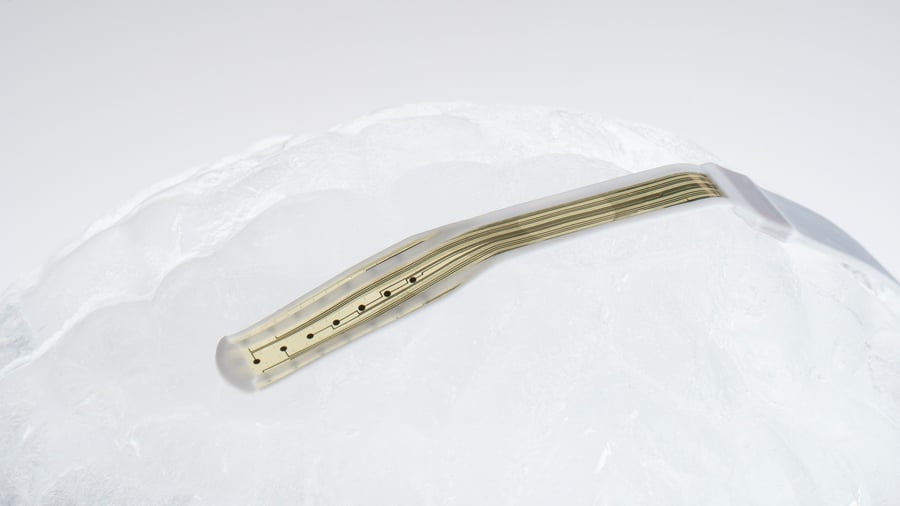
Carolina Aguilar, the founder and co-founder of the Spanish startup Inbrain, frequently adjusts the skullcap of a white Styrofoam head in her office, treating it as if it were a common office accessory. The company's focus is on implanting thin, flexible chips beneath a patient's ear, connected to a pulse generator by cable. This generator, akin to a USB stick, is powered wirelessly through the skullcap.
Although it may seem unusual, Aguilar emphasizes the significant potential of this technology in medicine. The chips analyze neural signals and translate them into computer-controlled actions, as seen in trials where paralyzed patients can operate a computer mouse. Inbrain aims to treat widespread diseases, including Parkinson's and dementia, affecting over 50 conditions in total.
The market potential, according to Morgan Stanley, could reach $400 billion in the United States alone. A global race is underway to secure a leadership position in this crucial technology, with Inbrain leading Europe in this field. The company ranks among the top ten BCI startups worldwide on the data platform Dealroom, alongside tech giants such as Elon Musk's Neuralink.
Major players like Microsoft and German pharmaceutical company Merck have partnered with Inbrain. The startup's advantage lies in its use of graphene, a carbon material discovered in 2004, which is highly flexible, harder than steel, and highly conductive. Graphene enables these chips to remain in the body for extended periods, fit more electrodes in a smaller space, and provide highly precise treatment.
Aguilar explains, "The graphene chips can stay longer in the body, accommodate many more electrodes in tiny space, and thus act much more precisely." These additional electrodes allow for the reading of more signals from the nervous system, providing a detailed picture of the body's complex processes.
Written by urgent.news from Handelsblatt's reporting — not their text. Machine-written — may contain errors; check the original before relying on it.