Madrid housing protests fuel speculation over Spanish election
The demonstrations were sparked by last week’s eviction of an 87-year-old disabled woman
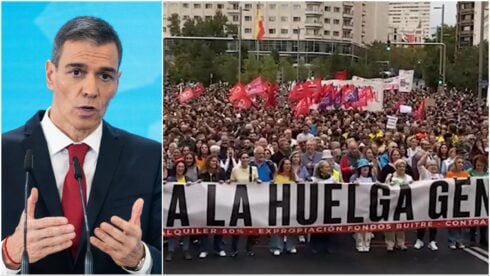
Nearly 500,000 people marched in Madrid on Saturday, a day after Spanish parliament rejected two government decrees designed to enhance tenants' protections. Organizers reported around 500,000 attendees, while authorities estimated roughly 70,000 participants. Protesters in the bustling Puerta del Sol square carried signs reading "General strike" and chanted "Down with rentierism." The demonstration remained peaceful, under a visible police presence.
The Tenants Union, coordinating the protests, stated that there's a "irreparable disconnect between what the people want and what the parties vote for." They demand a 50% cut in rents, open-ended contracts, and the expropriation of homes from "vulture funds." Tenants Union spokesperson Valeria Racu mentioned there's no set date for the general strike, which they aim to be "historic."
Tensions escalated in Valencia, where protesters marched towards the Palau de les Arts Reina Sofía, the venue for the 2026 property investment conference. Some demonstrators clashed with police, who responded with rubber bullets and tear gas. Valencia's Tenants Union and Housing Union organized the protest, with former CS leader Albert Rivera among the speakers.
Other cities, like Donostia and Cádiz, also saw demonstrations. In Donostia, the protest stretched into its second consecutive day, backed by the LAB union and Tenants Union. In Cádiz, where the average rent is around 900 euros and home purchases cost an average of 200,000 euros, the march concluded at City Hall with a manifesto reading.
Barcelona, Luana Rocha, a camp resident, told TVE that the goal is to remain indefinitely, expressing intentions for a general strike. Teruel will join the protests on Sunday with a demonstration at 18:30, starting from Plaza del Torico.
Following the rejection of the housing decrees, Congress has entered a period of reflection on calling early elections, a decision solely in Prime Minister Pedro Sánchez's hands. The opposition calls for elections, and some PSOE leaders believe it's necessary as well. Junts, the opposition party, urges the PSOE to negotiate, calling the decrees "a poorly drafted law." The PSOE counters that the texts incorporate Junts' proposals, but opposition figures argue that more is needed.
Written by urgent.news from Euronews's reporting — not their text. Machine-written — may contain errors; check the original before relying on it.
This story
This is one outlet's version. Read the fullest account.