India's resilience built over past decade, structural autonomy key to future: Nirmala Sitharaman
Union Finance Minister Nirmala Sitharaman on Saturday said India's economic resilience has been built consciously over the past decade through fiscal prudence, infrastructure creation, banking reforms, last-mile delivery and sustained reforms, while stressing the need for greater strategic autonomy and preparedness to deal with emerging global challenges.
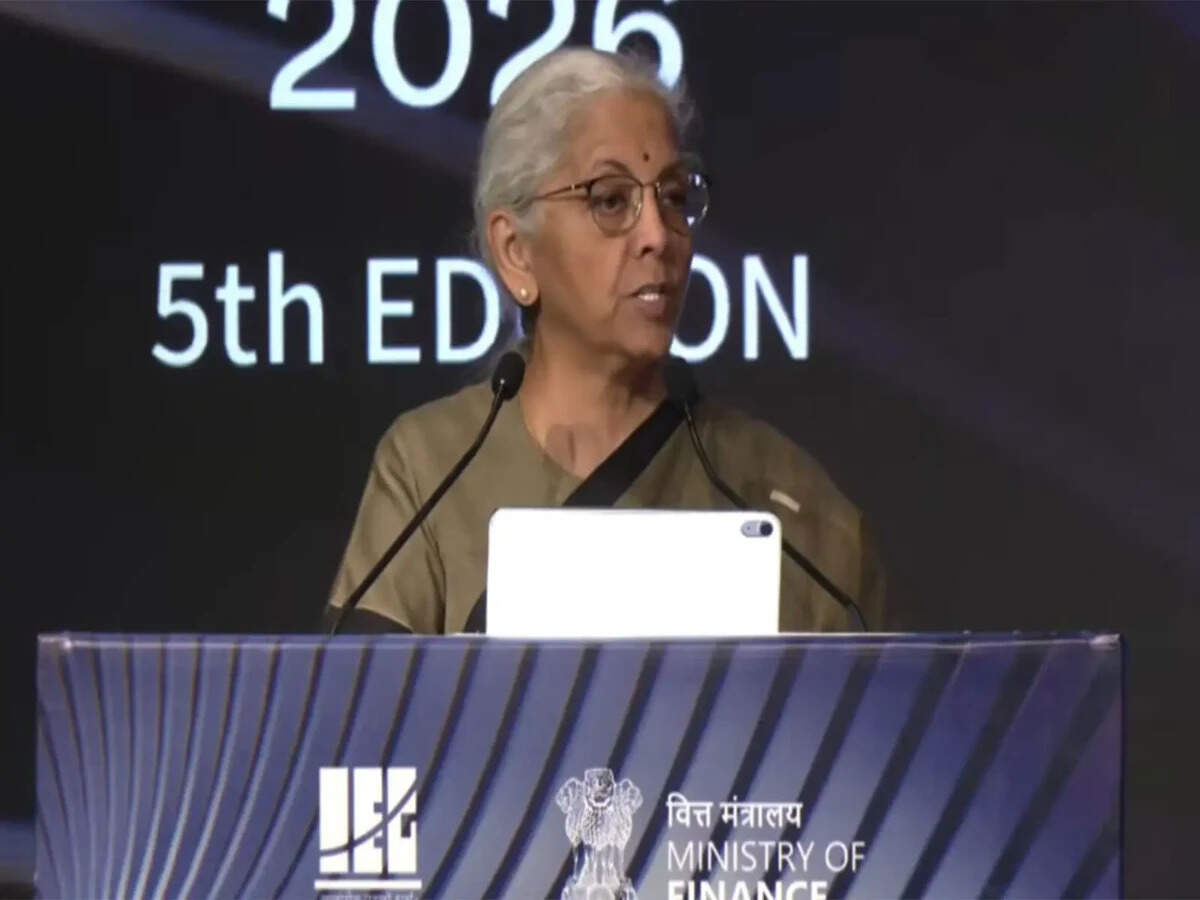
India's economic resilience has been deliberately constructed over the past decade, according to Union Finance Minister Nirmala Sitharaman. Speaking at the 5th Kautilya Economic Conclave, she emphasized the importance of structural autonomy and preparedness to confront future global challenges.
Resilience, Sitharaman explained, means being able to withstand shocks without deviating from the growth trajectory and retaining enough policy flexibility to respond to unforeseen disruptions. She pointed out that this resilience is evident in the absence of several adverse outcomes that could have occurred, such as an inflationary spiral, fuel shortages at petrol pumps, banking distress, and the need for forced fiscal corrections.
Citing Kautilya's Arthashastra, Sitharaman highlighted the importance of strong public finances as the foundation for a country's strategic autonomy. She noted that sound public accounts enable the state to act decisively when economic conditions deteriorate. India has successfully navigated the shocks of the past four years while maintaining its fundamentals, with real GDP growth at 7.8% in Q1 FY27, inflation at 4.82% in August 2026, a current account deficit of 0.5% of GDP in Q1, and foreign exchange reserves of approximately USD 766 billion.
The minister outlined the key pillars of India's resilience since 2014, including the Jan Dhan-Aadhaar-Mobile integration, Direct Benefit Transfer, and various welfare programs like PM Awas Yojana, Swachh Bharat, Ujjwala, Ayushman Bharat, and food security initiatives. She also mentioned the substantial loan disbursements under PM MUDRA Yojana, banking sector reforms, and a 18.8% increase in non-food credit from August 2025.
Infrastructure development has been a critical aspect of India's resilience strategy, with the finance minister stating that capital expenditure for FY27 is projected at Rs 12.22 lakh crore. The national highway network has expanded by around 61%, and the number of operational airports has more than doubled since 2014.
Looking to the future, Sitharaman emphasized strategic resource security, open and predictable global trade, skill development, and increased private investment in research and innovation as key priorities. She stressed that India must reduce its dependence on single sources of critical minerals, rare earths, and other resources by implementing initiatives such as the National Critical Mineral Mission, Rare Earth Corridors, India Semiconductor Mission 2.0, and the development of small modular reactors.
Sitharaman reiterated that resilience is an ongoing process, and India must continue to fortify its foundations to achieve higher productivity, better employment, and wider opportunities in the journey towards Viksit Bharat by 2047.
Written by urgent.news from The Economic Times - Economy's reporting — not their text. Machine-written — may contain errors; check the original before relying on it.