India’s Electoral Crisis Now Tests How Far Supreme Court Is Willing To Go
By K Raveendran India’s electoral system has entered a territory where the argument is no longer merely about errors in voters’ lists. The deeper question is whether citizens can continue to repose confidence in the constitutional institution entrusted with deciding who gets on those lists, how names are removed and whether the rules governing that […] The article India’s Electoral Crisis Now…
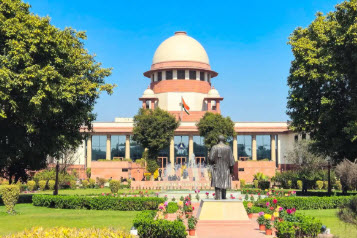
India's electoral system is grappling with a crisis that extends beyond mere errors in voters' lists. The central question now revolves around the trust citizens can place in the constitutional body responsible for determining who is included in these lists, how names are removed, and whether the rules governing this process are being implemented fairly. Allegations of fraud against the Election Commission are gaining ground, despite the Commission's own statements to the contrary.
The Special Intensive Revision (SIR) of electoral rolls has further complicated matters, making it increasingly hard to dismiss the controversy as a routine political dispute. Key issues include the exclusions from electoral rolls, the procedures used to identify and restore eligible voters, and the disagreements within the three-member Commission. These disputes challenge the very credibility of the institution.
The Supreme Court's ruling in May that the Election Commission had the authority to conduct the Bihar SIR under Article 324 and the Representation of the People Act does not imply that the revision process itself is unconstitutional. However, the focus has shifted to how this authority has been exercised, the safeguards protecting exclusions, and whether the decisions attributed to the Commission were reached through the necessary collegial process for a multi-member constitutional body.
The Supreme Court has agreed to hear a petition challenging the actions of Chief Election Commissioner Gyanesh Kumar, including allegations that Election Commissioners Sukhbir Singh Sandhu and Vivek Joshi objected to decisions related to the electoral-roll revision. These claims raise a fundamental constitutional question regarding the collective exercise of the Commission's authority versus the decisions of a single office-holder. This issue transcends electoral-roll management and delves into the heart of democratic legitimacy.
In times like these, democracy relies on institutions that can command respect even from those who lose. While Parliament, the government, the opposition, and the Election Commission may all have competing interpretations of the system under challenge, the judiciary remains the only institution capable of providing an authoritative resolution. The five-member commission led by former Supreme Court judge Madan B Lokur may shed light on the facts, but its findings will not carry the weight of a Supreme Court judgment.
The core responsibility lies with the Supreme Court. It must grapple with the broader question of electoral legitimacy, encompassing three critical stages: who appoints the referees (Chief Election Commissioners), how the referees make decisions, and who remains entitled to participate in the election they supervise. These disputes touch upon the very foundations of democratic governance.
The streets are already witnessing the political fallout. Youth-led protests demanding the Chief Election Commissioner's resignation have erupted, with opposition organizations and student groups joining the demonstrations. Hundreds have been detained in Delhi, and further mobilization is imminent. While these protests should not be equated with proof of the allegations, they underscore the growing public anger and the erosion of trust in the electoral process.
The constitutional system still offers avenues to resolve this controversy. The Supreme Court can request records, scrutinize whether statutory procedures were followed, determine the legal implications of disagreements within the Commission, safeguard eligible voters against wrongful exclusion, and prescribe remedies where violations are proven.
However, the true test lies in applying judicial review rigorously, without deviating from the Constitution's intended framework. The danger, however, is in allowing the controversy to undermine the very democracy the Constitution was designed to protect.
Written by urgent.news from Arabian Post's reporting — not their text. Machine-written — may contain errors; check the original before relying on it.