High school students in Paris' deprived suburbs spark national protest movement
While France ranks in the middle of OECD countries for spending on education, the average expenditure per secondary school student has remained little changed over the last decade.
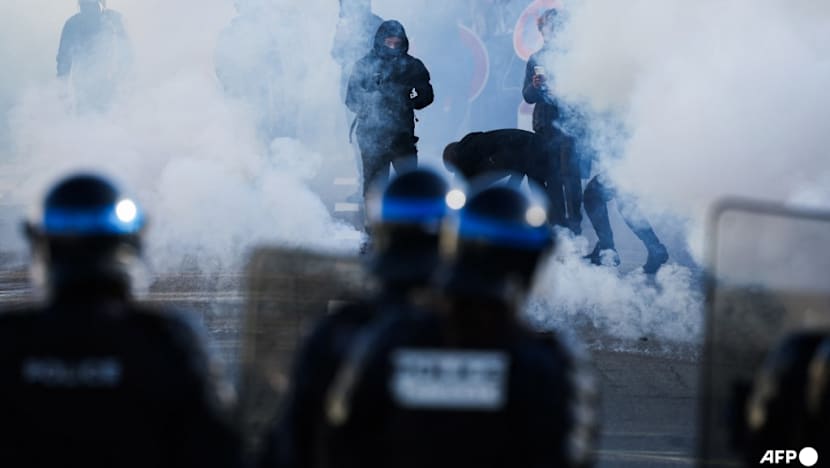
France, despite ranking in the middle of OECD countries for education spending, has seen a rise in protests from high school students in impoverished suburbs. These students, who aspire to become teachers themselves, are demanding better conditions in their dilapidated schools, such as overcrowded classrooms, teacher shortages, and a lack of essential resources like drinking water. The protests have spread from Parisian suburbs to other French towns like Marseille, Strasbourg, Tours, and Lille.
At a school in Aubervilliers, a suburb north of Paris, students like Maisa protested because they took an exam without a French teacher. Police responded with tear gas and rubber bullets, leading to arrests and injuries. Interior Minister Laurent Nunez condemned the violence and called for order. Education Minister Edouard Geffray defended the below-inflation budget increase and attributed the budget cuts to population decline.
The protests highlight the way France's marginalized urban neighborhoods are increasingly influencing national politics, according to political scientist Ulysse Rabate. The nationwide demonstrations have become a political flashpoint at a sensitive moment for the government, which recently announced unpopular spending cuts in its 2027 budget. The education budget is set to increase by a mere 1.7% to €65.53 billion, excluding teacher pensions.
Education union representatives in Seine-Saint-Denis complain about unsanitary school conditions and chronic staff shortages, including nurses and social workers. Two-thirds of high schools in the department have unfilled teacher positions, according to a union survey. In Pantin, a town near Paris, teacher Dilan Roche joined her students in protesting outside their school, demanding an end to overcrowded classes, lack of nurses, and social workers.
The protests began last week and are a response to the government's deep cuts to the education budget.
Written by urgent.news from Channel News Asia's reporting — not their text. Machine-written — may contain errors; check the original before relying on it.