Dagligvaregigantens milliardgebyrer: – Fremstår oppsiktsvekkende
Professor peker på ett sentralt spørsmål som kan avgjøre om Norgesgruppen, Rema 1000 og Coop får…
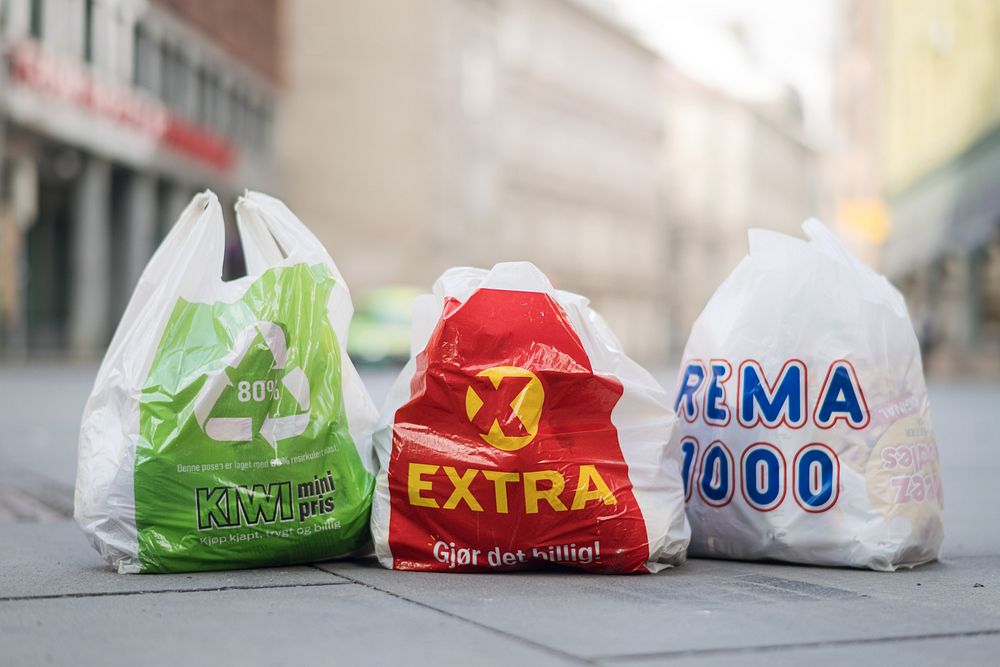
36 days in the Gulating Lagmannsrett, from October 12 to December 14, were dedicated to determining whether the dominance of the three large chains in the grocery industry was hindered by an agreement among them to monitor each other's prices. Since 2012, a "full opening" had been in place, allowing price checkers to spend up to 20 hours per week in each store.
Norgesgruppen, the largest retailer with subsidiaries such as Kiwi, Meny, Joker, and Spar, as well as the wholesaler Asko supplying goods to all chains, explicitly denied that this arrangement harmed competition. Both Rema 1000 and Coop assert that the agreement indeed damaged competition.
The Competition Authority contends that the collaboration could have led to higher food prices over a year span, and thus seeks to impose a total of 4.9 billion kroner in fines. Jusprofessor Ronny Gjendemsjø of the University of Bergen has closely followed the case since the investigation began in 2018 and expects the court to accept that a general economic theory can establish potential competition damage.
To understand Gjendemsjø's position, one must know what the Competition Authority actually set out to prove. They firmly believe that the agreement made companies more secure about where their competitors were located. If Kiwi lowered prices on a product, Rema and Coop would quickly follow suit. This reduced the profit margin of being the cheapest.
Conversely, if Kiwi tested a higher price for Grandiosa, they could quickly check if Rema and Coop would comply. If the competitors did not do so, the downside was small, as Kiwi could quickly lower prices again. The uncertainty was thus diminished. The incentive to cut prices was weakened, while the incentive to raise prices was strengthened.
This is what the chains dispute. They argue that they would have continued pursuing extensive price comparisons even without the agreement. Moreover, there is no evidence of weakened competition when looking at the statistics, the chains point out. To bolster their defense, the chains presented new analyses of price development in the relevant period (2011-2018) in advance of the trial.
The conclusion of the companies' investigations shows that Kiwi's profitability fell and that the chain had frequent price reductions in 2017-2018 - the years when price erosion was most intense. Rema 1000 examined the 182 pieces of evidence laid out in the case and the products mentioned. Overall, the margins for these products were negative in the period, so there is no reason to talk about pressure to raise prices, the chains maintain.
To strengthen their own case, the chains submitted new analyses of price development in the current period, i.e., the years 2011-2018, in advance of the trial. According to them, these analyses demonstrate that Kiwi's profitability fell, and the chain had frequent price cuts in 2017-2018 - the years when price erosion was most severe.
Rema 1000 found that the margins for these products were negative in this period, so there was no reason to talk about increased pressure to raise prices. Coop also conducted their own assessments, which indicate that competition was harmed. These analyses have little evidentiary value, the government argues. The government's legal counsel writes in their final statement that it is unnecessary to prove that competition was actually harmed to claim that collusion is unlawful.
It is enough to prove potential damage. The government's counsel cites the Competition Prosecutor, who points out that damage can include unexecuted price cuts and cannot be seen in historical price data. Gjendemsjø emphasizes that it would be problematic to grant the chains' argument that the cost of proving competition limitation is low if the only evidence available is a general theoretical approach.
He stresses that it should be no problem to intervene against collusion if economic theory suggests that competition can be weakened. However, Gjendemsjø notes that it would be striking to grant such high fines based on nothing more than a general theoretical approach.
Written by urgent.news from E24 Norway's reporting — not their text. Machine-written — may contain errors; check the original before relying on it.