Could we ever create artificial gravity on a spaceship?
Microgravity poses severe health risks for astronauts. But could there be a solution?
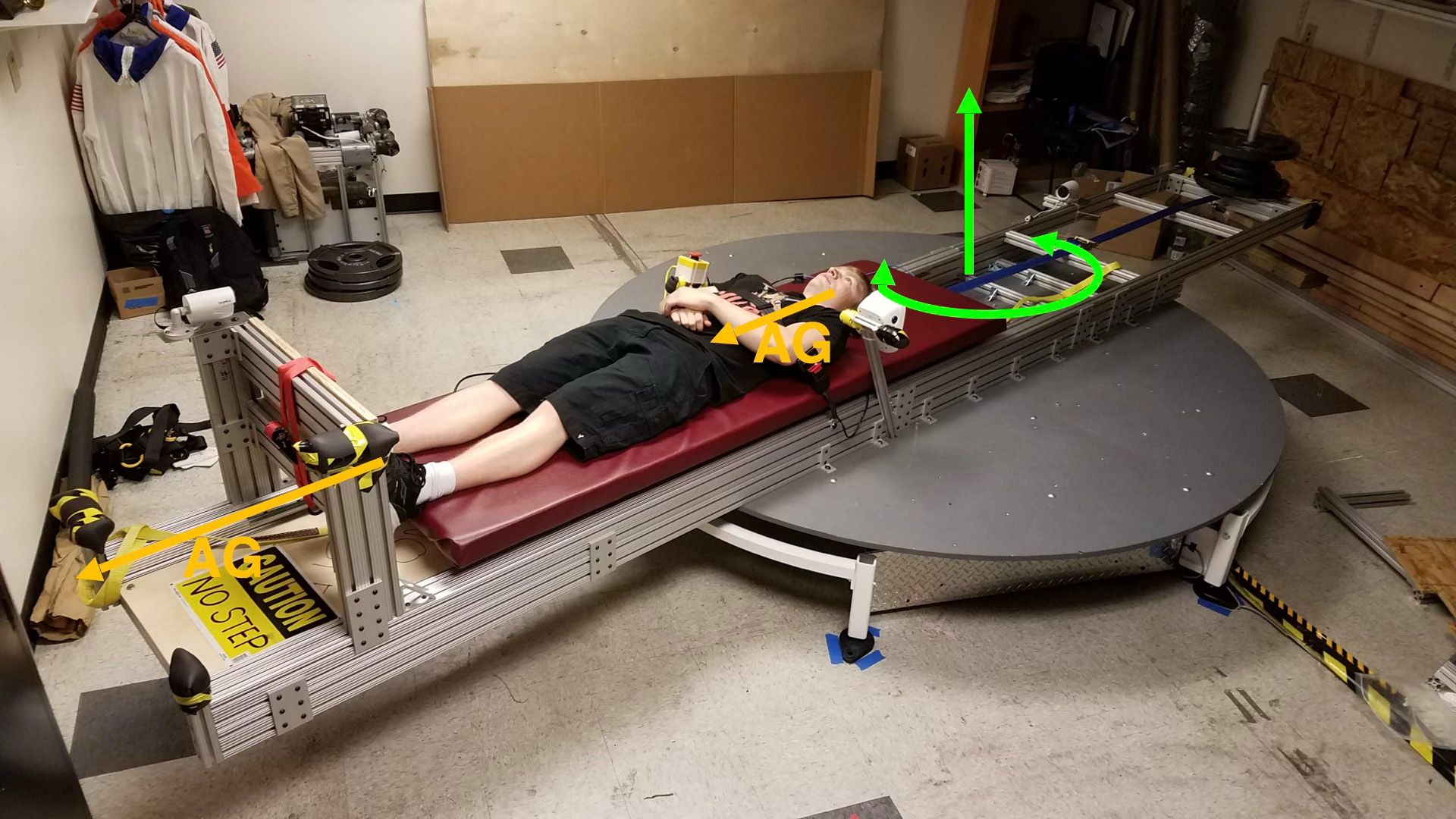
Extended stays in microgravity pose significant health risks for astronauts, affecting vision, bones, muscles and more. One potential solution is artificial gravity, akin to the rotating ring in the 1968 film "2001: A Space Odyssey." However, its feasibility remains uncertain.
Torin Clark, an aerospace engineering professor, believes artificial gravity could be achievable in the near future from a technical standpoint. Yet, there have been intermittent efforts to create such technology, only to see projects canceled and reemerge.
The Centrifuge Accommodation Module, a proposed 8.2-foot-wide centrifuge for the International Space Station (ISS), was canceled in 2005 due to budget constraints. Despite budgetary concerns, there is widespread agreement on the benefits of artificial gravity. The main challenge lies in implementation, including determining the necessary gravity level, device size, duration of use, and whether continuous or intermittent gravity is more effective.
Three approaches for creating artificial gravity are being considered: a rotating ring, a short-radius centrifuge, and linear acceleration via spacecraft propulsion. The rotating ring, though technologically feasible, is impractically large and requires multiple spacecraft for assembly.
The short-radius centrifuge, a more feasible option, involves a tube with a 6-10 foot radius that spins to generate gravity. Astronauts would use it in short daily sessions, similar to exercising on a treadmill. However, this method can induce the Coriolis effect, causing a sensation of tilting or tumbling that may lead to motion sickness. Training can help astronauts acclimate to this sensation.
Linear acceleration, where spacecraft continuously accelerates to push occupants against the floor, is another approach. However, this requires advanced propulsion technology, which may not yet be available.
While artificial gravity could potentially prevent the harmful effects of prolonged microgravity exposure, such as bone and muscle loss, blood clots, and visual issues, the exact amount of gravity needed and the duration of use remain unclear. Studies suggest that 30 minutes daily in a centrifuge may help, but longer durations and higher gravity levels might be more beneficial. However, these answers require extensive, costly research.
Written by urgent.news from Live Science's reporting — not their text. Machine-written — may contain errors; check the original before relying on it.