APOD: 2026 October 3 – Selfie at Vera Rubin Ridge
APOD Science APOD APOD: 2026 October 3 –… Today’s APOD Archive Submissions Index Search Calendar RSS Education About Discuss APOD Astronomy Picture of the Day Discover the cosmos! Each day a different image or photograph of our fascinating universe is featured, along with a brief explanation written by a professional astronomer. Selfie at Vera […]
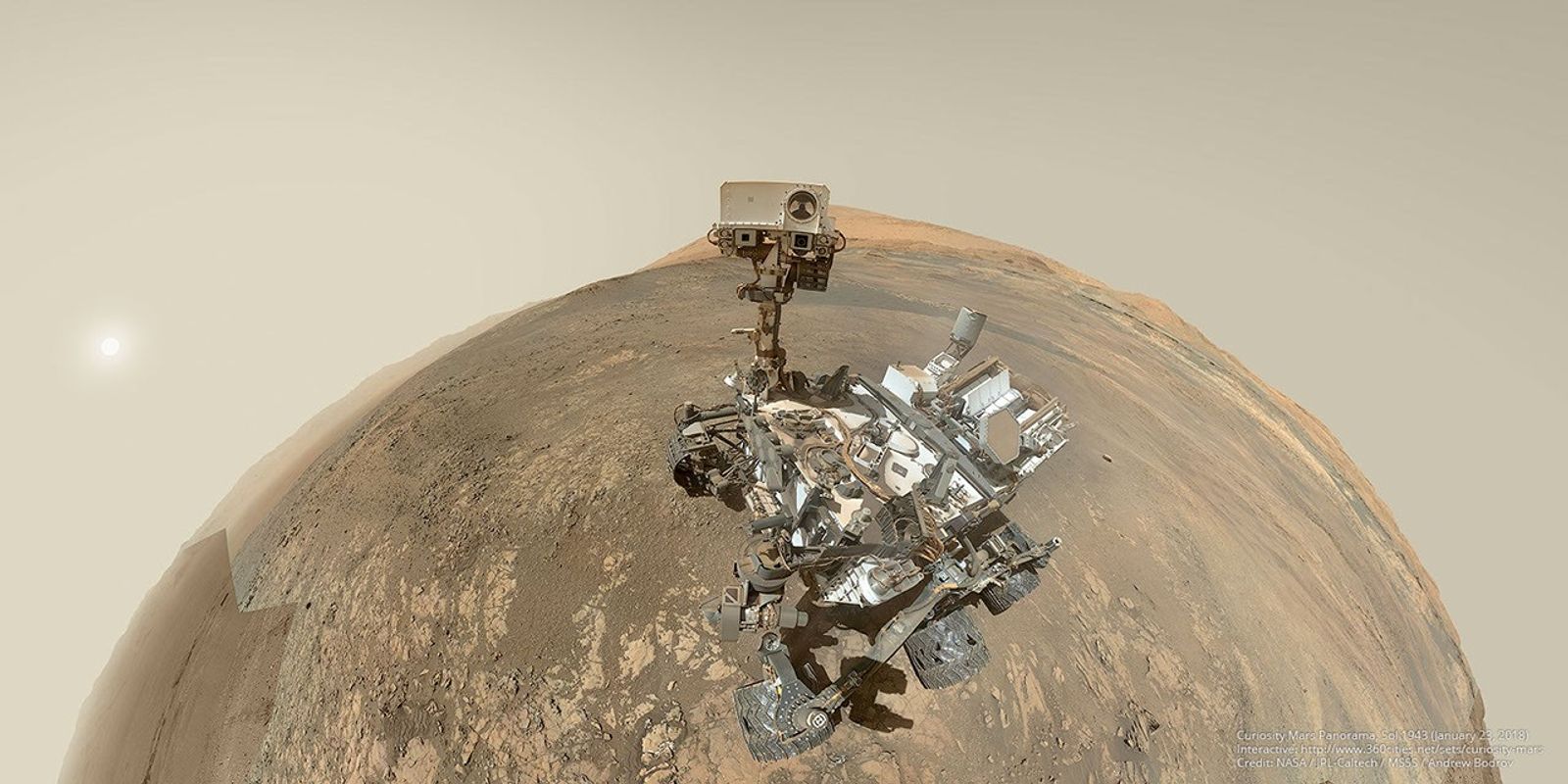
On sol 1943 of its Mars exploration, the Curiosity Rover captured a selfie at the south rim of Vera Rubin Ridge. A sol, or Martian solar day, is approximately 40 minutes longer than an Earth day. This particular snapshot, sol 1943, aligns with the Earth date of January 23, 2018. The image is a mosaicked panorama, composed of 61 individual exposures taken by the Curiosity's Mars Hand Lens Imager (MAHLI).
The rover's arm was absent in frames used for the final image, while the extended background was captured by the rover's Mastcam on sol 1903. Above the Mastcam, on the rover's mast, the ChemCam housing can be seen, which blocks the view of the distant 5 kilometer high Mount Sharp peak. On August 26, 2026, Curiosity had gained a total elevation of 1 kilometer in its ascent from the Gale Crater floor to Mount Sharp.
Written by urgent.news from NASA's reporting — not their text. Machine-written — may contain errors; check the original before relying on it.
This story
This is one outlet's version. Read the fullest account.
- APOD: 2026 October 3 – Selfie at Vera Rubin Ridge science.nasa.gov