What AI’s biggest CEOs really want from Washington
On Tuesday, President Donald Trump brought many of the most powerful people in AI to the White House, including Nvidia CEO Jensen Huang, Meta CEO Mark Zuckerberg, Google CEO Sundar Pichai, and Anthropic CEO Dario Amodei. At a high level, most want some version of the same thing: more data center capacity, faster permitting, more federal spending on AI , and a light (or nonexistent) regulatory…
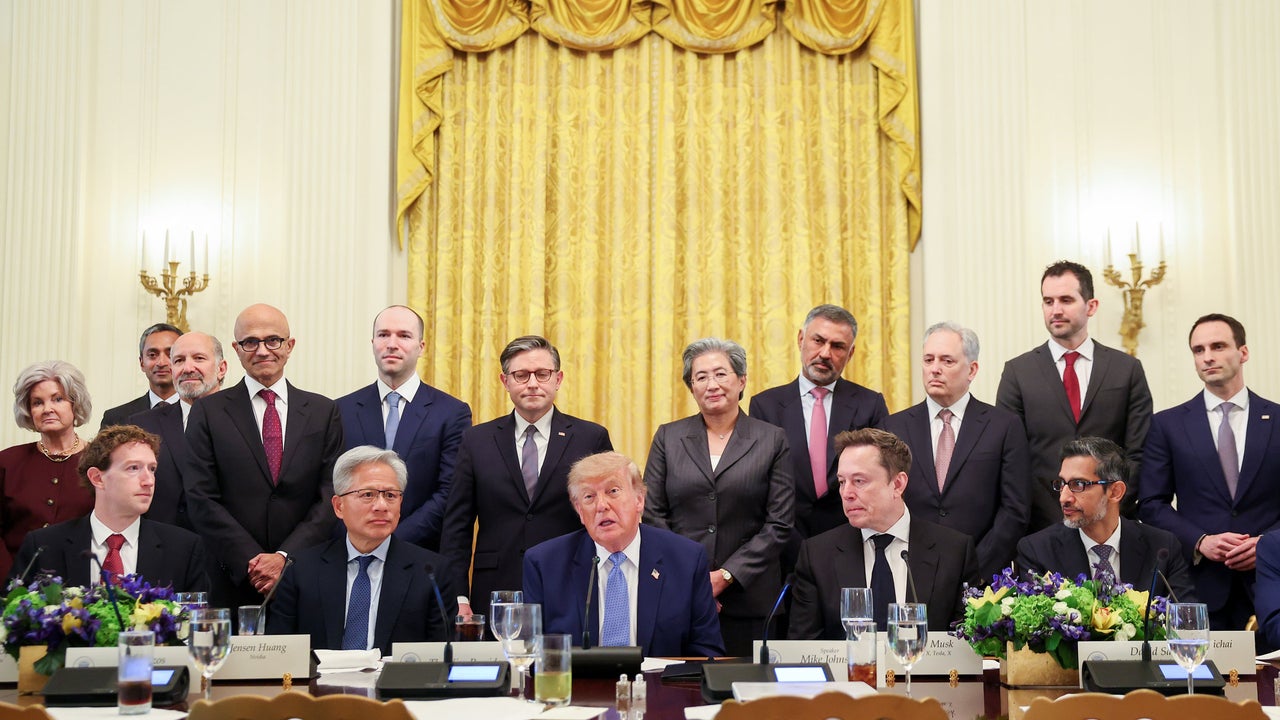
On Tuesday, President Donald Trump convened a gathering at the White House with several top AI executives, including Nvidia CEO Jensen Huang, Meta CEO Mark Zuckerberg, Google CEO Sundar Pichai, and Anthropic CEO Dario Amodei. Their primary objective was to discuss various aspects of AI, with a common desire for increased data center capacity, faster permitting, greater federal spending on AI, and minimal regulatory interference.
However, their distinct business models led to different concerns and priorities regarding specific details.
Anthropic, one of the companies in attendance, advocated for stronger government oversight of advanced AI systems. Their proposed "regulatory ladder" aimed to make rules progressively stricter as AI capabilities increased, eventually incorporating external testing and incident reporting. Moreover, Anthropic's CEO, Dario Amodei, had been embroiled in disputes with the Trump administration over the Pentagon's utilization of Anthropic's AI, Claude.
Despite initial setbacks, their relationship appears to be improving, as Trump hosted Amodei for a private dinner prior to the White House meeting.
Nvidia, a leading chipmaker, was primarily concerned with ensuring that government actions didn't impede the demand for more chips in the AI industry. CEO Jensen Huang advocated for focusing on real-world harms rather than theoretical risks. Additionally, Nvidia had significant financial implications if the U.S. continued to restrict exports of advanced AI chips to China.
This restriction cost the company $4.5 billion in charges related to H200 chips it couldn't export in 2025. Furthermore, Nvidia expressed concern about losing market share to competitors due to the chip export limitations.
Meta, an influential player in open-source AI, was focused on protecting its interest in distinguishing between closed and open AI models. Mark Zuckerberg argued that regulations limiting access to open-source models could create a dominant few AI players and decrease the global influence of American technology advancements. Meta also cautioned against rules that would limit the data developers could use for training or restrict model distillation, as those restrictions could place American AI systems at a disadvantage against Chinese competitors.
Google, a formidable force across various sectors of AI, emphasized the need for a unified federal rulebook for AI. The company emphasized maintaining access to data for model training, increasing energy supply, streamlining federal AI procurement, and avoiding export controls that could exclude American companies from foreign markets.
Google's CEO, Sundar Pichai, emphasized addressing risks without stifling innovation and avoiding fragmented regulatory regimes, as the company is involved in nearly every aspect of AI, from building frontier models to operating data centers and selling AI tools to businesses and governments.
Lastly, OpenAI, another AI powerhouse, advocated for federal safety rules specifically targeting the most powerful AI systems. OpenAI proposed mandatory, capability-based national AI safety requirements, including common testing standards, independent assessments, and mandatory reporting of AI-related security breaches. They argued that these stringent measures should only apply to the few companies developing the most advanced AI systems, rather than smaller developers or startups.
Written by urgent.news from Fast Company's reporting — not their text. Machine-written — may contain errors; check the original before relying on it.