Watching Cancer Proteins in Real Time, with Help from Rare Earth Elements
A long-duration single-molecule imaging platform from the Broad Institute and MIT has revealed unexpected stability in homodimers of HER3, one of the most enigmatic members of the ErbB receptor family. The post Watching Cancer Proteins in Real Time, with Help from Rare Earth Elements appeared first on GEN - Genetic Engineering and Biotechnology News .
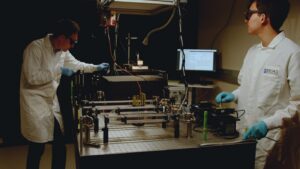
A groundbreaking research platform from the Broad Institute and MIT has unveiled unexpected stability in HER3 homodimers, a crucial component of the ErbB receptor family. Published in Cell, the study demonstrates that wild-type HER3 forms stable homodimers, whereas cancer mutations destabilize these pairings. This discovery could potentially pave the way for novel cancer therapies.
The key to this breakthrough was the use of a unique upconverting nanoparticle (UCNP) probe, doped with heavy rare earth elements, which does not photobleach during imaging. The probe allows researchers to track EGFR, HER2, and HER3 at the single-molecule level on live cells simultaneously, in three colors, with 100-millisecond resolution and the ability to run for over 16 minutes straight.
The stable HER3 homodimers, which form a signaling-inactive pool, sequester HER3 and limit its availability to pair with other receptors, potentially impeding cancer signaling. Cancer mutations, however, exhibit opposite effects. For instance, EGFR mutations like the exon-19 deletion make EGFR homodimers more stable, driving signaling and correlating with clinical aggressiveness.
In contrast, HER3 mutations destabilize the homodimers, potentially freeing HER3 to form signaling-active heterodimers. HER2 mutations only modestly enhance the stability of its homodimers, aligning with the clinic where HER2 cancers are typically driven by gene amplification. The research team bought the heavy rare earth elements, ytterbium, erbium, and thulium, used in the UCNP probes, in vials from a U.S. distributor, similar to how other labs purchase antibodies.
The supply chain for these materials is highly concentrated, with China controlling 85% of global rare-earth oxide production, including 99% of dysprosium oxide and terbium oxide.
Written by urgent.news from GEN Biotechnology's reporting — not their text. Machine-written — may contain errors; check the original before relying on it.