US blast simulation targets China’s alleged secret nuclear testing
The US has conducted a non-nuclear underground experiment to enhance its ability to detect low-yield nuclear explosions that it explicitly linked with a test that Washington suspects China carried out in 2020 – an accusation Beijing denies. The US Department of Energy announced on Wednesday that the National Nuclear Security Administration (NNSA) conducted a “subsurface, non-nuclear chemical…
The US Department of Energy carried out a non-nuclear underground experiment at the Nevada National Security Site to improve its capacity to detect low-yield nuclear explosions, specifically those allegedly conducted by China. This exercise, conducted by the National Nuclear Security Administration (NNSA), aimed to enhance the United States' ability to discern such explosions, particularly those that may employ a decoupled detonation technique to reduce seismic signals detectable by nuclear sensors.
The experiment did not involve any actual nuclear detonations but instead gathered data to validate models and algorithms vital to the US's nuclear detection capabilities. The announcement highlighted the importance of accurately identifying the signature of underground detonations, especially for "decoupled" explosions, which pose a challenge to current detection systems.
Despite Washington's allegations that Beijing covertly tested a nuclear weapon in June 2020 at the Lop Nur site in northwest China, China vehemently denied the accusation, maintaining compliance with the Comprehensive Nuclear-Test-Ban Treaty (CTBT). This treaty, signed by both nations in 1996 but not yet ratified, prohibits nuclear explosions in all environments.
The US government's accusations have been met with skepticism, as international monitoring bodies, including the CTBTO, have stated that available seismic data from the suspected date of the test do not conclusively establish the cause. The US has expressed genuine concerns over potential violations by both Russia and China of the CTBT, emphasizing the importance of advanced detection capabilities to counteract such breaches.
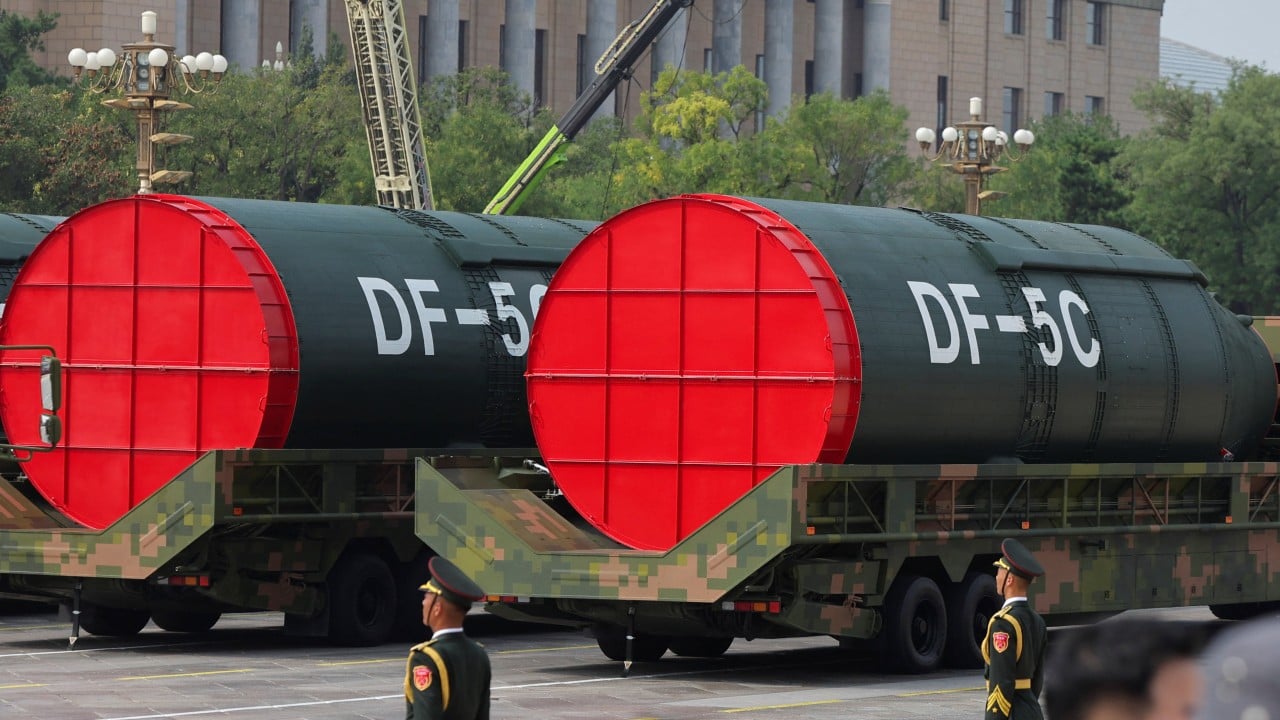
These developments come amid China's reported acceleration of its nuclear stockpile, estimated to reach over 1,000 warheads by 2030 according to the Pentagon's China military power report. Meanwhile, China's current nuclear arsenal is believed to consist of up to 620 warheads, as per the SIPRI report. Experts suggest that enhanced US detection capabilities could complicate China's nuclear testing efforts, potentially impacting its strategy for nuclear warhead modernization and electronic disruption technologies.
Written by urgent.news from South China Morning Post's reporting — not their text. Machine-written — may contain errors; check the original before relying on it.