This Spectacular Star Field Hides Brown Dwarfs That Never Ignite
The James Webb Space Telescope does it again The post This Spectacular Star Field Hides Brown Dwarfs That Never Ignite appeared first on Nautilus .
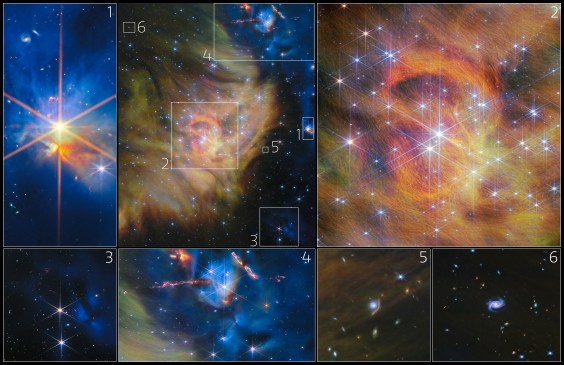
The James Webb Space Telescope (JWST) has captured an expansive image of a region of space, known as IC 348, located 1,000 light-years away in the Perseus constellation. This image, spanning approximately 30,866 x 38,204 pixels, reveals a dazzling display of star formations amidst a sea of dust. While star-hunting is the primary objective, the telescope also seeks to identify brown dwarfs, celestial objects that don't quite reach the status of a full-fledged star.
The NIRCam (Near-Infrared Camera) on JWST has identified brown dwarfs with a mass equivalent to two Jupiters, which are significantly lighter than previously theorized. These objects, less than 0.2 percent of the sun's mass, glow faintly compared to their bright stellar neighbors. These brown dwarfs, which never ignite, present an intriguing opportunity to refine our understanding of the star formation process. Remarkably, one of these super-light brown dwarfs exhibits signs of a developing disk around it.
The image also showcases a cluster of protostars, still gathering mass and occasionally emitting jets of gas and dust, known as Herbig-Haro objects. These are visible as bright, linear bars of color in the image, offering a unique glimpse into the interstellar world that the JWST can reveal.
Written by urgent.news from Nautilus's reporting — not their text. Machine-written — may contain errors; check the original before relying on it.