The Teachers Of Today Should Adapt To New-Generation Students Rather Than Dictate To Them: Adopting Appropriate Teaching-Learning Methods Is Inevitable
Backdrop: Education has always been a dynamic process that evolves with society. Each generation of students brings new aspirations, learning styles, values, technological exposure, and expectations. While the fundamental purpose of education remains unchanged- to develop knowledgeable, empowered, employable, ethical, and responsible citizens- the methods of achieving this objective must…
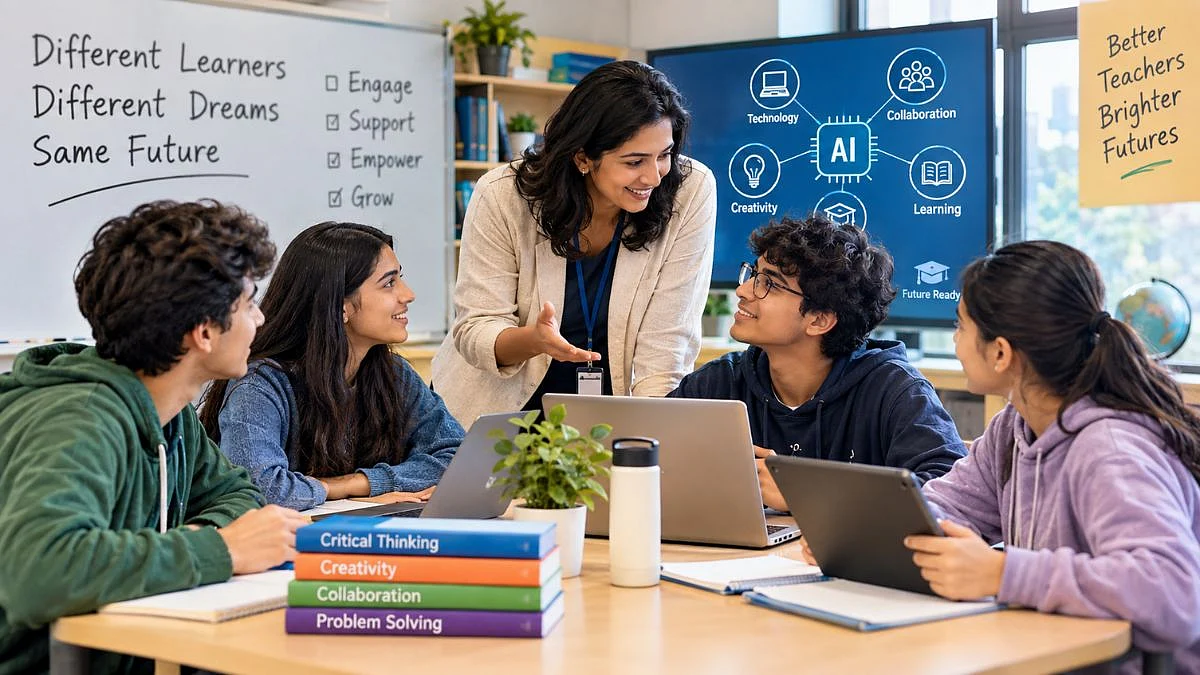
The educational landscape is constantly evolving to accommodate the needs of new generations of learners. Generation Z and Generation Alpha, the students entering higher education today, have grown up in a world saturated with technology. They rely on instant access to information through smartphones, social media, artificial intelligence, and other digital platforms.
This has fundamentally transformed the role of teachers, who must now shift from being the primary source of knowledge to becoming facilitators, mentors, coaches, and guides.
While some may lament the apparent shortcomings of today's students, such as shorter attention spans and perceived lack of discipline, it is crucial to recognize their strengths. They are technologically savvy, creative, quick learners, adept at multitasking, and willing to challenge conventional thinking. Rather than expecting students to learn in the same manner as previous generations, educators should strive to create learning experiences that foster inquiry, exploration, collaboration, creativity, and problem-solving.
Traditional lecture methods, while valuable for introducing concepts, often fail to maintain students' attention in modern classrooms. Instead, active learning strategies that engage students in discussions, case studies, simulations, projects, debates, and role plays can transform them from passive recipients to active participants in the learning process.
Teachers must also appreciate the importance of building meaningful relationships with their students, who respond positively to empathetic, respectful, and supportive educators.
Technology has become an essential part of education and should be integrated into the teaching-learning process rather than viewed as a distraction. Learning Management Systems, online quizzes, virtual laboratories, AI-assisted learning tools, collaborative platforms, and digital simulations can enhance student engagement. The goal is to empower teachers with technology to create a more effective and engaging learning environment.
Moreover, recognizing the diversity among learners is crucial. Today's classrooms comprise students with varying abilities, backgrounds, learning preferences, languages, and emotional needs. Teachers should adopt learner-centered pedagogies that accommodate different learning styles, such as Universal Design for Learning (UDL), differentiated instruction, and inclusive education.
Finally, the emotional well-being of students has gained significant attention. Teachers must develop emotional intelligence alongside subject expertise and create a supportive learning environment. This can include encouraging classroom participation, providing constructive feedback, fostering a psychologically safe atmosphere, and identifying students who may require additional support.
The recent introduction of the National Education Policy (NEP) 2020 in India further emphasizes the need for pedagogical transformation, advocating for competency-based education, multidisciplinary learning, flexibility, and experiential learning.
Written by urgent.news from Free Press Journal's reporting — not their text. Machine-written — may contain errors; check the original before relying on it.