The Court’s Warning On Hidden Plastics
The Madras High Court has taken a commendably forward-looking view of food safety by refusing to recall its order that requires plastic/PET water bottles as well as salt and sugar packets to carry a legible warning on the likely presence of micro- and nano-plastics. There has been a predictable pushback to the earlier order from the food industry, but the regulator, FSSAI, took a retrograde stand…
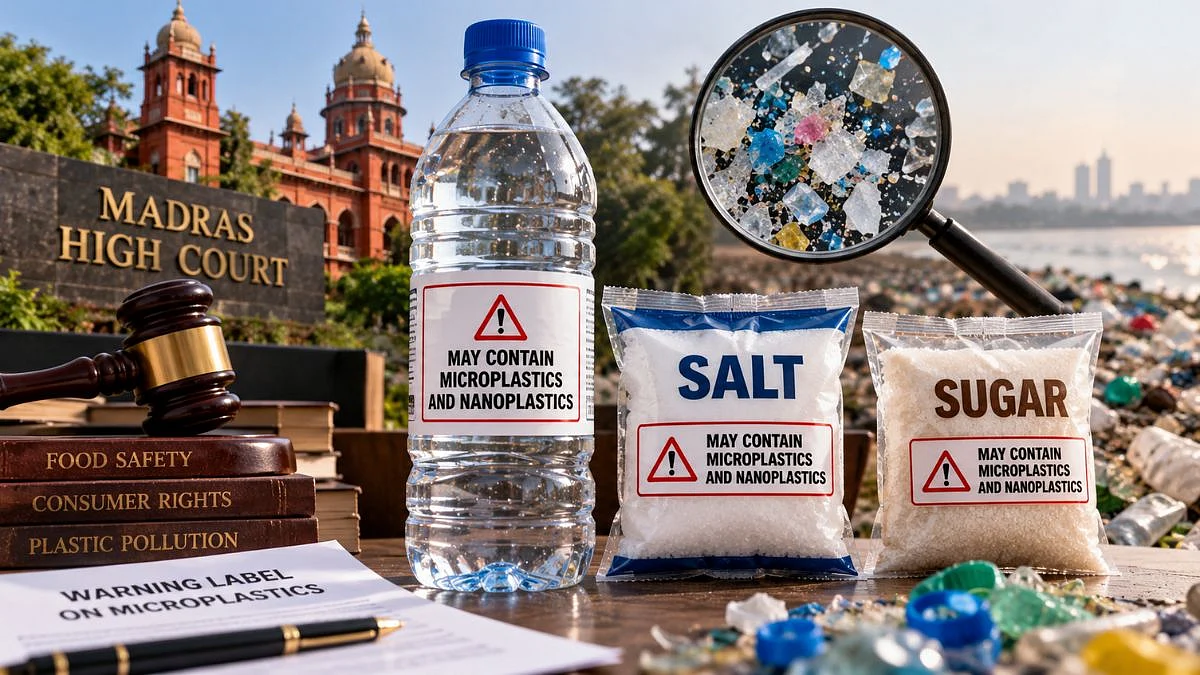
The Madras High Court has demonstrated a forward-thinking approach to food safety by maintaining its requirement for plastic/PET water bottles, as well as salt and sugar packets, to display a clear warning regarding the potential presence of micro- and nano-plastics. The food industry responded as expected to the initial order, but the regulatory authority, FSSAI, chose to align with the manufacturers instead of prioritizing public health.
The court panel, tasked with examining pollution and unsustainable practices in the Nilgiris, was unconvinced by the arguments presented by the industry stakeholders. They objected to labeling, citing the absence of definitive evidence, its premature implementation, the necessity for further research on potential harms, the measure's lack of proportionality, and the lack of such requirements in other countries.
The court emphasized that the primary concern is the presence of pollutants in plastic packaging, a claim not disputed by the opposition. The Food Safety and Standards Authority of India (FSSAI) has a legal duty to inform consumers about any potential harm, compelling the High Court to adopt the precautionary principle and enforce labeling.
The global concern over plastic pollution is undeniable, with the Pacific Ocean hosting a massive garbage patch comprising plastic debris from across the world, and this issue continues to worsen annually. These floating islands of trash, a direct result of consumerism-driven economic growth, have fragmented into microplastics and nanoplastics that now pervade our surroundings, from mountains and rivers to drinking water and human tissues.
As the impact of such pollution on humans and animals remains uncertain, given its novel nature in geological time, it is evident that these synthetic materials are foreign to biological systems. In India, polyethylene terephthalate (PET) bottles constituted 92% of the 1.9 million tonnes of this specific plastic type used in 2024-25.
Conversely, Germany has been comparatively proactive in utilizing glass and paper-based packaging, alongside implementing labeling systems to indicate whether food is healthy or unhealthy. India must abandon its resistance to the call for a genuine cleanup and adopt a proactive stance by eliminating accumulated plastic waste from various environments.
Encouraging the adoption of eco-friendly materials and enforcing a strict ban on single-use plastics are crucial steps in this direction. While labeling may not provide consumers with a clear choice, it is likely to generate public pressure and encourage the industry to explore safer packaging alternatives.
Written by urgent.news from Free Press Journal's reporting — not their text. Machine-written — may contain errors; check the original before relying on it.