Thailand’s Ko Lan waters turn green as plankton bloom keeps swimmers away
Heavy rains and floods help spark plankton blooms as researchers warn of worsening hypoxic conditions, with oxygen levels too low to support marine life.
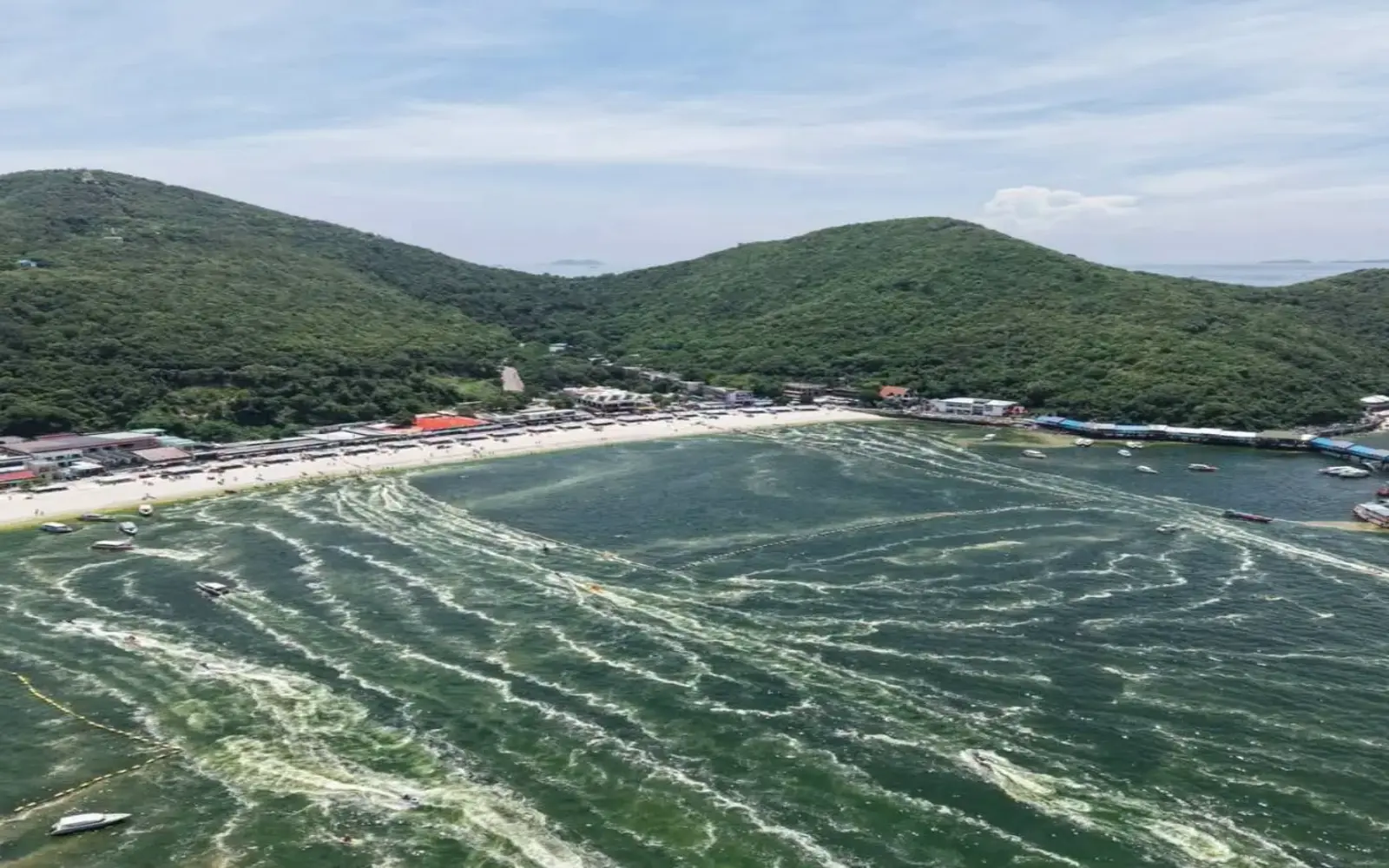
Ko Lan, a popular tourist island in Thailand, experienced a strange phenomenon this week as its waters turned bright green due to a plankton bloom. The discolouration discouraged some swimmers from entering the sea, while others remained cautious, fearing potential health issues. The green hue was caused by a type of plankton known as Noctiluca, according to Arvut Munhapon, a senior researcher at the Marine Science Research Division of Burapha University.
Munhapon and his team collected water samples to study the phenomenon, noting that plankton blooms are a natural occurrence but have become more frequent and intense due to climate change, fertilizer runoff, and nutrient-rich wastewater. These blooms typically last two to three days and can lead to hypoxic conditions when the plankton die off, depleting oxygen levels and creating "aquatic dead zones."
Anukul Buranaprat, deputy director of the Institute of Marine Science at Burapha University, expressed concern about the severity of hypoxia in the inner Gulf of Thailand this year, attributing it to the recent monsoons and El Niño. The flooding Thailand has faced in recent weeks, including in central provinces and Bangkok, further contributed to the problem by increasing freshwater flow into the Gulf.
Local food vendors reported a decline in customers due to the green water, with some visitors opting to avoid the affected areas altogether.
Written by urgent.news from Free Malaysia Today's reporting — not their text. Machine-written — may contain errors; check the original before relying on it.
This story
This is one outlet's version. Read the fullest account.
- Thailand’s Ko Lan waters turn green as plankton bloom keeps swimmers away freemalaysiatoday.com