Smart Car Researcher Wants to Eliminate Stoplights
Christos Cassandras has spent more than 40 years studying how computers and machines make decisions. Lately, his work has focused on a problem nearly every driver knows well: sitting at a red light with no cross traffic in sight, wondering why it takes so long for the light to turn green. Cassandras, an IEEE Life Fellow, is a professor at Boston University , where he headed its systems…
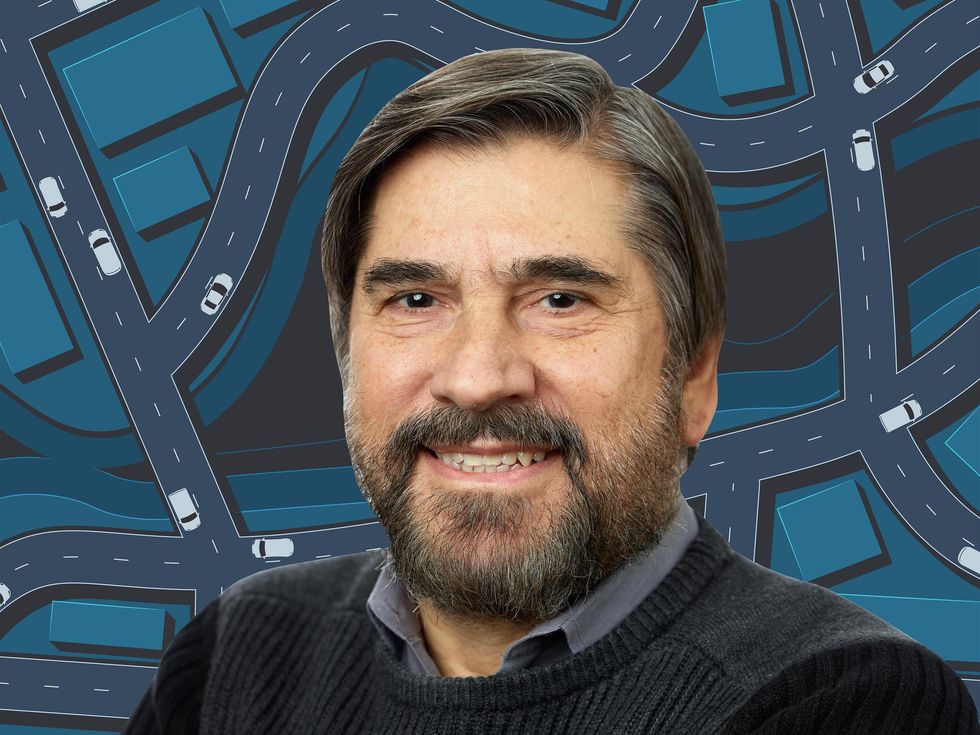
Christos Cassandras, a professor at Boston University, has spent over 40 years researching how computers and machines make decisions. Recently, his focus has shifted to a common driver's issue: waiting at a red light with no opposing traffic, wondering why it takes so long for the light to change. Cassandras, an IEEE Life Fellow, is a professor at Boston University, where he once headed its systems engineering division, a graduate program he helped establish.
He has received the IEEE Intelligent Transportation Systems Society Outstanding Research Award for his work on autonomous vehicles and the systems that enable them to drive safely. Cassandras's career is built on the foundation of his research, which could potentially eliminate traffic lights altogether. In the 1990s, he theorized that a machine, like a car, could be viewed as both a physical object following physical laws and a computer processing information and making decisions, a concept known as cyber physical systems.
This framework remains the standard way engineers describe a car's mechanical behavior. Cassandras emphasizes safety as the key factor for adopting self-driving cars. Growing up in Greece during a dictatorship, Cassandras was inspired by the 1969 Apollo 11 moon landing and the early development of the Internet. Encouraged by teachers and mentors, he pursued a career in engineering, earning degrees from Yale, Stanford, and Harvard.
His early work on managing buffers on an assembly line for Fiat helped him understand the concept of event-driven systems, which he later formalized into hybrid systems theory, now known as cyber physical systems theory. This theory views machines as both physical and event-driven, offering a new approach to engineering that could lead to the elimination of stoplights.
Written by urgent.news from IEEE Spectrum's reporting — not their text. Machine-written — may contain errors; check the original before relying on it.