Singapore’s crackdown on fake reviews exposes business of buying ‘social proof’
Singapore’s biggest crackdown so far on fake online reviews has exposed how businesses exploit the appeal of five-star ratings to game the system, with experts warning generative AI will make fake reviews more rampant and consumers need to be more discerning of what they read online. The Competition and Consumer Commission of Singapore (CCS) has taken action against 45 companies – including a…
Singapore has launched its most extensive crackdown yet on fake online reviews, uncovering how companies manipulate high ratings to gain a competitive edge. The Competition and Consumer Commission of Singapore (CCS) targeted 45 firms, including a funeral home, law office, and aesthetic clinic, for purchasing reviews from a provider offering AI-generated testimonials.
These businesses were forced to remove the reviews and issue public apologies for six months during the initial phase of the investigation. Around 100 companies were involved in total.
Experts warn that generative AI will make fake reviews more prevalent, as businesses will increasingly use AI to craft realistic and undetectable testimonials. In response, consumers may need to become more vigilant in evaluating online content. Alton Chua, a professor at Nanyang Technological University, explained that online review systems are constantly adapting, with some companies attempting to cheat while users learn to distinguish genuine feedback from fraudulent reviews.
With the arrival of Generative AI (GenAI), the prevalence of fake reviews is expected to rise, as creating realistic text has become cost-free and virtually indistinguishable from authentic customer feedback.
Elmie Nekmat, an associate professor at the National University of Singapore, highlighted the power of reviews in conveying social proof. High ratings can significantly influence consumers' decisions, even before they delve into the business or compare alternatives. In Singapore, deliberately misleading consumers through fake reviews constitutes unfair trade practices under the consumer-protection framework.
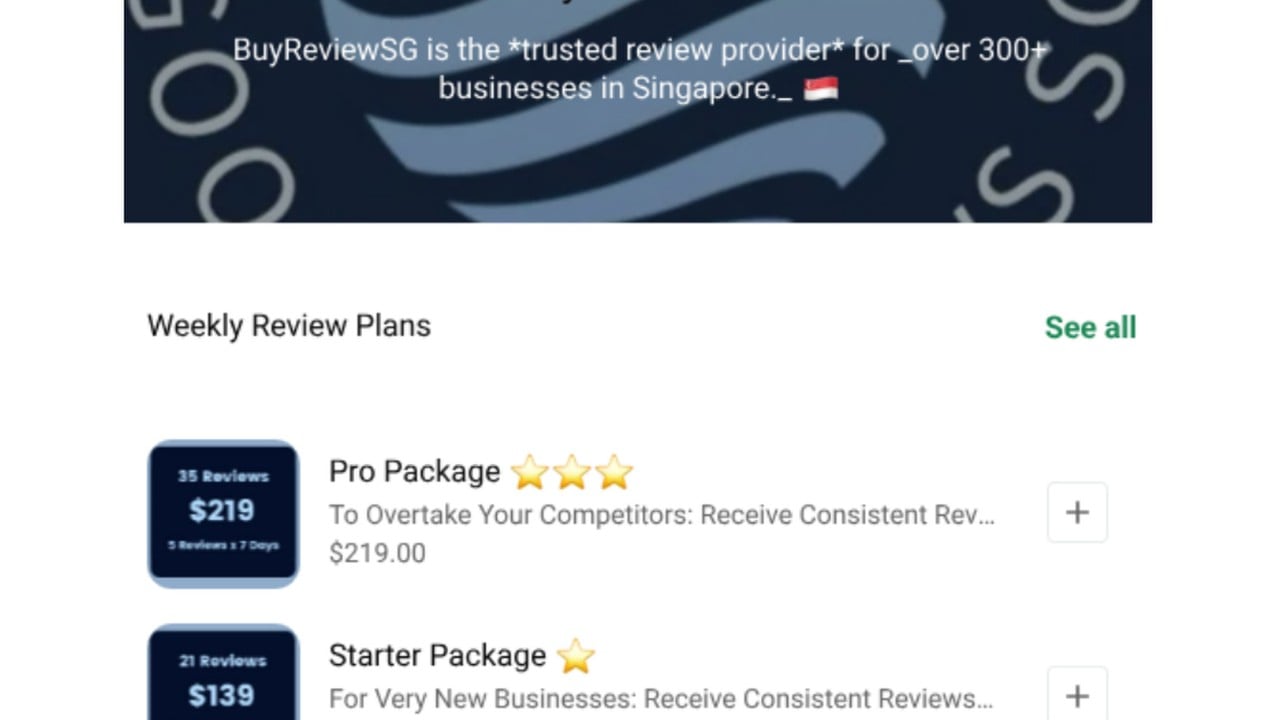
The CCS conducted a two-phase investigation to combat the issue, which is currently underway. Two businesses declined to cooperate with the required terms. The investigation revealed that Julian Tung Yan Kai operated a fake review service for about 100 companies through Reputifly, BuyReviewSG, and GetReviewSG. Tung used GenAI to produce reviews that resembled genuine customer experiences, allowing clients to choose the desired rating and edit the generated content.
CCS stated that Tung promised to cease providing fake review services and donated proceeds to charity, though he did not claim a tax deduction for the donation.
Criminal actions may be taken against companies that obstruct investigations or fail to comply with court orders, potentially resulting in fines or imprisonment. The CCS has emphasized that while unfair review practices are not criminal offenses, businesses may face legal consequences if they disregard court injunctions. The commission has also noted the distinction between paying influencers to promote products genuinely and posting fake reviews under anonymous identities.
Influencers' endorsements tend to carry more credibility due to their established reputation, unlike fake reviews that lack authenticity or may involve non-existent users.
Written by urgent.news from South China Morning Post's reporting — not their text. Machine-written — may contain errors; check the original before relying on it.