Scientists Zero In on Tiny Particles to Improve Weather and Air Quality Forecasts
A new method for handling satellite aerosol observations boosts simulation accuracy, with potential benefits for weather and climate forecasting.
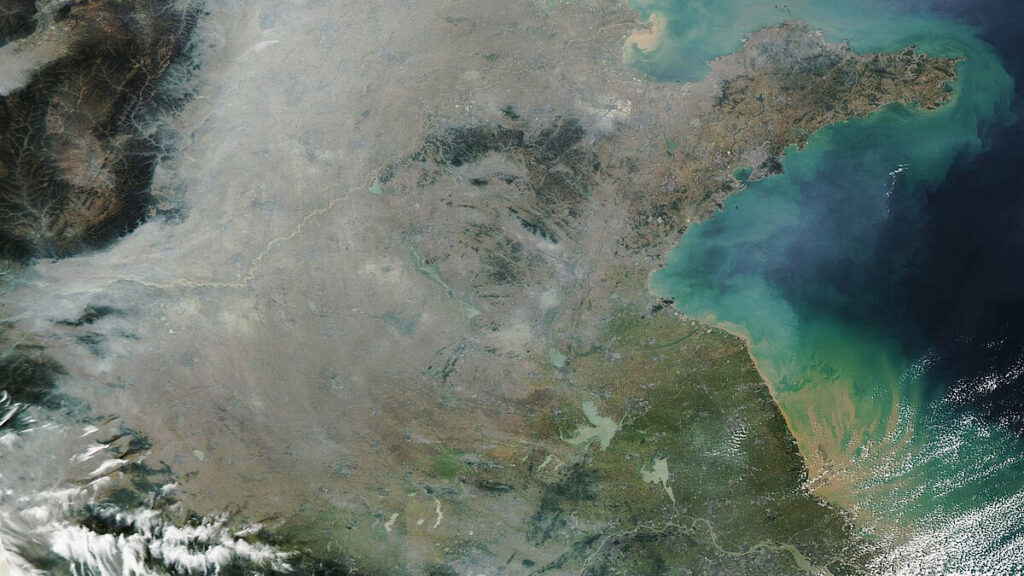
Aerosols are tiny particles suspended in the Earth's atmosphere and have a significant impact on weather, climate, visibility and human health. These particles can come from natural sources such as wildfire smoke, pollen, desert dust and sea salt, as well as from human activities like vehicle emissions and industrial processes. Aerosols affect sunlight, heating or cooling it, and help form clouds, playing a crucial role in weather and climate forecasting.
However, their complex properties make them challenging to model, leading to uncertainties in weather and climate predictions.
Zhang et al. have developed a new method that could improve the accuracy of aerosol simulations. Their approach involves directly incorporating satellite observations of aerosol radiance into the models. Traditionally, satellite data would be preprocessed to infer aerosol properties, but this indirect method resulted in less accurate predictions due to the high computational cost.
The new method, however, leverages a novel artificial intelligence (AI) component that has been trained on a vast dataset. This AI component quickly analyzes how satellite observations are influenced by aerosols and the sunlight reflected from the Earth's surface.
When tested against real-world satellite observations in China, the new approach reduced prediction errors by approximately 50% compared to traditional simulations. This breakthrough indicates that this computationally efficient technique could be a practical way to enhance aerosol simulations, thereby improving weather and climate forecasts.
Written by urgent.news from Eos's reporting — not their text. Machine-written — may contain errors; check the original before relying on it.