Rare two-headed turtle hatchling discovered on Cape Cod
A two-headed turtle hatchling is one of three bicephalic terrapins that have been found on Cape Cod over the past five years.
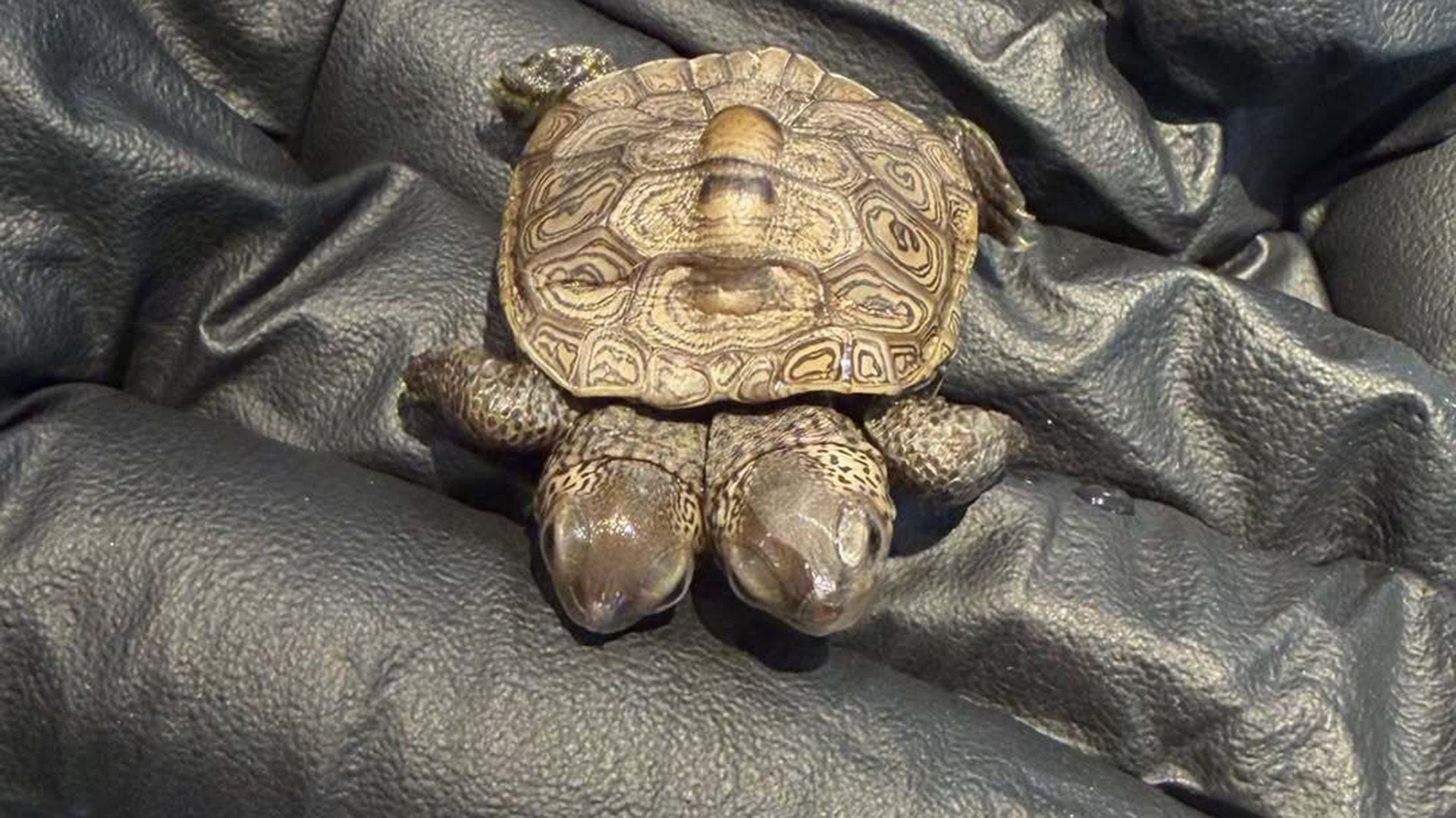
On Cape Cod, a rare occurrence has taken center stage: a two-headed diamondback terrapin hatchling discovered. Cape Cod, renowned for its lobsters and increasing great white shark population, now boasts another extraordinary inhabitant. This baby turtle, barely 0.18 ounces (5.2 grams) in weight, was rescued by the Cape Wildlife Center in Barnstable, Massachusetts, on September 17.
The turtle, exhibiting bicephaly - a rare developmental disorder typically resulting from incomplete splitting of a single embryo during the formation of identical twins - was initially spotted by Mass Audubon Wellfleet Bay Wildlife Sanctuary representatives in a protected nesting site in Wellfleet.
Bicephaly, a condition where conjoined twins share one body but possess two fully formed independent heads, presents significant survival challenges. Coordinated movement, feeding, and other essential functions are hindered due to this abnormal anatomy. While the exact cause remains a subject of research, it is believed to be influenced by a combination of genetic and environmental factors.
The turtle's preference for returning to the same nesting sites, limited gene pool, and environmental conditions during incubation are all potential contributors. The turtle's rare condition is not unprecedented; previous cases have been documented in the Netherlands and Turkey.
This particular terrapin, identified as a diamondback terrapin (Malaclemys terrapin), is a unique example of bicephaly among turtles. Both genetic and epigenetic factors, as well as environmental influences, are thought to contribute to its development. The center emphasizes that while bicephaly is rare, this is the third such case found in the area within the past five years, offering valuable insights into the health and well-being of these turtles.
Veterinary staff are closely monitoring the turtle's health to ensure its survival and well-being. Despite the challenges posed by its condition, the discovery of this two-headed terrapin presents a unique opportunity for further study and understanding of such rare deformities. As researchers continue to investigate, this remarkable turtle serves as a reminder of the importance of monitoring and studying such anomalies to better comprehend their implications for animal health and population dynamics.
Written by urgent.news from Live Science's reporting — not their text. Machine-written — may contain errors; check the original before relying on it.