Oil prices stable amid mixed supply signals from the Middle East
Oil prices remained broadly stable on Friday after rallying more than 4 per cent in the previous session, as traders weighed the possibly of renewed Iran war hostilities against surging supplies from the Strait of Hormuz. Brent, the benchmark for two thirds of the world's oil, fell 0.05 per cent to $102.10 a barrel at 9.07am UAE time. West Texas Intermediate, the gauge that tracks US crude, was…
Oil prices remained largely unchanged on Friday, despite a 4% rally the previous day, as traders balanced the potential for renewed Iran hostilities against surging supplies from the Strait of Hormuz. Brent, the benchmark for two-thirds of the world's oil, slipped 0.05% to $102.10 a barrel, while West Texas Intermediate, the gauge tracking U.S. crude, fell 0.31% to $92.58 a barrel.
Daniel Richards, senior economist at Emirates NBD, noted that "shipping-related reassurance around the Strait of Hormuz and a possible opening on Iranian nuclear inspections weighed on prices, but renewed U.S. military deployments to the region kept the risk premium alive."
Brent prices were volatile on Thursday, opening lower but rallying over 4% intraday before closing down 1.2% at $102.3 per barrel due to supply improvement signals from the Middle East. Brent and WTI are moving in opposite price directions, with Brent expected to see a weekly loss and WTI a weekly gain. Oil flows through the Strait of Hormuz reached their highest level since the Iran war began, after Saudi Arabia increased shipments via the contested waterway due to Houthi attacks that restricted its Red Sea route.
Saudi shipments through Hormuz surged to 2.9 million barrels per day in September from around 1 million bpd in August, according to preliminary Kpler data.
Saudi Arabia, OPEC's largest producer, is increasing supplies through Hormuz following the East-West pipeline shutdown due to Houthi drone attacks on September 10. The pipeline, with a capacity of seven million bpd, was partially reopened on September 22. Houthi rebels also imposed a maritime embargo on Saudi shipping in July, further restricting the kingdom's oil flow to the Bab Al Mandeb strait.
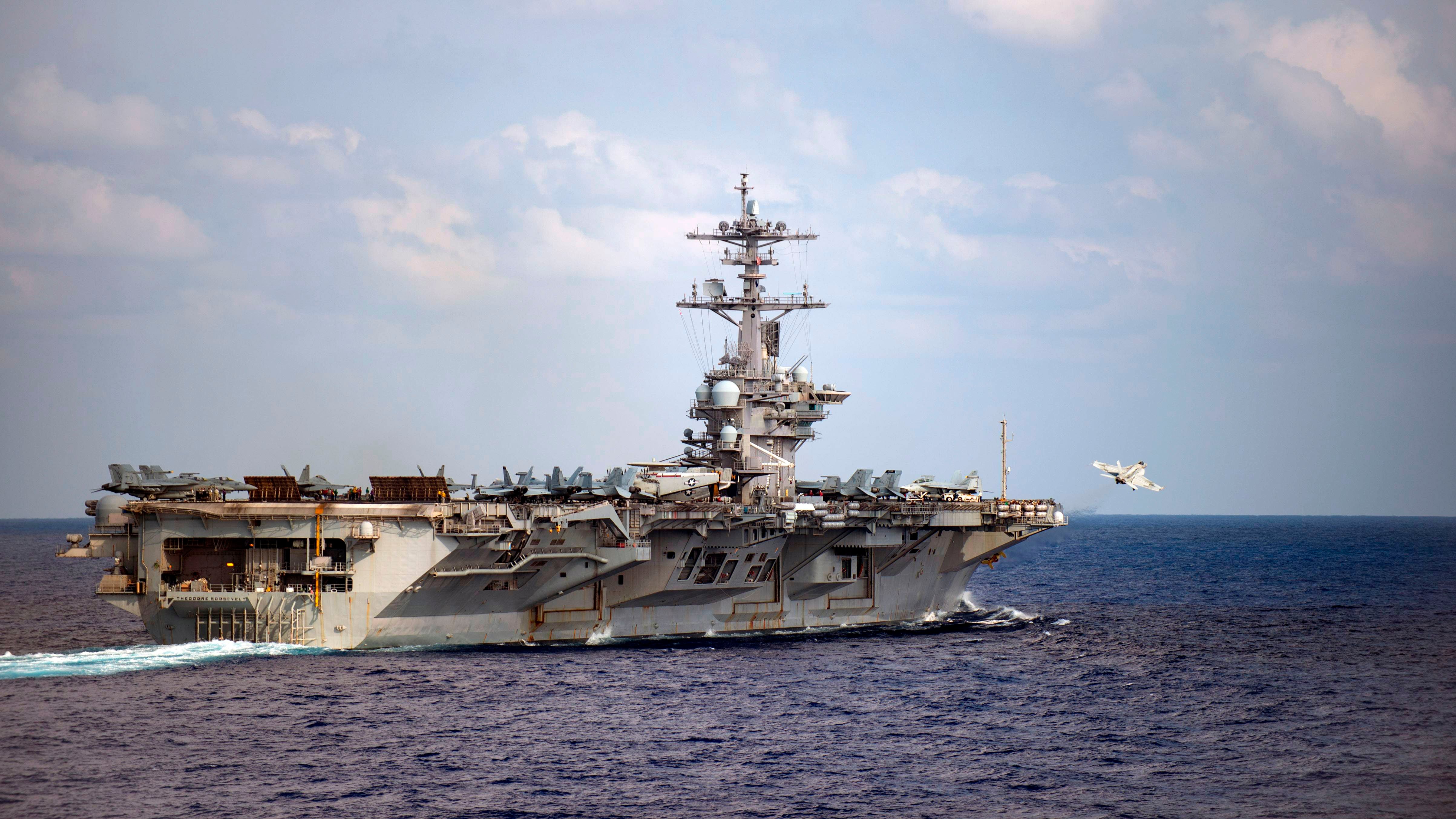
U.S. plans to send a third aircraft carrier strike group to the Middle East have added geopolitical risk, with a separate amphibious group of over 2,000 U.S. Marines also deployed.
While oil flows out of the Middle East appear to be normalizing, the risk premium persists due to geopolitical concerns. A US official revealed that the USS Theodore Roosevelt, accompanied by its carrier strike group, was heading to Central Command's area of operations in the Middle East. The Nimitz-class, nuclear-powered ship is expected to increase the risk premium further.
The Energy Department is offering to loan up to 40 million barrels of crude oil from the Strategic Petroleum Reserve to energy companies to counter rising fuel prices due to the Iran war. The OPEC+ meeting scheduled for Sunday is expected to keep oil production targets steady for November.
Written by urgent.news from The National UAE's reporting — not their text. Machine-written — may contain errors; check the original before relying on it.