No Presumption Of Cattle Being Transported For Slaughter Merely Due To Missing Documents, Supreme Court Rules
The Supreme Court has held that the absence of transport documents alone cannot lead to a presumption that cattle are being transported for slaughter. A Bench of Justices JB Pardiwala and K Vinod Chandran made the observation while setting aside the conviction of a man under the Chhattisgarh Agricultural Cattle Preservation Act, 2004. He was among six people convicted in a case involving the…
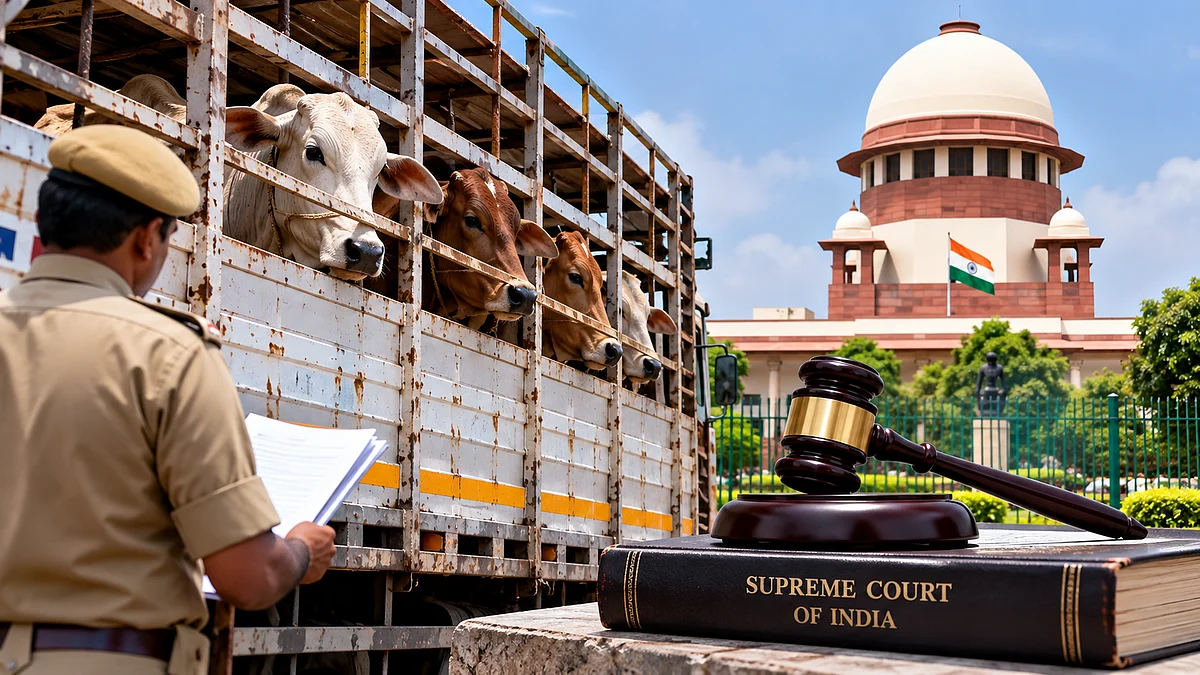
The Supreme Court has ruled that the absence of transport documents alone cannot be used to presume that cattle are being transported for slaughter. This decision came while overturning a conviction under the Chhattisgarh Agricultural Cattle Preservation Act, 2004. The case involved the transportation of 32 bullocks allegedly for slaughter.
The Court observed that merely lacking documents does not automatically imply a criminal intent. Six individuals were previously convicted, including the appellant, for violating the Act's provisions. The lower courts had upheld the conviction, which reached the High Court, which in turn reduced the sentence to the time already served.
The appellant then appealed to the Supreme Court, disputing his conviction. In its ruling, the Supreme Court examined Sections 6 and 11 of the Act. It held that the reverse burden of proof under Section 11 would only apply if the essential elements of the alleged offence were first established. The Court noted that the head constable who intercepted the cattle failed to prove their intent for slaughter.
Thus, the lack of documents explaining the purpose of transportation or the truck driver's refusal to produce them could not be used against the appellant. The Court also considered the testimony of a veterinary doctor and the president of a Gaushala (cattle shelter), who stated that the seized cattle were suitable for agricultural use, like ploughing. Consequently, the Court allowed the appeal and dismissed the appellant's conviction.
Written by urgent.news from Free Press Journal's reporting — not their text. Machine-written — may contain errors; check the original before relying on it.