New e-hailing safety rules put emergency response under scrutiny
South Africa’s new e-hailing rules require panic buttons, but industry experts warn that alerts are only effective if responders can reach drivers and passengers quickly.
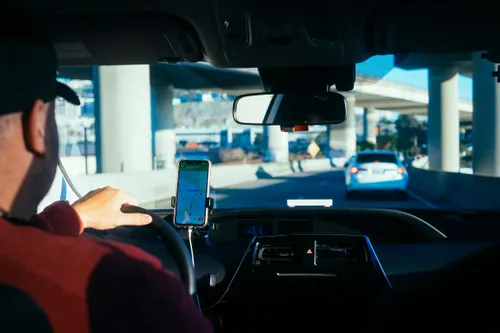
A surge in dashcam footage exposing violent crimes, including robberies, hijackings, and assaults involving South African e-hailing drivers, has sparked renewed national concern over passenger and driver safety. Justin Suttner, Head of Sub-Saharan Africa at emergency technology platform AURA, emphasizes that while dashcam footage aids in evidence collection and investigations, the critical priority during an active incident is to minimize the gap between a signal of distress and professional assistance arriving on the scene.
South African Police Service (SAPS) statistics show 3,811 carjackings occurred in South Africa between April and June 2026, averaging over 40 per day. Although this represents an 18.2% year-on-year decline, the overall risk level for motorists remains high. A 2026 study by the University of South Africa (UNISA) identified e-hailing drivers as particularly vulnerable, with increases in armed attacks, route deviations, and malicious property damage from 2020 to 2024.
To address these risks, e-hailing platforms are employing various technological solutions. AURA supplies the emergency response infrastructure for Uber's panic button in South Africa. Upon triggering an SOS, AURA's automated system coordinates and dispatches the nearest vetted responder from a network of over 3,000 security and medical personnel.
Other platforms, such as Bolt and inDrive, partner with different entities, like the Automobile Association (AA) and telematics provider Cartrack, to provide in-app alerts through call centers and equip vehicles with physical panic buttons and AI dual-vision dashcams.
South Africa's extensive private security network is a valuable asset, but previous instances have seen these resources dispersed across separate networks. AURA aims to consolidate these resources into a single technology-enabled response network, achieving an average response time of seven to eight minutes across the country. To optimize navigation, AURA has been granted authorization to integrate Google Maps Platform directly into its responder app, enhancing routing accuracy and reducing transit times.
In high-stress situations where phone interaction might further endanger a person, discreet physical and automated triggers remain essential. While app-based SOS buttons are effective in many scenarios, quick activation is paramount. If someone believes they are in immediate danger, the process of unlocking a phone, opening an application, and navigating through multiple screens may not be feasible.
The goal is to minimize friction, allowing the individual to seek help without having to provide their address or engage in lengthy conversations before assistance is dispatched.
Although private armed security typically arrives at a scene first, Suttner clarifies that private responders complement public law enforcement rather than supplant them. Private responders are designed to shorten the period during which the victim is unprotected, potentially saving lives in the process. Since its launch in 2017, AURA's dispatch system has processed over one million emergency activations, saving 389 lives and establishing over 40,000 safe spaces through fixed-location responses in the first six months of 2026.
As safety standards continue to evolve across platforms like Uber, Bolt, and inDrive, technology providers remain committed to delivering swift physical intervention to transform passive monitoring into live, actionable protection.
Written by urgent.news from IOL's reporting — not their text. Machine-written — may contain errors; check the original before relying on it.