Kleingeld einzahlen: So können Bankkunden noch Münzgeld umtauschen
Immer weniger Banken ermöglichen kostenfreie Münzgeldeinzahlungen. Welche Optionen Kunden bleiben – und wo sich der Weg zur Filiale noch lohnt.
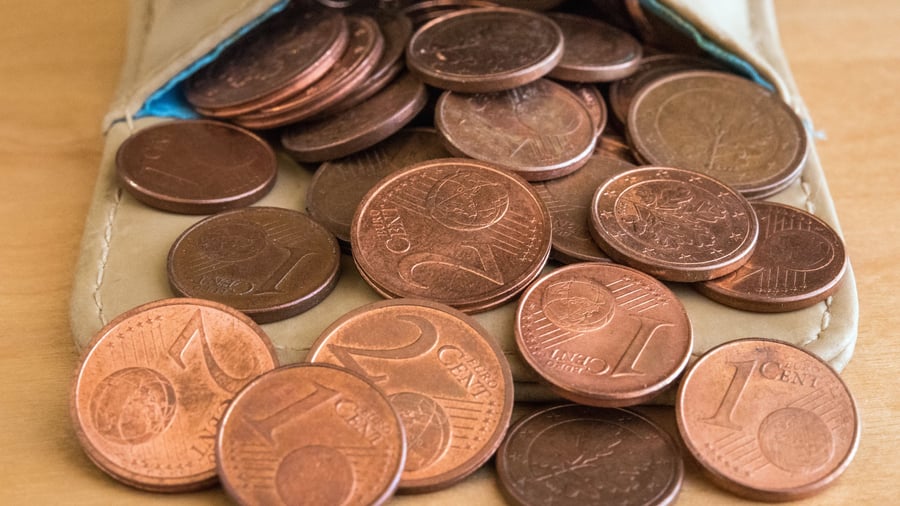
Many German bank customers may be unaware that copper coins still exist in their wallets or savings accounts. This is why bank officials like Burkhard Balz, a former Bundesbank executive, have called for the abolition of the one and two cent coins. The small copper coins often get overlooked or lost, and they cost more to produce and transport relative to their face value.
There are several ways to deposit copper coins into a bank account. The Handelsblatt explains how this can be done cost-effectively. Where can I deposit my coins? Some German banks accept copper coins, including Sparkassen, Volks- and Raiffeisenbanken, Deutsche Bank, and Commerzbank. While some locations allow depositing copper coins at special copper coin machines, others offer the service at the counter.
In practice, however, customers can only exchange their coins at banking hours and only at certain branches. The service is usually reserved for account holders and may incur fees at certain banks and branches. The credited amount is typically added to an existing account with the respective bank. Can the Bundesbank accept copper coins?
Citizens can also deposit copper coins at the Bundesbank. The federal bank is obliged by the Coin Law (Coin Act) to accept copper coins and exchange them free of charge. This option is mainly available to savers living or working in metropolitan areas, as the 31 Bundesbank branches are primarily located in major cities, including nine of the 16 state capitals.
There, according to the federal bank, even old Deutsche Mark coins can be deposited. According to the Bundesbank, it must be evident that the deposited money has a private origin. Household amounts are roughly a full bottle of coins, a savings tin, or a larger bag, explained a Bundesbank spokesperson. For customers who regularly conduct business-level cash transactions, different rules apply.
They must provide proof of the origin of the cash brought in and face scrutiny for money laundering risks. How much does it cost to deposit coins at the bank? State-owned banks like Sparkasse, Volksbank, Deutsche Bank, and others are not obligated to accept any copper coin amount. By law, they can only accept amounts of 200 euros or a maximum of 50 coins at once.
Therefore, these branch banks often consider copper coin depositing or exchange as a service fee, charging a fee if more than 50 coins are deposited. Two examples: The Frankfurter Sparkasse charges five percent of the deposit amount for private customers, but at least five euros, when more than 50 coins are deposited. The Volksbank Kassel-Göttingen charges a flat rate of five euros for each deposit with more than 50 coins.
Generally, fees vary depending on the bank, amount, and frequency of depositing. Costs may also depend on the existing account model. Prices for Sparkassen and Volksbank/Raiffeisenbank fees vary by region. Before depositing copper coins, it is worth checking the conditions of your home bank and optimizing the frequency of deposits.
Why is my bank charging me a fee for depositing coins now? Accepting and managing copper coins involves more effort for banks than a few years ago. Legally stricter checks are now necessary before copper coins can be processed and reintroduced into circulation. Banks often outsource these processes to external companies, as is the case with many Sparkasse branch banks.
The internal process costs, such as the legal Münzgeldprüfungsverordnung implemented since 2015, can amount to 400,000 euros for a medium-sized Sparkasse branch. Outsourcing adds additional ongoing costs. This increased effort has led to longer waiting times for customers and incurred additional costs for banks. Where else can I deposit copper coins for free?
Besides the Bundesbank, some other German banks still accept copper coins for free. At certain Commerzbank branches, customers can deposit both cash and copper coins for free via an ATM, with a limit of 9,999.99 euros. If no ATM is available, the counter service costs up to 3.90 euros. Similar fees apply to Comdirect bank customers, who can deposit copper coins for free up to three times a year in Commerzbank branches.
For deposits exceeding this amount, a fee of 4.90 euros typically applies. Fees may vary based on the branch and account model. How long does it take for copper coins to appear in my account? The time it takes for copper coins to be credited to your account varies. Deposits made via ATMs are usually credited in real-time to the bank account.
When depositing at the counter, the credit typically takes one bank working day. In rare cases, it may take up to three bank working days for the money to be reflected in the account. At the Bundesbank, exchanging copper coins typically takes only a few minutes. However, the bank may initially only accept larger amounts of copper coins against a provisional receipt and pay out the determined value after processing.
Written by urgent.news from Handelsblatt's reporting — not their text. Machine-written — may contain errors; check the original before relying on it.