Immobilien: Warum jeder fünfte Luxuskäufer Vermögen in ein Familienanwesen steckt
Der Familiensitz erlebt eine Renaissance: Viele Vermögende suchen nach Anwesen, die mehreren Generationen Platz bieten. Worauf es ankommt, damit eine solche Immobilie wertstabil bleibt.
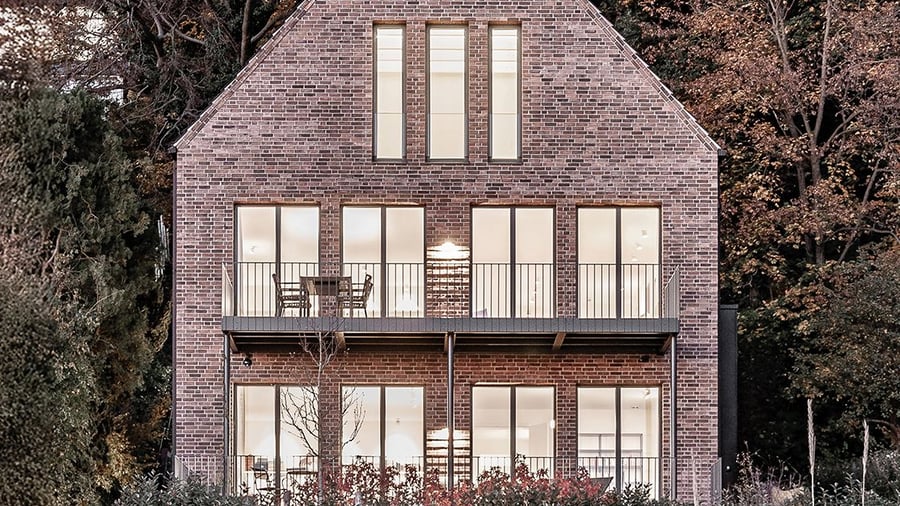
In Hamburg's luxurious real estate market, one fifth of high-end buyers are reportedly investing in family homes. These properties are being designed with multiple generations in mind, providing space for all family members and ensuring a stable asset value. Architect Alexandra Bub of Hamburg-based firm Alexandra Bub explains that the four floors of the villa she leads have been planned to easily divide into individual high-quality units, making it simple to accommodate four generations under one roof.
Real estate agent Engel & Völkers reports that one in five luxury purchases in the international market is now made with the explicit intention of bringing additional family members together under one roof.
When designing a multi-generational home, buyers and builders must consider several factors to ensure long-term stability in property value. Engel & Völkers notes that middle-aged individuals, particularly those aged 45-60, are actively seeking homes that fit the multi-generational concept. The need to spend more time with various family members and the challenges posed by an aging society are driving this demand.
A shared family residence allows children to support aging parents without sacrificing personal space, while grandparents can keep a close eye on their grandchildren thanks to their proximity. Additionally, the sense of security that comes with residing on a large, secluded piece of land, far from direct neighbors, can also be a significant draw for affluent families.
Properties with large square footage in prime locations, such as Munich or Düsseldorf, where square meter prices can reach up to 30,000 euros, can also be economically advantageous due to the shared use of the home by multiple generations. These properties, however, are relatively scarce in metropolitan areas, especially when the goal is to have multiple independent addresses within the same building, ample space for different lifestyles within the family, and the option to combine everything back into a single residence.
Despite the numerous benefits, experts advise potential buyers to carefully consider the decision before merging a family unit. Markus Riedel, a Munich-based real estate agent, cautions that not all families will appreciate the daily proximity of extended family members. Riedel highlights the importance of clear communication among all parties involved to prevent disappointment.
It is also worth noting that well-designed and luxurious multi-generational homes are not easy to find in urban centers. Anne Wilkens, Managing Director of Dahler & Company's Elbvororte location in Hamburg, agrees that such properties are rare, particularly when multiple independent addresses are required, sufficient space for varied family life styles, and the option to revert to a single residence.
Makler Riedel advises that clients should be prepared to sell any such properties they acquire, as children may decide to relocate to a different part of the city after a few years.
To maintain the long-term value of a multi-generational property, Wilkens emphasizes the need for a few key components. A strategic location, appropriate size, and versatile usage are essential to ensure lasting demand for the property. As an architect, Bub stresses the importance of designing the home to adapt to changes throughout different life stages.
Flexibility in the spaces and their usage, whether for shared living across generations or for commercial purposes, is crucial. Besides adaptable floor plans, Bub believes that incorporating features like a communal living area, a yoga room, or a swimming pool can enhance the property's appeal. She also emphasizes the importance of providing private retreat spaces in separate building sections to ensure long-term livability.
For properties that may need to accommodate aging parents or returning children, Bub recommends incorporating moderate-sized rooms that can be separated via individual electrical and water systems. This way, the property can easily adapt to sudden changes in family needs. Moreover, when planning for future generations, it is essential to consider the inclusion of private gardens and balconies from the beginning.
As an example of successful implementation, Bub points to a multi-generational home that received the "Häuser Award" for its design, featuring units oriented towards morning and evening sunlight, connected by a large communal area with outdoor terraces, allowing for family gatherings while maintaining individual privacy. Each unit also has its own address, providing a sense of independence.
By offering separate living units with their own distinct identities, the property can cater to various family situations while maintaining a sense of ownership for each resident.
Written by urgent.news from Handelsblatt's reporting — not their text. Machine-written — may contain errors; check the original before relying on it.
This story
This is one outlet's version. Read the fullest account.