How to Move AI SRE Agents From Demo to Production
An AI agent that works on an engineer’s laptop can feel like a breakthrough. It can read logs, query observability tools, inspect cloud resources and connect a failed deployment to a bad configuration change in minutes. For a single investigation, under close human supervision, that is real progress. It is also the easy part. The […]
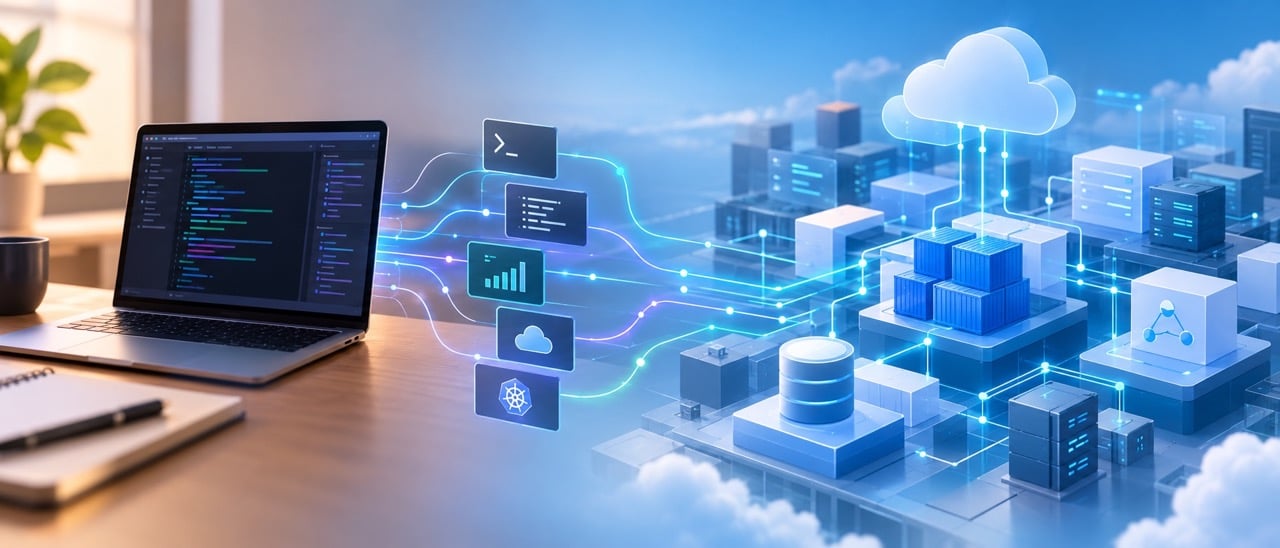
Producing an AI agent that transitions from demonstration on an engineer's laptop to robust production use presents significant challenges. While a laptop-based agent excels in isolated, supervised investigations—reading logs, querying observability tools, and connecting failures to configuration changes—making it production-ready requires a different approach.
In production, the agent must handle concurrent sessions, maintain investigation history, manage token spend, enforce scoped permissions, and stay within the business-defined access, cost, and automation guardrails. Local frameworks that enable quick experimentation fall short in production environments, where agents must operate continuously, leave behind trustworthy records, and operate within strict guidelines.
Critical to production readiness is the agent's ability to keep working after the first session, preserve investigation history, and respond to monitoring systems around the clock. Without a reliable record connecting the initial alert to the evidence reviewed, tools used, actions taken, and final recommendations, the team lacks the ability to evaluate the agent's work and improve it over time.
Token spend is crucial for production agents, as general-purpose frameworks can consume substantial resources at scale. Monitoring costs per session and per use case, alongside latency, success rate, and tool-call volume, helps balance quality and performance tradeoffs. A newer model might offer better quality but at the expense of increased latency and cost, necessitating careful evaluation based on specific use cases and the cost implications of being slow or incorrect.
Demonstration scenarios alone do not guarantee production readiness. What works in a single investigation may not sustain performance across diverse scenarios. Testing should emulate real production patterns, known failures, and edge conditions to assess the agent's capabilities accurately. The ultimate goal is not merely to produce a polished answer but to ensure the agent reliably identifies triggering changes, utilizes evidence correctly, determines the correct root cause, and recommends a trustworthy response that aligns with human-defined standards for quality investigations.
Written by urgent.news from DevOps.com's reporting — not their text. Machine-written — may contain errors; check the original before relying on it.