How the FCC is rolling back decades of progress through regressive jurisprudence
There is not a single woman judge on the Federal Constitutional Court. It is a court composed entirely of men. At the time of the 27th Amendment , various unconvincing justifications were presented: the amendments would reduce pendency of cases; “activist” judges had brought these changes upon themselves; the FCC would hear important cases of constitutional interpretation that consumed too much…
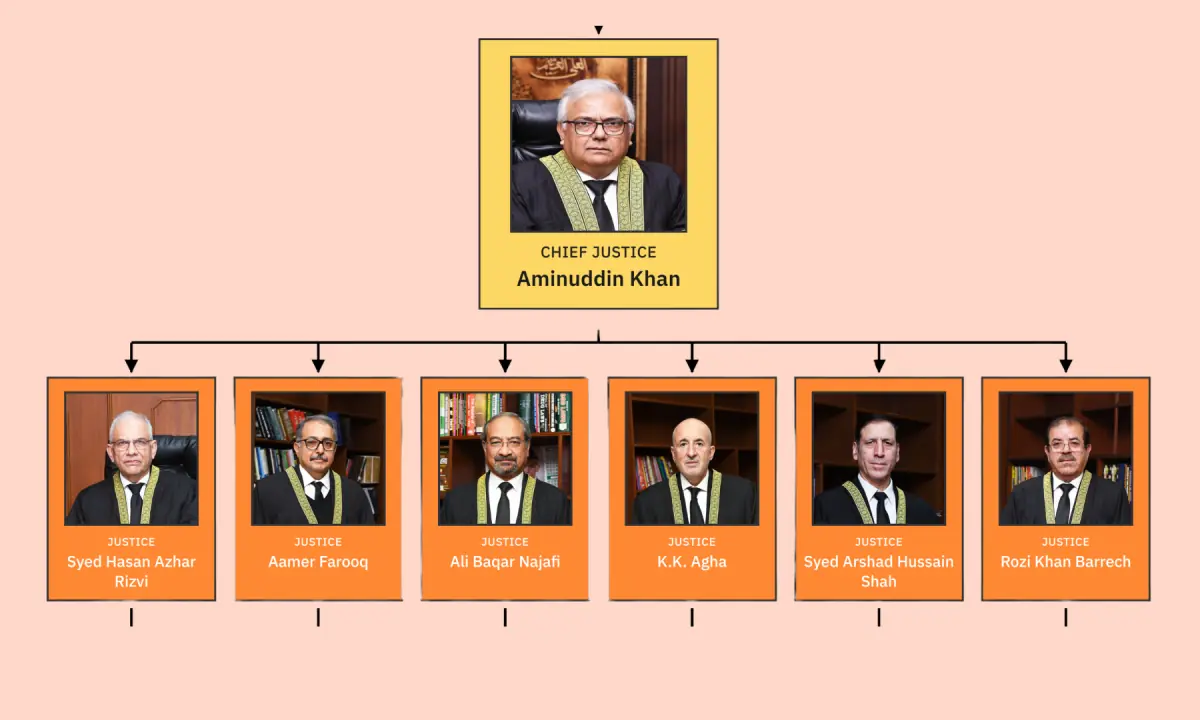
The Federal Constitutional Court in Pakistan does not have a single female judge, with the entire bench consisting of male members. During the drafting of the 27th Amendment, several weak justifications were given, such as the amendments potentially delaying cases, "activist" judges forcing changes upon themselves, and the Federal Shariat Court hearing important constitutional interpretation cases that consumed too much of the Supreme Court's time.
However, it is evident that the courts are being deprived of their independence, which endangers more than just political cases. Once judicial independence is compromised, no fundamental right remains protected.
The recent roll back of hard-fought protections for women by the Federal Shariat Court (FCC) is a cause for concern for everyone. The FCC's most recent decision has restricted the scope of the workplace harassment law, authored by Justice Ali Baqir Najafi. Justice Najafi, who previously contributed to victim-blaming reasoning in a brutal murder case by stating that the crime was a result of "living relationships," has now authored a judgment that undermines the protections offered under the workplace harassment law.
The FCC has adopted an interpretation of the workplace harassment law that effectively nullifies its intended purpose. Now, only harassment that is "sexual in nature" is covered, thus erasing an essential category of protection explicitly included by parliament.
The definition of harassment includes "sexually demeaning attitudes" when it interferes with work performance or creates an intimidating, hostile, or offensive work environment. However, by limiting harassment to conduct that is "sexual in nature," numerous forms of gender-based abuse are excluded from legal protection. This includes humiliation, degrading treatment, intimidation, and a hostile work environment that lack any sexual element.
The FCC's decision effectively strips victims of their rights, as humiliation, degradation, intimidation, and a hostile, discriminatory workplace may go unaddressed if the conduct cannot be classified as sexual.
In 2022, parliament amended the federal law, explicitly broadening the definition of harassment to encompass "discrimination on the basis of gender, which may or may not be sexual in nature." However, the FCC's judgment will only impact claims arising from conduct that transpired before the amendments came into force. The most significant consequences of the FCC's decision will affect victims in Punjab, Khyber Pakhtunkhwa, and Balochistan, as these regions have not adopted the 2022 amendments.
It is now the responsibility of provincial legislatures to act swiftly and amend their respective workplace harassment laws to ensure that the protections parliament has recognized cannot be undermined through regressive judicial interpretation.
Written by urgent.news from Dawn's reporting — not their text. Machine-written — may contain errors; check the original before relying on it.