Geopolitics: The systemic characteristics of a complex world —Phar Kim Beng
OCTOBER 2 — Geopolitics was once understood principally through maps. Mountains protected states. Oceans sepa...
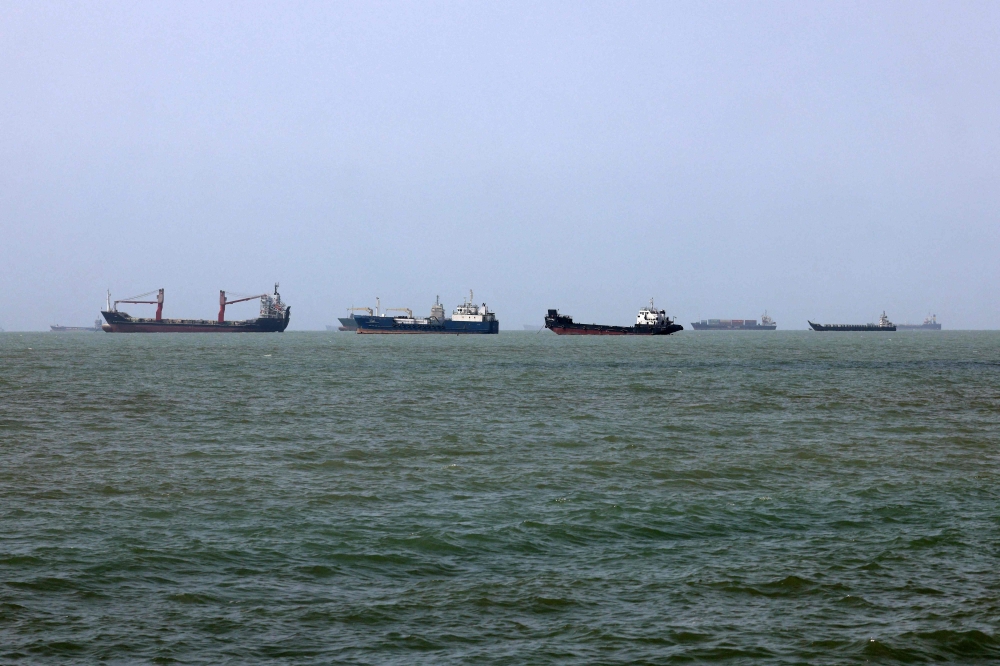
OCTOBER 2 — Geopolitics has evolved significantly in the twenty-first century. It is no longer just about maps and boundaries. Rather, it is now characterized by the intricate web of connections between major powers. Energy, semiconductors, artificial intelligence, shipping, undersea cables, satellites, rare earths, financial markets, and supply chains are all interlinked.
A disruption in one area can quickly spread to others, making the world complex. The Strait of Hormuz, for instance, is a narrow but economically significant passage. A serious disruption there can have far-reaching consequences beyond the Middle East, affecting energy supplies, shipping costs, inflation, and household expenditure worldwide.
Similarly, the Red Sea and Bab al-Mandeb have similar effects. The Taiwan Strait is strategically important due to Taiwan's location in the Western Pacific. However, its significance is further amplified by the concentration of advanced semiconductor manufacturing in Taiwan, particularly by Taiwan Semiconductor Manufacturing Company (TSMC).
Semiconductors are used in various devices, from computers to automobiles, telecommunications equipment, and artificial intelligence systems. A Taiwan Strait crisis could not only result in a military confrontation but also become a systemic technological shock. Geopolitics is forcing governments and corporations to rethink their strategies.
Efficiency must now be balanced with resilience, leading to terms like "friend-shoring," "near-shoring," "de-risking," and supply-chain diversification. The Covid-19 pandemic highlighted this vulnerability. The intensification of US-China competition has reinforced this lesson. Artificial intelligence adds another dimension, as it relies on advanced chips, data centers, electricity grids, and mineral supply chains, making it deeply physical and closely tied to geopolitics.
Questions of AI sovereignty, cybersecurity, and data security are now central to national security policies. Financial markets also react quickly to geopolitical instability, with expectations about shortages and disruptions affecting markets before the physical scarcity occurs. Consequently, geopolitics operates across geography, technology, psychology, and expectations, making linear thinking inadequate.
A conflict can produce a chain of consequences, from energy market impacts to inflation and political dissatisfaction. Southeast Asia is located within these interconnected networks. ASEAN is situated between the Indian and Pacific Oceans and near several crucial maritime routes. The Strait of Malacca and the South China Sea are vital for global commerce.
Countries like Singapore, Malaysia, Vietnam, and Indonesia play significant roles in semiconductor and electronics supply chains. ASEAN cannot view geopolitics as happening elsewhere and should not interpret every development through the lens of US-China rivalry. The international system is becoming increasingly complex and multifaceted, with states diversifying their strategic options instead of simply aligning with one power camp.
Written by urgent.news from Malay Mail's reporting — not their text. Machine-written — may contain errors; check the original before relying on it.