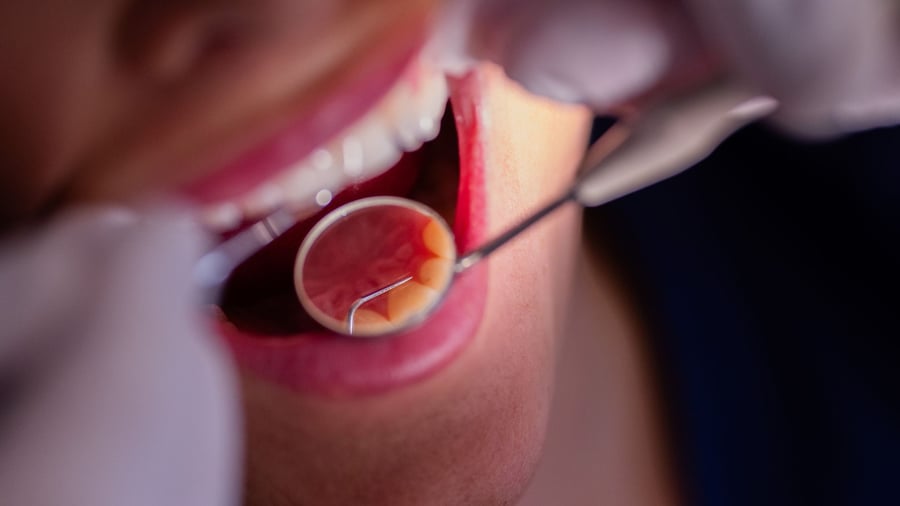
Geld knapp?: Härtefallregelung beim Zahnersatz: Für wen sie gilt
Auch wer sich bei Zahnersatz für die Kassenvariante entscheidet, muss zuzahlen - oft mehrere hundert Euro. Das ist einfach nicht drin? Für solche Fälle gibt es eine Härtefallregelung.
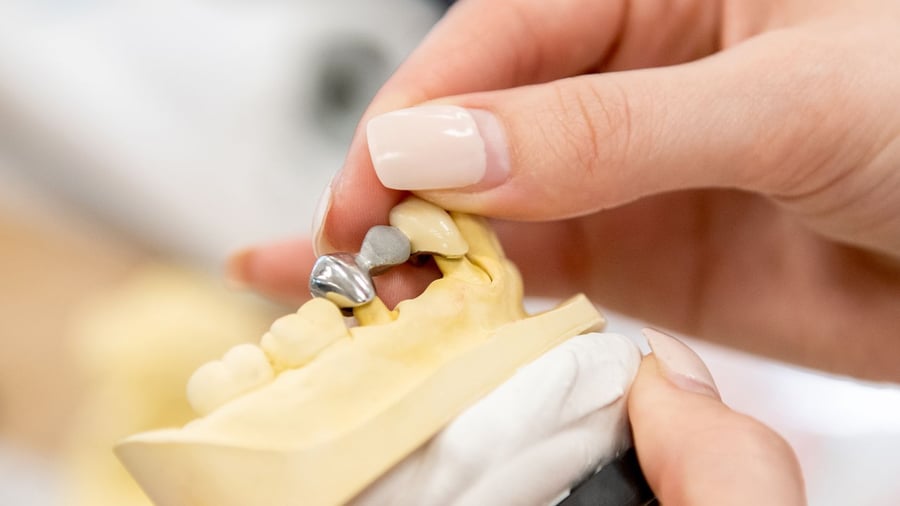
Dental procedures can be expensive, and it's not just the aesthetic options that cost more. Even when choosing the more affordable option like a crown or bridge, insured individuals still have to pay a portion out of pocket. Currently, the statutory health insurance covers 60 to 75 percent of the costs for standard care. This is set to decrease to 50 to 65 percent come 2027.
For instance, a three-tooth bridge would cost around 1,718 euros for standard care. Without any additional benefits, the insurance covers 60 percent, which amounts to approximately 1,030 euros. The remaining 688 euros would need to be paid out of the individual's own pocket. When it comes to hardship regulations, certain income thresholds come into play.
Anja Schlicht from Finanztip explains that if someone has very little income, the hardship regulation might come into effect, where the insurance covers the entire cost of standard care. The specific threshold depends on the individual's living situation: for singles, it's 1,582 euros, for those with a household member, it's 2,175.25 euros (this includes spouses, same-sex partners under the Life Partnership Act, and family-insured children), and for each additional household member, the threshold increases by an additional 395.50 euros.
It's important to note that "people receiving social benefits automatically fall under the hardship regulation," according to Anja Schlicht. This includes recipients of basic income support and social assistance, as well as those receiving student financial aid. If you wish to apply for the hardship regulation, it's advisable to mention it early on in your dental treatment.
You can obtain the necessary form from the health insurance company or your dentist. In the form, you'll need to disclose your income and provide proof of it. The health insurance will then review the application. If your income is just over the threshold, you may not be out of luck. There's a so-called "individual hardship regulation" that could provide a higher percentage of coverage for dental procedures, even if it doesn't cover 100 percent of the costs.
The Verbraucherzentrale (Consumer Center) advises contacting the health insurance company to explore all available options in such cases.
Written by urgent.news from Handelsblatt's reporting — not their text. Machine-written — may contain errors; check the original before relying on it.
This story
This is one outlet's version. Read the fullest account.
- Own shares increase: Dentures will soon cost more: How can you save? handelsblatt.com