From risk to reputation: Jason Ho on what makes a bank worthy of trust
Drawing on nearly four decades in international banking, Eximbank board member Jason Ho discusses financial crises, governance and his long-term priorities for the Vietnamese lender.
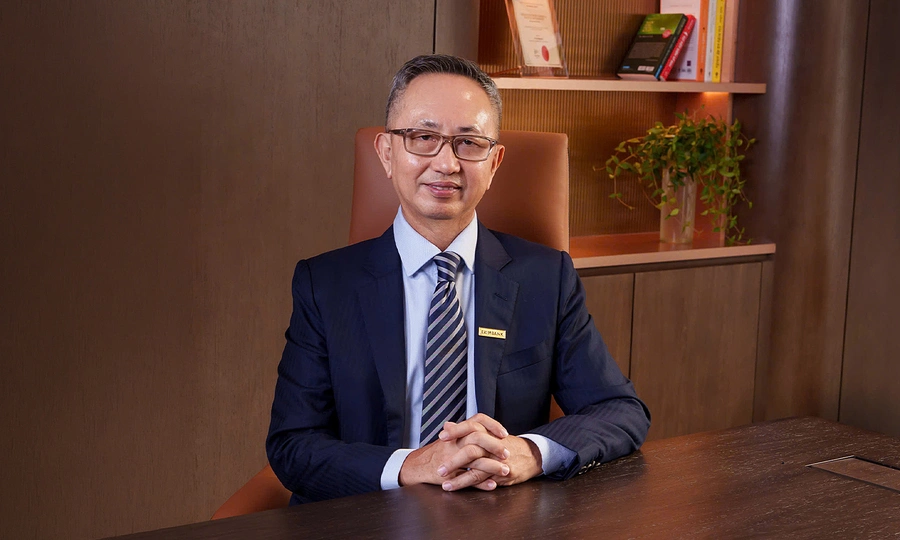
Jason Ho has spent his career in various aspects of banking, including trading, treasury, risk management, human resources, and corporate governance. He now serves on the board of Eximbank, a Vietnamese lender, and brings his extensive experience to the institution as it plans its next phase of development. For Ho, the primary goal of banking is not merely to generate profits quickly or accumulate large balance sheets.
Instead, the focus should be on earning customers' trust and maintaining the discipline to protect that trust. This is a principle he has carried throughout his career, drawing from his experiences during the Asian financial crisis of 1997 and the global financial crisis of 2008.
During the 1997 crisis, Ho served as the corporate treasurer for Volvo in Asia Pacific and witnessed companies taking on excessive debt due to low interest rates, without properly considering the risks associated with foreign exchange fluctuations. The 2008 crisis reinforced another lesson for Ho: banks can report strong profits while hiding excessive leverage, liquidity risks, and flawed decision-making.
These experiences led Ho to emphasize the importance of understanding, assessing, pricing, and managing risks, rather than avoiding them altogether.
Ho identifies four key foundations for a sound bank: fiduciary responsibility, reputation, corporate governance, and sustainable profitability. Profitability is seen as an outcome of appropriate decisions, effective risk management, and customer confidence, rather than an objective to be pursued at any cost. His own upbringing in a low-income family in Singapore further shaped his perspective, instilling in him the importance of savings and the peace of mind that comes from having a trustworthy bank.
Reputation, for Ho, is central to providing this peace of mind. It takes years to build and can be destroyed quickly. To protect this trust, strong corporate governance is essential. Clear responsibilities, effective oversight, and established risk limits help institutions identify and address potential problems before they escalate into crises.
Ho also emphasizes the distinction between the board's responsibilities and those of management. While management implements strategy and oversees daily operations, the board sets the strategic direction, approves major plans, oversees risk appetite, and provides independent judgment.
With his diverse background in balance sheet and liquidity management, organizational transformation, and various committees, Ho is contributing to Eximbank's board in a strategic capacity. He aims to provide independent oversight and guidance, rather than getting involved in day-to-day management. For Ho, the focus should not solely be on profit maximization.
Instead, he believes in building a sustainable business that can grow meaningfully. This involves having the right people, culture, risk management, and technology, all supported by strong governance. Sustainable profitability will naturally follow when these elements are in place.
As Eximbank enters a period of strategic review and transformation, Ho envisions the bank strengthening customer trust, improving its funding profile, maintaining effective risk controls, and generating sustainable returns. He favors a balanced set of financial and non-financial indicators to measure success, including sustainable growth in return on equity (ROE), funding stability, customer satisfaction, employee engagement, reduced fraud incidents, and controlled non-performing loans (NPLs).
He also considers employee recommendations of the bank as a workplace as an important indicator of organizational culture. In terms of technology, Ho sees it as a tool to improve customer understanding, decision-making, and service delivery, rather than an objective in itself. He believes banks must retain human judgment where technology cannot fully replace personal interaction or professional assessment.
As customer behavior evolves and digital technologies reshape expectations, adaptability will become increasingly important. For Ho, the core pillars of banking will remain the same, but the ability to adapt will be crucial to Eximbank's long-term success.
Written by urgent.news from VnExpress Business's reporting — not their text. Machine-written — may contain errors; check the original before relying on it.