From barren desert to red gold: Saffron cultivation debuts in Ladakh
Ladakh has launched a pilot to grow high-value saffron on restored barren land in Leh, planting about 90,000 Iranian saffron corms across 4,000 square metres at Spituk Pharka. If successful, the project could diversify cold-desert agriculture and create a new income source for local farmers, youth and self-help groups.
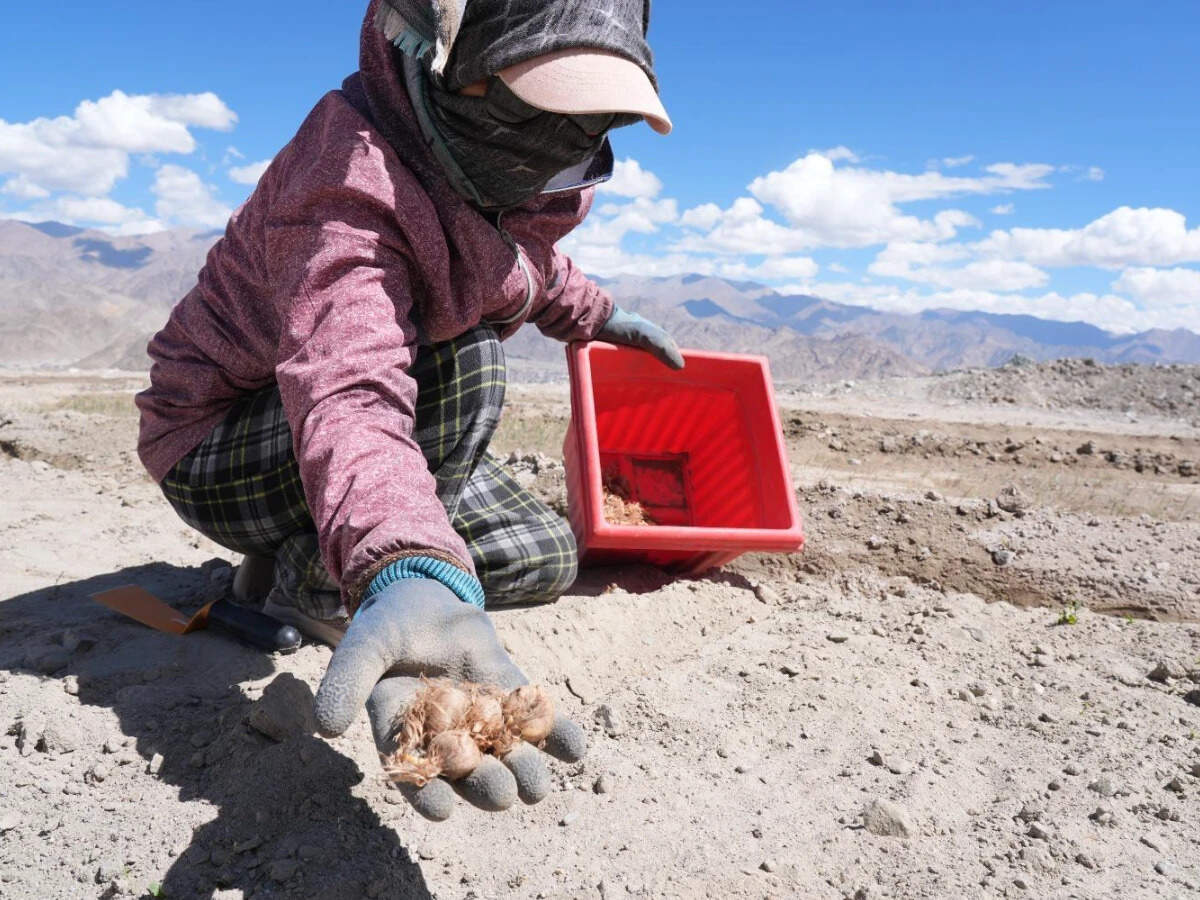
In a groundbreaking venture, a once barren expanse of high-altitude Ladakh in the Union Territory of Leh is poised to yield a lucrative crop: saffron. Leveraging lessons learned from previous floriculture experiments with Lilium and Gladiolus, the state administration has launched a pilot saffron cultivation program. Roughly 800 kilograms of premium Iranian saffron corms, numbering 90,000 units, have been sown across 4,000 square meters at Spituk Pharka, following instructions from Lieutenant Governor Vinai Kumar Saxena.
If the trial proves fruitful, it will usher a novel economic opportunity for cold-desert farming while bolstering India's domestic saffron reserves. The cultivation site is nestled within an 800-acre land restoration zone governed by Project Him Sarovar. Agriculture experts chose corms that met stringent criteria—weighing at least 10 grams and measuring between 8-10 centimeters in circumference—to optimize yield potential in Leh's distinctive agro-climatic environment.
To render the arid soil suitable for cultivation, surplus water from the recently revitalized Igoo–Phey irrigation canal is being redirected across the land, aided by four adjoining storage ponds boasting a collective capacity of 24 million liters. The overarching goal is to showcase the potential of desert lands to be repurposed for high-value agricultural enterprises, offering local farmers, youth, and Self-Help Groups a lucrative secondary income stream.
Saffron is known for its premium market value, with neighboring Jammu and Kashmir producing approximately 90 percent of India's domestic saffron supply. The project's leader, Governor Saxena, expressed enthusiasm, stating, "Our endeavor is to transform degraded and barren land into productive assets and create new opportunities for our farmers.
The introduction of saffron is another important experiment in crop diversification, which can open a new avenue for enhancing farmers' incomes."
Written by urgent.news from The Economic Times - Economy's reporting — not their text. Machine-written — may contain errors; check the original before relying on it.