EC Sirs, Your SIR Is Fraudulent
The Special Intensive Revision (SIR) of electoral rolls was supposed to clean up the voters' lists. Instead, mounting evidence suggests that the exercise has itself become deeply compromised. Calling it merely an administrative error would be an injustice to the millions whose right to vote has been placed in jeopardy. More than 13 crore names were struck off the draft rolls in 30 states and…
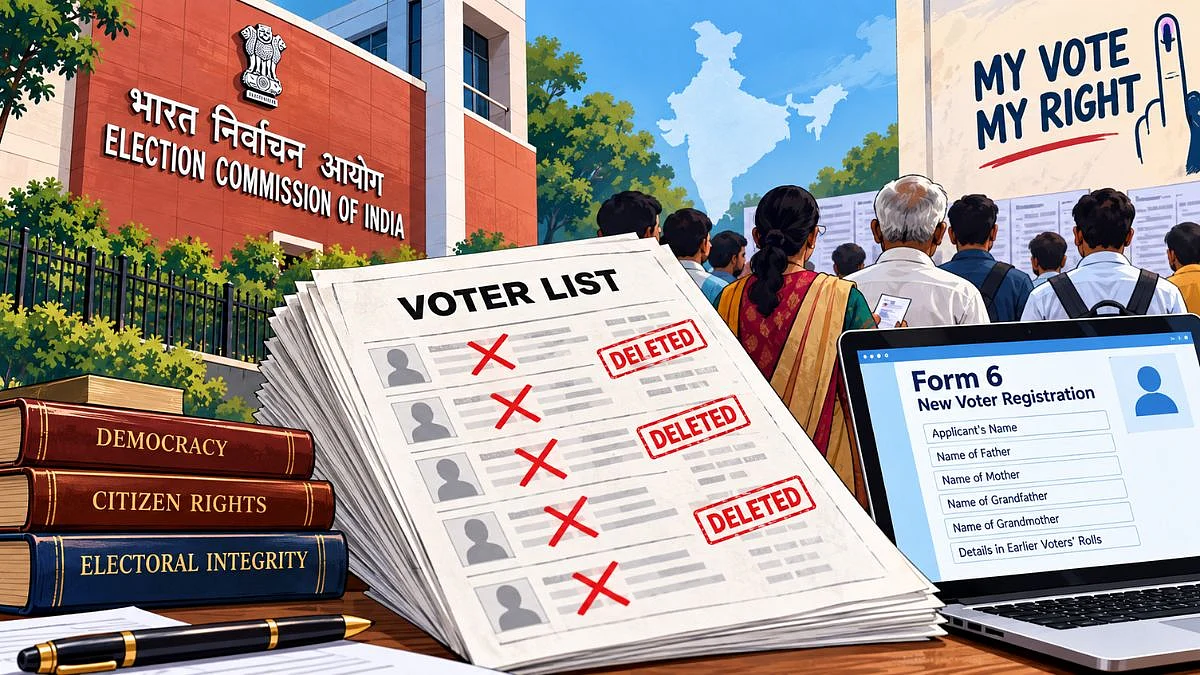
The Special Intensive Revision (SIR) of electoral rolls, intended to refine the voter lists, appears to have become a source of controversy. Over 13 crore names were removed from the draft rolls in 30 states and union territories. The Election Commission (EC) has provided explanations for each deletion, but the magnitude of the deletions warrants more than mere explanations; accountability is required.
Doubts have also arisen regarding subsequent elections, particularly in West Bengal, as the integrity of an election hinges on the faith that eligible voters were not unjustly removed. A troubling revelation is that Form 6, which new voters complete, now includes an additional declaration requesting information about themselves or their parents and grandparents' voter history.
Election Commissioners Sukhbir Singh Sandhu and Vivek Joshi formally objected to this alteration, questioning its legality and introduction. Despite their concerns, the change remained in effect until the controversy surfaced. Questions have been raised about who ordered this alteration at the ECI and who approved it at the tech company (TCS) responsible for implementing it.
These queries are not about political leanings but about the accountability chain within the institution responsible for safeguarding voters' fundamental democratic rights. Another concern is the allegations in Karnataka that fraudulent applications were filed to delete genuine voters. If confirmed, this would demonstrate how vulnerable electoral roll revisions are to manipulation without robust, independently enforced safeguards.
The EC's subsequent actions, including a special enrolment drive in 20 states and union territories, seem contradictory to the original exercise's claimed reliability. If the revision process was as dependable as claimed, why was a recovery operation necessary? The most distressing aspect is that the most vulnerable to bureaucratic exclusion—poor, migrants, workers, and citizens without well-documented ancestry—are the very people who uphold India's democracy.
These individuals often lack the resources to hire legal help and intermediaries, relying solely on their vote. The institution tasked with protecting this vote cannot afford to become an entity that citizens doubt is acting in the best interest of political establishments. The questions surrounding the SIR process are now too serious to be dismissed as mere partisan allegations.
The Commission must address the country with transparent answers, and the voters deserve nothing less. Otherwise, it should reconsider its role.
Written by urgent.news from Free Press Journal's reporting — not their text. Machine-written — may contain errors; check the original before relying on it.