Daimler Truck maps what it takes to scale electric trucks
More than 60 zero-emission truck models are on the market, Rådström said. Daimler Truck wants chargers, hydrogen stations and CO2-based tolls to catch up to them. The post Daimler Truck maps what it takes to scale electric trucks appeared first on FreightWaves .
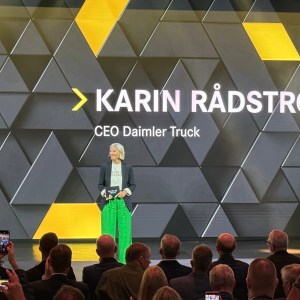
HANNOVER, Germany — Daimler Truck outlined the requirements for Europe to transition battery-electric and hydrogen trucks from experimental vehicles to mainstream fleets. Speaking at the company's Media Night in Hanover ahead of the IAA Transportation 2026, CEO Karin Rådström emphasized the need for public megawatt chargers, hydrogen stations suitable for trucks, and road tolls that incentivize zero-emission vehicles.
In the first half of 2026, Mercedes-Benz Trucks held 38% of Europe's market for locally CO2-free medium- and heavy-duty trucks. Since series production began in late 2024, the eActros 600 has driven over 160 million kilometers. Currently, there are more than 60 electric or zero-emission trucks in the market, and 25 different zero-emission bus models from Daimler and its competitors.
The company estimates that by 2030, around 35% of new trucks should run on batteries or hydrogen to meet EU CO2 targets, which would require 35,000 megawatt charging points. Europe currently has about 187 hydrogen stations, most of which provide only 350 bar pressure, insufficient for trucks. Daimler Truck suggests Europe needs 1,000 hydrogen stations by 2030.
Cost parity with diesel is another barrier, with CO2-based road tolls helping offset higher investment costs. In Germany, the toll difference between diesel and electric trucks amounts to 33 to 35 cents per kilometer. Only 13 EU member states have adopted CO2-based tolls, and fewer than a handful set a meaningful gap between electric and diesel vehicles.
Written by urgent.news from FreightWaves's reporting — not their text. Machine-written — may contain errors; check the original before relying on it.