Book Adaptations Soar in Popularity — and at the Box Office — Over Franchises, Video Games
Novels accounted for 37.6% of all adapted IP titles that premiered in 2025 The post Book Adaptations Soar in Popularity — and at the Box Office — Over Franchises, Video Games appeared first on TheWrap .
Film and television studios and streaming services are increasingly turning to existing intellectual property (IP) for new content, rather than developing original ideas from scratch. Historically, movies have relied more heavily on adapted IP, but that gap has narrowed. In recent years, a larger share of new series and films have been based on pre-existing IP—12-14% of new series and 11.5% of new movies in 2025.
However, simply counting the number of new releases does not fully capture their impact. Adapted adaptations generate a disproportionate share of audience demand, despite making up a smaller percentage of new content. In 2025, IP-driven movies accounted for just 11.5% of the film slate, but they captured 47.1% of total audience interest.
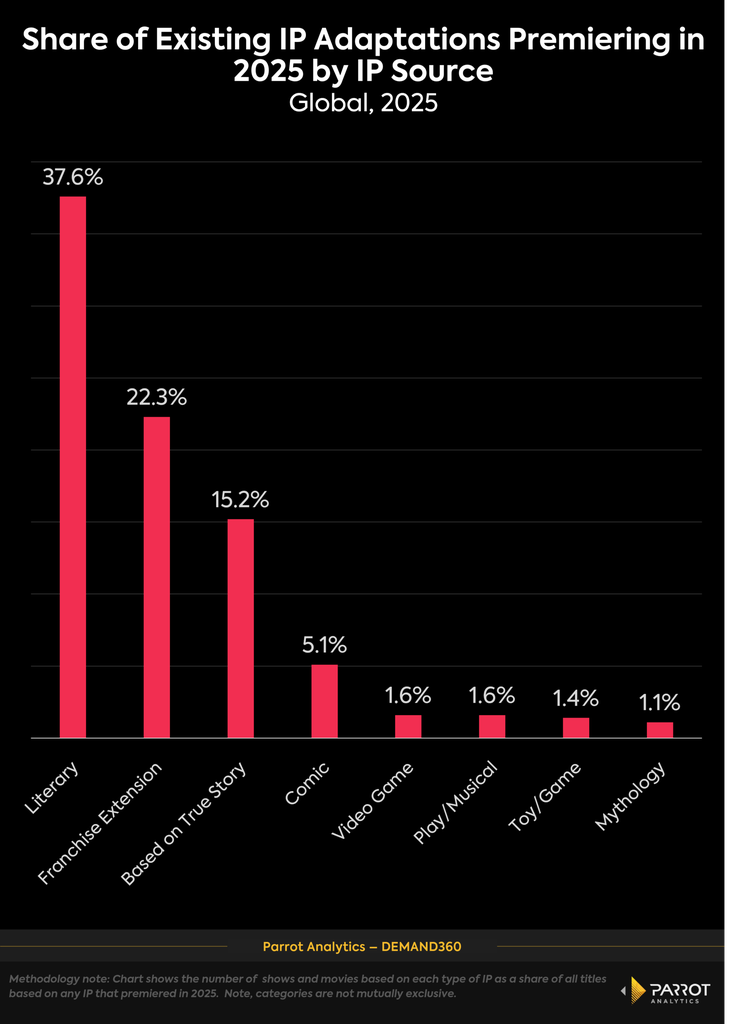
The same trend held true for television, where adapted shows claimed 37.5% of demand despite representing only 13.8% of new series. The top 100 most-wanted titles show an even stronger preference for adapted IP, with books leading as the primary source of material. Literary works accounted for 37.6% of all adapted IP titles that debuted in 2025, marking the highest share since 2017.
Franchise extensions and true stories followed, while video game adaptations were the least represented at 1.6%. The financial return on literary adaptations is significant, with productions based on books generating three and a half times the global demand of the average title. The success of these adaptations can be attributed to the existing tested concepts and devoted fanbases that provide a marketing advantage, allowing studios to leverage an established audience.
The broad demographic appeal of book adaptations is noteworthy, as they attract a more diverse age range compared to video game adaptations, which tend to be heavily skewed towards male, Gen Z audiences. The data suggests that using a library card—i.e., turning to existing literary adaptations—could be a valuable strategy for creating a successful hit in today's competitive entertainment market.
Written by urgent.news from TheWrap's reporting — not their text. Machine-written — may contain errors; check the original before relying on it.