Before we question the Ghana Fire Service, let’s ask ourselves what we expect them to fight fire with
The October 1 inferno at Avenor has once again exposed a difficult but necessary conversation about the state of Ghana’s firefighting infrastructure and, more importantly, our collective attitude towards fire safety. Whenever a major fire breaks out, the Ghana National Fire Service (GNFS) is often the first institution placed under public scrutiny. The expectation is […]
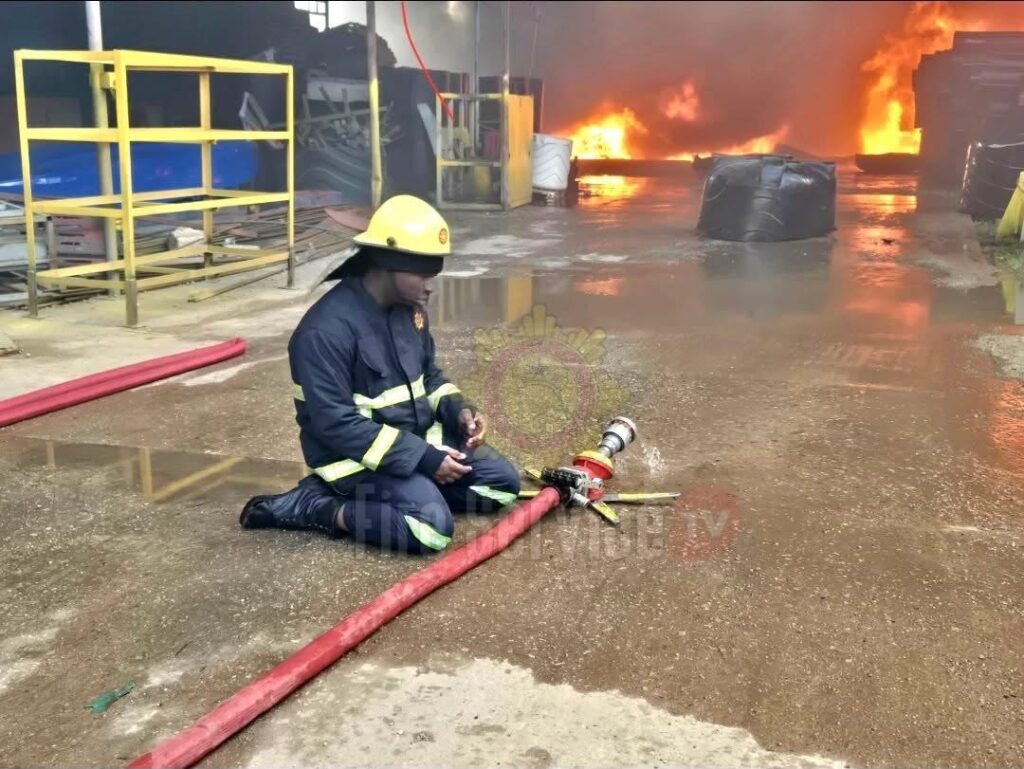
The October 1 fire at Avenor has reignited a conversation about Ghana's firefighting infrastructure and public attitudes towards fire safety. When major fires occur, the Ghana National Fire Service (GNFS) is often questioned, as the public expects them to quickly extinguish the flames. However, is fighting fires as simple as arriving at the scene and deploying tenders?
Perhaps it is time to question what we expect the GNFS to achieve with the resources at its disposal. The GNFS identifies adequate resources, equipment, and appliances as crucial to its mission of protecting lives and property. While its mandate includes fire prevention, public education, and emergency response, the reality on the ground is far more complex.
At Avenor, firefighters struggled to access affected areas due to blocked roads and structures. The GNFS had to clear these obstacles to reach the fire. This raises the question: if a tender cannot access the fire, what exactly are we expecting them to do? Clearly, these tenders cannot fly. This conversation must move beyond simply defining the Fire Service's role and examine the role of citizens in creating the conditions that firefighters must confront.
Construction on or near emergency access routes, blocked roads, and uninhabited areas are just a few examples of how we create challenges for emergency responders. At Avenor, the fire hydrants were empty, leaving firefighters without a water source to combat the blaze. This highlights the shared responsibility of fire safety, involving government, local authorities, property owners, businesses, communities, and individual citizens.
The Interior Ministry has emphasized that fire safety is a shared responsibility and urged compliance with fire-safety laws. There is also a need to discuss the equipment available to the GNFS. In June 2025, the government acknowledged the need to replace aging and broken-down vehicles and announced plans to acquire 100 new fire tenders, with GH¢150 million allocated for the retooling of the Fire Service.
While this is a positive development, the real test will be whether the equipment reaches the Service, is distributed appropriately, maintained properly, and is available during emergencies. Retooling the Fire Service should not be a political talking point, but rather an investment in lives, property, and national infrastructure.
It must go beyond fire tenders and include accessible hydrants, reliable water sources, appropriate equipment for industrial fires, high-rise buildings, and other complex emergencies, proper protective equipment, communication systems, and continuous training. Ultimately, the biggest change needed is a shift in mindset. When a firefighter arrives at a scene, we should not assume they will effortlessly extinguish the fire.
Firefighters operate under dangerous conditions, rescuing people and animals while risking their own lives. The Avenor incident underscores that their job is not magic. If roads are blocked, hydrants are inaccessible, or equipment is inadequate, firefighters face even greater challenges. Therefore, while questioning the GNFS is crucial, accountability must be informed by reality.
We must demand that government equips the Fire Service properly and that assemblies enforce planning and building regulations, businesses and property owners comply with fire-safety requirements, and citizens stop creating obstacles for emergency responders. The current leadership of the GNFS, under Chief Fire Officer Daniella Mawusi Ntow Sarpong, is working towards reforms, including the introduction of the Automated Fire Safety Compliance System (AFCAS) to modernize fire-safety inspections and compliance.
However, leadership alone cannot solve every problem. Government must provide resources, and the Service must maintain and deploy them effectively. Local authorities must enforce regulations, businesses and property owners must comply, and together, we can improve fire safety in Ghana.
Written by urgent.news from Adom Online's reporting — not their text. Machine-written — may contain errors; check the original before relying on it.
Also reported by 1 other outlet
- Fire service saves N35m property in Gombe punchng.com