Analysis: RI’s illegal cigarette trade A problem of enforcement and incentives
Indonesia's illegal cigarette trade has long deprived the state of revenue and undermined formal producers. Recent allegations that people linked to a House of Representatives legislator sold counterfeit excise stamps, however, suggest that illicit trade may also involve those with access to formal institutions. The case raises questions about how illegal cigarettes keep circulating through…
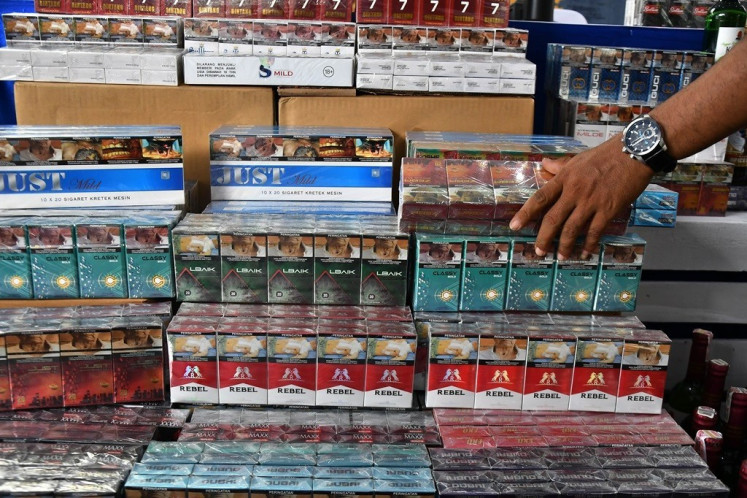
Indonesia's illegal cigarette trade poses a significant challenge, siphoning revenue and complicating formal producers. Allegations have emerged that individuals close to a House of Representatives legislator were involved in selling counterfeit excise stamps. This case underscores how illicit cigarettes continue to circulate despite intensified enforcement and regulation.
Counterfeit excise stamps have allegedly been traced to Adi Harnowo, a former expert staff member of House Commission XI Chairman Mukhamad Misbakhun. An East Java businessman reportedly purchased stamps at a discounted rate, allegedly with Adi's assistance. Two other individuals connected to Misbakhun were also implicated, with a team coordinating the transaction.
In one instance, over Rp 600 million in cash was paid to a legislator's subordinate. A Malang entrepreneur reported that the legislator suggested he could manage his subordinates when purchasing stamps, setting a minimum monthly purchase of 100 reams. Misbakhun has denied involvement, as has Adi, who ceased working for the legislator in October 2024.
The allegations arise as the Corruption Eradication Commission (KPK) investigates excise-stamp manipulation alongside a broader bribery and gratuity case. Customs officials have been accused of accepting bribes from cigarette entrepreneurs, with one report citing Rp 100 million paid by HS cigarettes owner Muhammad Suryo for operating expenses.
The KPK has summoned Pamekasan tobacco trader Haji Her, who claims ignorance of the suspects. This case highlights the strict penalties for excise-stamp counterfeiting under Indonesian law, with Articles 54 and 55 of Law No. 39/2007 imposing one to five years in prison and fines ranging from two to 10 times the excise owed, and one to eight years in prison and fines of 10 to 20 times the excise value, respectively, for counterfeiting or falsifying stamps.
The illicit cigarette market remains robust, accounting for 96.2 percent of excise revenue in 2022-2023, and employing millions of people. Despite excise increases since 2014, demand persists, leading to a widening price gap and pushing smaller producers out of the formal system. Enforcement efforts have primarily targeted retailers and distribution points, while production networks have been more challenging to dismantle.
The government has attempted to address this through formalization initiatives, but illegal cigarettes remain a pervasive issue, with an estimated 4.6 percent of national consumption and 13 percent of legal production. The Finance Ministry estimates annual state losses of up to Rp 60 trillion, while Indodata points to a higher figure of Rp 97.81 trillion.
Written by urgent.news from The Jakarta Post's reporting — not their text. Machine-written — may contain errors; check the original before relying on it.